
Bets. Social license is still lacking.
Brazil has already regulated sports betting. The legal framework is in place. More than seventy companies have already paid R$ 30 million each to operate legally.
The sector is organizing itself to fulfill its role within the rules, and there are consequences for those who do not comply. The market has moved out of informality and today operates with clear requirements for compliance, transparency, and social responsibility. Complying with the law is a crucial step. The challenge now is to achieve social license, the kind that must be earned every day.
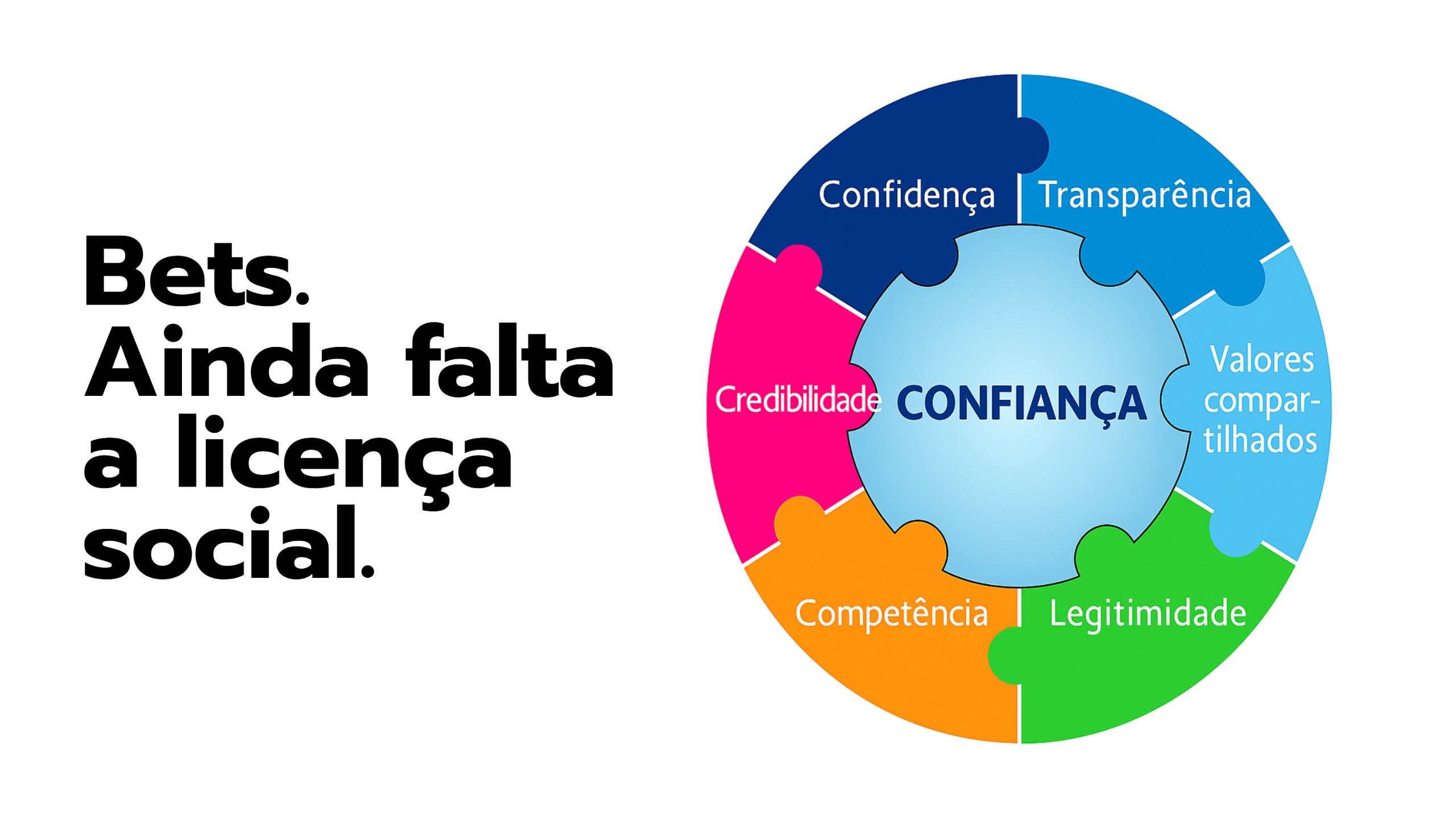
Public trust doesn't come with a decree. It's not published in the Official Gazette. It's built on people's perception, on how the regulated sector is understood, on its ability to engage with society, to clearly explain the risks of the illegal market, and to demonstrate that it's there to be part of the solution. And that's precisely where the current challenge lies.
Historically, other industries have faced discomfort throughout their trajectories. But few need to explain their own role as much as this to be perceived as legitimate.
Perhaps that's why the sector has just been impacted again. The increase in the tax rate on GGR from 12% to 18%, in a market that has barely had time to breathe since the regulation, is not the first surprise. And it probably won't be the last.
Even with regulatory advancements, the sector still faces significant resistance. For many, the mere existence of betting is a source of discomfort. But it's worth remembering that betting is an age-old practice, present in virtually every culture. Let he who has never said "want to bet?" cast the first stone. Precisely for this reason, it needs to be approached with maturity, not taboo. Without a clear, coordinated, and responsible response, the sector will remain vulnerable to measures that weaken its legitimacy, even though it is legally authorized.
Given this scenario, how can brands be promoted ethically and in a socially responsible manner within a regulated environment, especially in the face of growing resistance to the sector's existence? Some of this resistance stems from legitimate public health concerns, but also from misconceptions about what the industry truly is.
There are still many people who don't know that there are two betting markets operating in Brazil: the legal and the illegal. Many also don't know that the illegal market isn't exclusive to Brazil and that it also affects the regulated industry and bettors in several other countries. Many still don't know about the .bet.br domain and why it exists. Just look at the recent debates in the Betting CPI (Parliamentary Commission of Inquiry). Pretending this reality doesn't exist is a mistake. And stifling those who follow the rules only does one thing: it pushes the player straight to the other side.
High CAC and tight margins create a dangerous equation. The only way out is to increase lifetime value with strategies that prioritize retention, recurrence, and reputation. Responsible Gaming needs to be seen as a strategic investment, not a cost center. It's compliance plus marketing, not just compliance. It's a tool that strengthens brands, differentiates operators, improves the industry's reputation, increases player retention, lifetime value, and return on investment. It's a brand asset and needs to be treated as such.
Social licensing will come from public commitment, active listening, and the courage to present itself as a legitimate sector of Brazilian entertainment. No operator or association will solve this alone. The sector needs to act now, and using Responsible Gaming as its main banner is how we will ensure that this game can continue to be played.
(*) Thiago Iusim is Founder and CEO @ Betshield Responsible Gaming www.thebetshield.com

