
Open letter to the candidates for President of the Republic
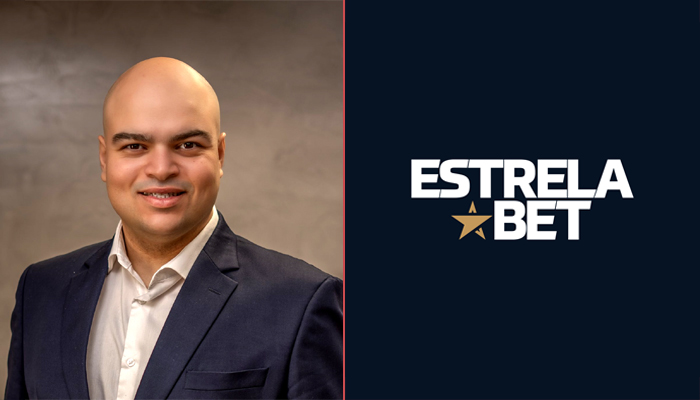
In the coming months, Brazil will discuss many important topics, and inevitably, betting will be among them. After seven years working in this sector and having closely followed the process that led the country from an almost complete absence of rules to the construction of the regulated market we have today, I would like to make a very simple request: before presenting proposals on betting, try to understand how this market really works. There is room for criticism, adjustments, and improvements, without a doubt. But a public policy built on flawed premises can produce exactly the opposite result to what it intends to achieve.
Let's start with taxation. It's relatively common to hear in public debate that betting companies "pay 13% in taxes," as if that were the entire tax burden on the activity. It isn't. The 13% is a specific tax calculated on the GGR (Gross Gaming Revenue), which, simply put, corresponds to the revenue from bets after prizes have been paid to players. In addition to this, an authorized company is subject to Brazilian corporate taxation, including PIS/Cofins, ISS, IRPJ, and CSLL, as well as inspection fees and a regulatory structure involving licenses, certifications, systems, compliance controls, anti-money laundering measures, responsible gaming, and various other obligations. And the specific tax on GGR itself will gradually increase in the coming years. It's perfectly legitimate to discuss the sector's taxation, but this discussion needs to begin with the actual tax burden, not the impression that there's only a 13% rate applied to a lightly taxed activity.
There is also an economic issue that I consider more important and that rarely receives due attention in this discussion: the competitor of a regulated company in Brazil is not just another regulated company. It is also the illegal operator. This means that there is a limit to how much we can increase taxes, restrictions, and costs on those who have a license without altering the competitiveness between these two markets. If the regulated product becomes too expensive, too restricted, and uncompetitive, the bettor doesn't necessarily stop betting. They switch sites. And the illegal site doesn't pay the 13%, doesn't pay a license fee, doesn't collect the same taxes, doesn't have the same regulatory costs, and doesn't have to comply with Brazilian rules on responsible gambling, money laundering prevention, advertising, or consumer protection. In this scenario, we create a rather curious situation: the more we exclusively burden those who comply with the law, the greater the competitive advantage can become for those who have chosen to ignore it.
That's also why proposals to simply ban betting worry me. Prohibiting an activity for which there is demand doesn't mean making that demand disappear. Brazil, in fact, knows this reality very well: for decades, Brazilians have found, and still find, marginalized forms of entertainment and games that haven't even been legalized or regulated. Prohibition may remove a certain activity from the formal environment, but it doesn't necessarily remove that activity from society. And when that happens, the State loses precisely the instruments that regulation offers to monitor, establish limits, collect taxes, and, above all, protect the consumer.
This does not, of course, mean ignoring the problems related to gambling. On the contrary. We need to seriously discuss problem gambling prevention, child protection, responsible advertising, indebtedness, sports integrity, money laundering, and the protection of vulnerable people. Serious companies in the sector should participate in this discussion and assume the responsibilities arising from their activity. But there is a fundamental difference between combating problems related to gambling and combating the regulated betting market . Weakening the latter can make the former even more difficult, because the clandestine operator does not necessarily implement self-exclusion mechanisms, does not have the same duties of identifying the bettor, does not respond to the SPA (Sports and Arbitration Services) in the same way, and, ultimately, can simply disappear with the consumer's money.
Therefore, I am not writing this letter to ask the candidates for an agenda favorable to betting companies, but to suggest a change of perspective: perhaps the main question about betting in the next four years should not be "how to end betting?", but "how to ensure that Brazilians who decide to bet do so within a regulated market?" . From there, we can move on to discussing the blocking of payment methods, holding companies that provide services to clandestine operators accountable, combating illegal advertising, removing irregular apps from app stores, blocking websites, effective oversight, and educating consumers to recognize an authorized platform. At the same time, we need to preserve a firm and responsible regulatory environment, but one that is economically sustainable enough so that compliance with the law does not become a competitive disadvantage.
Gambling exists and will continue to be a relevant issue for millions of Brazilians. The challenge for the next President of the Republic will be to decide in which environment this activity will take place: in companies that are identified, taxed, monitored, and subject to Brazilian laws, or on clandestine platforms that operate outside the control of the State.
(*) Fellipe Fraga is Chief Business Officer (CBO) – responsible for Institutional Relations at Stellar Gaming. He holds a Law degree from PUC Minas and a specialization in Public Law from UNESA. He has extensive experience in the areas of Public, Electoral, and International Law. He was a founding member of the Superior Court of Sports Justice for American Football (STJD-FA) and served on the Sports Law Commission of the Brazilian Bar Association (OAB-MG).

