Casagrande defends regulation of betting and reform in the Judiciary.
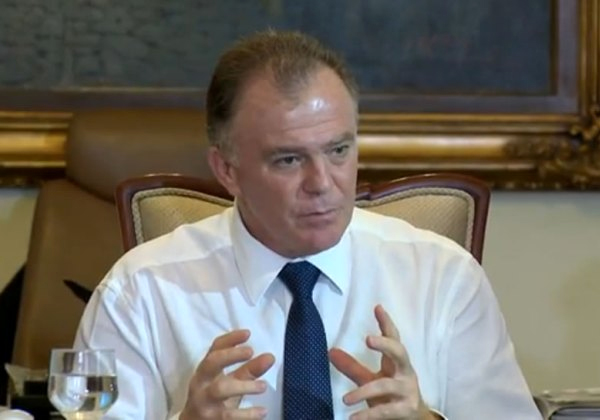
Former governor Renato Casagrande (PSB), candidate for the Senate in Espírito Santo in the 2026 Elections, defended on Wednesday (August 26) the regulation of betting and the end of lifetime appointments for ministers of the Supreme Federal Court (STF). The interview was given to Folha Vitória, in a special series dedicated to the candidates for the Senate in Espírito Santo.
One of the main points of the interview was the betting platform of Banestes, the state bank of Espírito Santo. Authorization for Banestes to create the Espírito Santo State Lottery – Loteria Capixaba – and implement its own betting operation occurred during Casagrande's tenure as governor. The initiative will be conducted by Banestes Loteria SA, a subsidiary of the bank, and will offer games in both physical and digital formats. The oversight of the service is the responsibility of ARSP (Public Services Regulatory Agency of Espírito Santo), which concluded public consultations in July 2026 to define the rules for protecting bettors and preventing fraud. Part of the revenue will be allocated to social areas such as social assistance, culture, sports, leisure, and tourism.
Casagrande acknowledged that eliminating betting would be unfeasible. According to the candidate, the correct approach involves regulation, increased taxation, and allocating some of the revenue to healthcare. He also advocates limiting advertising on these platforms, with mandatory warnings about risks, similar to what is done with cigarettes and alcoholic beverages. "It's a much greater challenge if you truly want to end betting. So, in my opinion, you have to regulate, tax, and limit betting advertising. There's a way to monitor who gambles; it creates addiction," he said.
Judicial Reform
The candidate proposed a "profound" reform of the Judiciary. Among the measures advocated by Casagrande are the creation of a term of up to 10 years for Supreme Court justices, the end of excessive salaries and perks, and the review of the impeachment of judges.
Casagrande also stated that he is against unilateral decisions by ministers that overturn resolutions of the National Congress, a position that, in his view, should only belong to the full Supreme Court. "Today, the Supreme Court is called upon for everything, gets involved in everything, and gives its opinion on everything," he said.
Public safety and penalties
In the area of security, Casagrande declared himself against the progression of prison regimes for those convicted of crimes against life. “Progression of prison regimes for those who commit crimes against life cannot exist. You cannot kill a person and three or four years later be free; this ends up leading to impunity. We have to give a clear signal of toughening the penalties for these crimes against life,” he stated.
Other topics of the interview
Casagrande stated he was in favor of ending the 6x1 work schedule, but conditioned the measure on the existence of compensation for the business sector, such as a reduction in the tax burden on affected employers or financial incentives from the federal government. According to him, the issue reflects a demand from workers, especially due to low wages.
Regarding abortion, the candidate stated that he is against legalization and defended maintaining the current law, which allows the procedure in cases of rape, anencephaly, and risk to the mother's life.
At the end of the interview, Casagrande answered objectively about his position on different issues. He stated that he is reasonably in favor of the Sentencing Bill, which reduced the sentences of those convicted for the acts of January 8th; in favor of reducing the age of criminal responsibility, racial quotas in universities, public funding for research and technology, reelection for mayors, governors and the president, the Reciprocity Law in response to US taxation, the Bolsa Família program "as it is today, but knowing that it can be adjusted," the end of privileged jurisdiction for politicians and female quotas in Congress; and against the easing of gun ownership and possession laws, printed ballots, and the current functioning of voting machines. Regarding the compulsory hospitalization of drug addicts living on the streets, the candidate stated that the decision "depends" and needs to involve the family and the Judiciary.