
Febraban Congress 2025: 3 major changes in AML for the betting market
By Fred Justo, Director of AML at Legitimuz
It's not new that Febraban's Congresses are the most relevant when it comes to preventing money laundering (AML) and the financing of terrorism. The event held a few days ago in São Paulo only reinforced this prominent position.
The financial market has been studying this topic for years and always provides valuable insights that end up being followed by other sectors of the economy. This year's edition revolved around three major themes: betting, Artificial Intelligence, and communications to COAF (Council for Financial Activities Control).
Bets as the protagonist of the debates.
I listed the bets first, not only because of alphabetical order, but because, of the three topics, the betting market was by far the most debated at the Febraban 2025 Congress.
It's worth highlighting a very significant change in the banking sector. Although criticisms of online betting persist, the tone has shifted considerably. The financial world is increasingly setting aside certain prejudices and beginning to understand betting sites as just another service provider that is 100% dependent on the financial system.
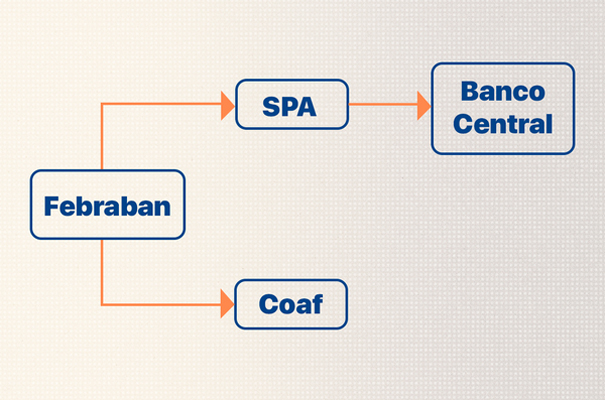
The shift in thinking has been so significant that the major banks no longer object to the fact that the Prize and Betting Secretariat (SPA) has become a kind of regulator for them.
Don't worry, financial institutions, payment methods, payment arrangements and institutions continue to be regulated by the Central Bank; nothing has changed in that regard.
However, following the publication of Ordinance SPA/MF 566/2025, these institutions became obligated to report to the SPA (Spanish Ministry of Planning, Budget and Administration) clients operating in the illegal betting market. Furthermore, they became obligated to terminate any financial transaction carried out in an illegal betting operation.
As a result, financial institutions began to follow specific SPA rules to combat illegal betting, information that was widely reported in the media this week.
New obligations for payment methods in the fight against illegal betting.
Payment methods face three new obligations when dealing with an operator not authorized by SPA:
- Identify illegal betting operators
- Communicating to the Prizes and Betting Department
- Prevent financial transactions with these platforms
The Turning Point: From Combating Betting to Combating the Illegal Market
Another change observed at the Febraban Congress is the understanding that the biggest problem in the betting market does not stem from the betting licenses issued by SPA, but rather from the illegal market. Banks have finally recognized this difference and have made themselves available to combat those operating outside the law.
This stance represents a very significant reinforcement and demonstrates maturity and commitment to combating money laundering and, more than that, to protecting society.
Although the war is against those operating illegally, some messages were also sent to legalized operators. One of them is that it is necessary to strengthen AML (Anti-Money Laundering), compliance, and anti-fraud teams. It is necessary to invest in:
KYC (Know Your Customer )
⇒ KYP (Know Your Partner)
⇒ KYE (Know Your Employee)
⇒ KYS (Know Your Supplier)
It is this alphabet soup that will mitigate the vulnerabilities found in the online betting sector.
Reports to COAF (Council for Financial Activities Control) on iGaming: quantity has increased, but what about quality?
At this point, what COAF has seen in these almost 10 months of the regulated betting market are typologies common to other sectors that are also subject to regulation.
The reports of suspicious transactions that have been received generally include:
⇒ Splitting withdrawals and deposits
⇒ Use of an orange account (formatting test)
⇒ Bets well above the bettor's income
I remember that when I left SPA in mid-April, the reports to COAF from the Fixed-Odds Betting sector alone were around five hundred. Now in October, that number has already exceeded two thousand reports.
That's quite a lot, but we've all heard that quantity isn't always a sign of quality, and in the case of reports to COAF (Council for Financial Activities Control) originating from the betting sector, this maxim has held true.
There has been progress, it's true, but there are still some difficulties in the reports that reach our Financial Intelligence Unit (FIU). The good news is that COAF (Council for Financial Activities Control) has been very helpful and open to dialogue with the sports betting sector.
The necessary union: regulated financial institutions and betting against illegality.
The Febraban Congress made it clear that collaboration between financial institutions, regulators, and betting operators is fundamental for the market's maturation. The change in stance of the banking sector, which has begun to see regulated betting as partners in the fight against illegality, marks an important turning point.
To contribute to this movement, the Legitimuz team recently held an enriching discussion on best practices for communicating with COAF in August, and of course, the idea is to repeat the event in 2025.
With the collaborative environment that has been established, who knows, maybe Febraban will join as a partner in this initiative? It would be the perfect union to further improve the quality of communications and strengthen the entire anti-money laundering ecosystem in Brazil.

