The defense cites the Provisional Measure on betting as a new development and asks the Supreme Court to urgently resume the trial on gambling.
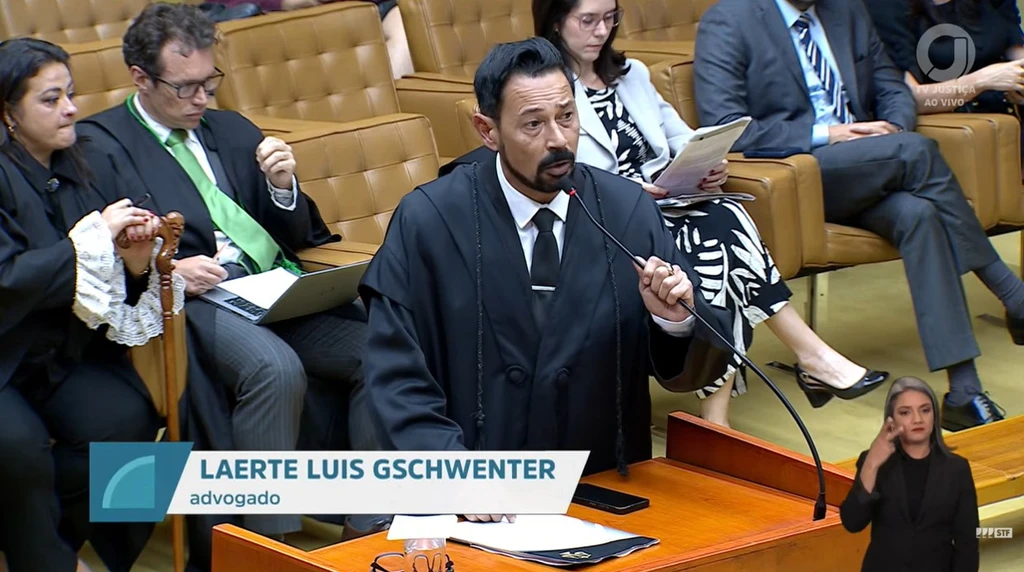
Lawyers Laerte Luis Gschwenter and Maria Carolina Peres Soares Gschwenter submitted a memorial to the Supreme Federal Court on Friday (2) in Extraordinary Appeal 966.177 (General Repercussion Theme 924). They request that Provisional Measure 1.394/2026, which prohibited fixed-odds betting, be recognized as a new supervening fact and that the judgment be resumed under a regime of absolute priority.
The petition is addressed to the president of the Supreme Federal Court (STF), Minister Edson Fachin, to the rapporteur, Minister Luiz Fux, and to Minister Flávio Dino, who requested a review on August 6th, after the rapporteur's vote in favor of the acceptance of article 50 of Decree-Law 3.688/1941. The lawyers, who defend the respondent Guilherme Tarigo Heinz, request that the document be distributed to all ministers, arguing that the analysis of the impact of the Provisional Measure "cannot be restricted to the office of the reviewing minister".
New fact in the course of view
Based on article 493 of the Code of Civil Procedure, the defense argues that the Provisional Measure was issued while the proceedings were stalled due to the review process and altered the regulatory framework of the matter before the Court established the constitutional precedent. According to the petition, it became impossible to judge the acceptance of article 50 in isolation.
The lawyers argue that the pending review, coupled with the immediate enactment of the Provisional Measure, creates a gap in which "millions of citizens and gamblers are pushed towards criminal activity without the Supreme Court having given its final word."
The Public Prosecutor's Office would confirm the ruling from Rio Grande do Sul.
The central argument is that the Provisional Measure does not contradict, but rather confirms the decision of the Criminal Appeals Court of Rio Grande do Sul, from November 2015. That ruling dismissed the criminal nature of gambling, but recognized that the State can prohibit the activity administratively, with administrative sanctions.
According to the petition, the Provisional Measure adopted this model. It prohibited betting only through instruments of police power, such as the termination of authorizations, blocking of websites and applications, and prohibition of financial transactions, without creating a criminal offense, which would be prohibited by article 62, paragraph 1, I, "b", of the Constitution. For the defense, this demonstrates that the contraventional sanction does not meet the requirement of necessity, a component of proportionality.
The petition also points out that the Provisional Measure makes an exception for other lottery modalities authorized by law, which would reinforce the inconsistency of considering private gambling offensive to morality while the State exploits official gambling.
"Protecting by punishing"
The defense is also analyzing Bill 5.477/2026, sent to Congress on the same date as the Provisional Measure. The text criminalizes the exploitation, dissemination, recruitment of bettors, and financial facilitation, with penalties of up to eight years imprisonment, and excludes the application of Article 50 regarding these actions. The bettor is not punished.
For the lawyers, this option would be thwarted if the Supreme Court validates article 50. The gambler would remain subject to paragraph 2 of the provision, which provides for a fine for anyone who participates in the game, "even if via the internet." The petition calls the result a contradiction: "protecting by punishing." The vulnerable citizen whom the State claims to protect would be transformed into a lawbreaker.
The memorandum adds that the principle of legality in criminal matters recommends that the redefinition of criminal policy on gambling be done by Congress, and not by validating a 1941 contravention.
Parallel to the Bingo Provisional Measure
The petition compares the current scenario to that of Provisional Measure 168/2004, which banned bingo and slot machines and was rejected by the Senate. It states that the impact now affects licenses paid by operators, sponsorship contracts, and millions of users, with a much higher potential for litigation. The document notes that 2.728 cases are currently suspended pending a ruling on Topic 924.
Prescription
The defense argues that the defendant's criminal liability has been extinguished since March 1, 2018. He was sentenced in the first instance to three months and 15 days of simple imprisonment for events that occurred in April 2013, in a judgment published on March 2, 2015. Since only the defense appealed, the statute of limitations would be three years, counted from that publication. The petition states that this recognition does not prevent the establishment of the general repercussion thesis.
The requests
Among the requests submitted to the Plenary are:
⇒ knowledge of Provisional Measure 1.394/2026 as a new fact;
⇒ resumption of the trial with priority and urgency;
⇒ Dismissal of the appeal by the Public Prosecutor's Office of Rio Grande do Sul, based on the argument that Article 50 was not adopted by the 1988 Constitution, and upholding the acquittal of the defendant;
⇒ official recognition of prescription;
Alternatively, the non-acceptance of at least paragraph 2, which applies to the bettor, with modulation of effects;
⇒ re-examination, by the rapporteur, of the premises of his vote in light of the regulatory change;
⇒ coordinated assessment with ADIs 7.721, 7.723, 7.749, 7.971 and 8.014, ADPF 1.212 and ACO 3.696, in addition to ADIs 8.024, 8.027 and 8.028, which question the Provisional Measure;
⇒ assessment of joint judgment or consolidation of related proceedings or, if not feasible, transfer of the relevant documents;
⇒ referral to the Attorney General's Office and convening of a public hearing with the TCU (Federal Court of Accounts), AGU (Attorney General's Office), Congress, Federal Police, Central Bank, COAF (Council for Financial Activities Control), and the Ministries of Finance and Justice.