
Members of Parliament advocate for the Senate's approval of Bill 442/91.

During the debates surrounding the vote on the bill that created the Health and Tourism Lotteries, several parliamentarians advocated for the approval of Bill 442/91 by the Federal Senate.
The most forceful defense came from Representative Carmen Zanotto (CIDADANIA – SC), rapporteur of the proposal that created the minimum wage for nursing.
“The Senate needs to vote on this matter. On the same day that we approved the regulation of gambling here, we finished the financial impact studies in the Working Group. That same night, in this House, the Rapporteur of the Gambling Bill allocated 4% of the revenue to health. If we reach 12% and understand that health is a priority, we will solve the problem of the States, Municipalities and philanthropic organizations in the medium term, of course. That is why, in the short term, we have other initiatives, and I will talk about them later.”
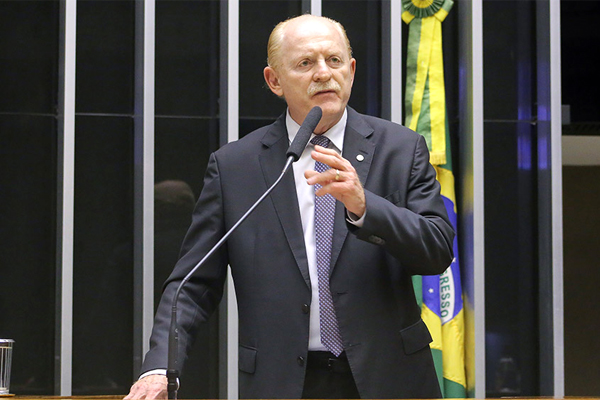
Representative Vermelho (PL-PR), who was part of the Working Group responsible for updating the Regulatory Framework for Games project, also defended the proposal.
“We had an important and significant vote in this House, which was about the regulation of gambling. We had foreseen—I am one of the ten members of the working group that presented the gambling bill in this House—the allocation of 8% of tax revenue specifically for healthcare. After a statement by our Leader Ricardo Barros in this House, together with the working group, we opted to allocate up to 20% of the taxes collected from the regulation of gambling, so that we could meet the needs of the SUS (Brazilian Public Health System), philanthropic hospitals, and municipalities, so that they can honor this fair salary, which is the national minimum wage for nursing. Our bill is stalled in the Senate. I hope that the Senators, urgently, when possible, now or as soon as the elections are over, will also do their part and vote on this gambling regulation bill.”
Someone might say, “But it takes time for a casino to be set up, and for the state to start collecting revenue.” But online gambling is happening. There are over a hundred international platforms. The illegal lottery game known as “jogo do bicho,” which will be regulated, is already happening. With all this, we are losing revenue. So, I make this appeal. I stand with this group, but we have to find a solution for this.”
The minimum wage for nurses is before the Supreme Court.
The National Confederation of Health, Hospitals and Establishments and Services (CNSaúde) filed a direct action of unconstitutionality questioning sections of Law 14.434/2022, which establishes a minimum wage for nurses, nursing assistants and technicians, and midwives. The minimum wage established in the law for nurses is R$ 4.750. Nursing technicians have a minimum of 70% of this value, and nursing assistants and midwives, 50%.
The reporting judge, Luís Roberto Barroso, of the Supreme Federal Court (STF), requested statements from Congress, the Presidential Palace, the Attorney General's Office (AGU), and the Prosecutor General's Office (PGR) regarding the Direct Action of Unconstitutionality (ADI). All opinions were contrary to the arguments of CNSaúde, with the exception of the PGR, which is expected to issue its statement by the end of this week.
ADI already has the support of several associations and employers' organizations linked to hospitals, all requesting to act as amicus curiae (interested parties in the case).

