
Fux signals his vote in favor of maintaining the criminal offense of gambling.
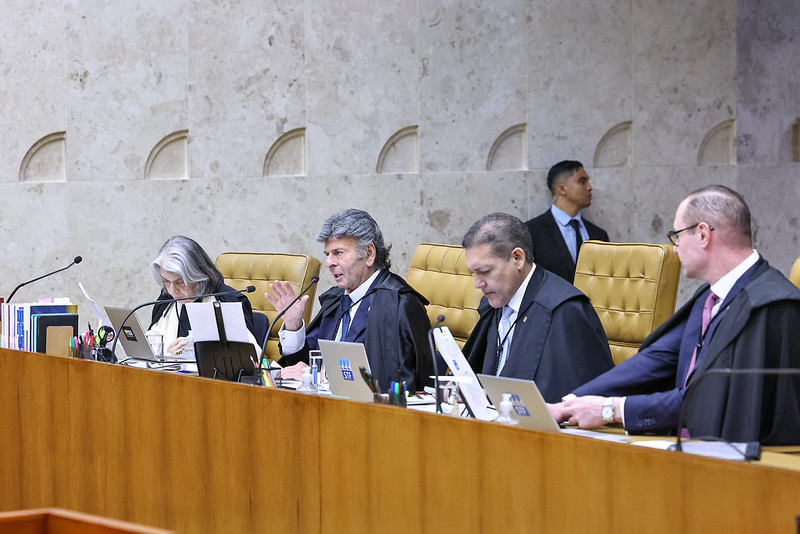
The Brazilian Supreme Court began, this Wednesday (August 5th), a trial that could redefine decades of prohibition: the plenary session began to analyze whether the criminalization of gambling, enshrined in a 1941 decree-law, withstands the test of the 1988 Constitution. The rapporteur, Minister Luiz Fux, presented the first part of his vote defending the validity of the norm, but the position has already encountered strong criticism from legal experts.
The legal precedent set by the Brazilian Supreme Court (STF) in Extraordinary Appeal 966177, registered under General Repercussion Theme 924, will directly impact 2.728 pending cases across all courts in the country. At the heart of the debate is a contradiction exposed by the judgment itself: the same state that criminalizes those who operate slot machines in bars in the interior of Rio Grande do Sul authorizes lotteries, regulates sports betting and online gambling, and collects taxes on these modalities.
Fux's vote and its premises.
In his opening statement, Justice Fux clarified the scope of the specific case: it is not about the conviction of a gambler, but of a merchant who operated slot machines in an establishment in São Leopoldo, Rio Grande do Sul. The Appeals Panel of the Special Criminal Courts of the state had acquitted the merchant, understanding that the 1988 Constitution made the criminalization of the activity incompatible. The Public Prosecutor's Office of Rio Grande do Sul appealed to the Supreme Federal Court (STF), leading to the judgment.
The rapporteur structured his defense of the norm around the principle of proportionality. According to Fux, criminal prohibition is necessary to protect fundamental legal rights, and the legislator has ample leeway to define criminal conduct, as long as constitutional parameters are respected. He argues that the prohibition was incorporated into the 1988 Constitution and that the incompatibility of criminal norms with the Constitution should only be declared in exceptional cases, when there is a visible violation of human rights.
The minister went beyond the abstract plane and cited examples of violence and the actions of criminal organizations in Rio de Janeiro, Mato Grosso do Sul, and Paraná to illustrate that gambling serves as a front for money laundering and financing drug trafficking. For Fux, speaking of freedom of initiative and economic freedom in the context of gambling means placing opposing concepts side by side.
According to him, gambling has reached a "galloping dimension" and generated disputes that "represent high levels of criminality." At this point, without mentioning names, Fux referred to the murders of the sons of illegal gambling bosses Castor de Andrade and Rogério de Andrade in Rio de Janeiro, in 1998 and 2010, respectively.
"Gambling has reached an unimaginable level, evolving to the extent of so-called 'bets,' which also have their effects, and these effects are very serious," said the reporting minister, who will conclude his vote this Thursday.
The trial was suspended after this first part; the rapporteur informed that he still had 16 pages of justification to present, and the conclusion of the vote was postponed to the session on Thursday (August 6).
After Fux concludes his vote, the other Supreme Court justices will express their opinions on the case. The order of the votes is from the most recent (Flávio Dino) to the most senior (Gilmar Mendes). The president of the Supreme Court, Edson Fachin, will speak last.
Voices in the plenary session
The statements heard by the court before the rapporteur's vote made it clear that the debate transcends the issue of the bar in São Leopoldo.
MPRS prosecutor Flávia Raphael Mallmann stated that free enterprise does not protect illegal activities and that the rule remains valid as an instrument for protecting public order, health, and dignity, especially of people in vulnerable situations.
The opposing position was held by Laerte Gschwenter, the lawyer for the acquitted merchant. According to him, the prohibition is incompatible with all fundamental rights enshrined in the 1988 Constitution, and the State has no legitimacy to criminalize the individual choice of a capable citizen exercising their free will.
The representative of the Federal Public Defender's Office, Gustavo Zortéa da Silva, proposed a specific cut: regardless of the conclusion regarding commercial exploitation, the gambler should not be punished. According to the Federal Public Defender's Office, the Law of Criminal Offenses stigmatizes gamblers by treating them as offenders, when gambling addiction should be treated as a public health issue.
The representative of the National Association of Mayors and Deputy Mayors, Alessandra Jirardi, added a pragmatic argument: since the State itself operates lotteries, there is no basis to claim that gambling offends morality. Municipalities, she said, are being deprived of the revenue that the activity could generate.
Brazil's Attorney General, Paulo Gonet, concluded the series of pronouncements on the side of criminalization. According to him, the existence of state-authorized gambling does not invalidate the Law of Criminal Offenses, and the spread of gambling without proper controls generates psychiatric risks and affects the national economy.
"Divorced from Brazilian reality"
The most direct criticism of the rapporteur's vote came from outside the plenary session. Régis de Oliveira, a professor at USP and former judge, considered Fux's position problematic at its core. "Minister Fux's decision is based on a formalist analysis and a theoretical construction of legal principles that, in practice, do not lead to concrete results. This reasoning, besides being subjective, proves to be divorced from Brazilian reality," he stated to BNLData.
According to Oliveira, the practical consequence of denying the Public Prosecutor's appeal is maintaining control of gambling in the hands of criminal organizations like the PCC and CV. The jurist's central argument is economic and based on public policy: "By legalizing the sector, the State transforms informal operators into taxpayers, replacing the payment of bribes with tax revenue." He estimates that the legalization of casinos, bingo halls, and the jogo do bicho (illegal lottery) could generate around R$ 20 billion annually, resources that, in his assessment, would be reinvested in health and education.
Oliveira acknowledges the rapporteur's reputation, but doesn't mince words in his vote. "Although Minister Fux is a worthy and competent magistrate, his vote is purely theoretical," he said. According to the professor, maintaining legislation from the Getúlio Vargas era ignores the modernization of customs and the global reality, in which sports betting already moves significant resources, some of which are sent abroad. "It is a legal contradiction to insist on absolute prohibition, ignoring individual freedom and the need for legislative modernization," he concluded.
Thursday's session (August 6th), at 2 pm, will define the path: Fux will conclude his vote, and the other ministers will be able to begin to express their opinions. What the plenary decides will apply to the 2.728 cases awaiting resolution, in addition to reaffirming the understanding about an activity that, as the debate itself made clear, already takes place in Brazil, with or without the blessing of the State.

