
The government could raise more than R$ 400 million from sports betting licenses.
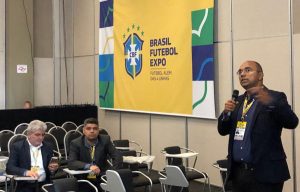
During the panel 'Sports Lottery and Football: Regulation and Sponsorship Opportunities', held last Friday (6), during Brasil Futebol Expo, organized by CBF, in São Paulo, the Secretary of Evaluation, Planning, Energy and Lottery of the Ministry of Economy – SECAP/ME, Alexandre Manoel announced several premises regarding the regulation of the Fixed Odds Sports Betting lottery modality.
The secretary presented an overview of the Union's lotteries and the regulatory process of Law No. 13.756, which legalized fixed-odds sports betting. Currently, with a population of 210 million, Brazil ranks 97th in per capita lottery betting sales.
Alexandre Manoel reported that the public consultation, which ended on August 31st, received 1.849 suggestions regarding SECAP/ME's choice of the 'authorization' system.
Draft of the regulatory decree
The representative from the Ministry of Economy informed that the draft decree regulating sports betting will be published on the SECAP/ME website in September, but added that the authorization fee proposed by the government will be R$ 3 million in a single installment, payable in full upon obtaining authorization to operate the lottery, renewable every nine years. Experts estimate that with the government's choice of the 'authorization' regime, it could collect more than R$ 400 million from licenses alone, as it is believed that more than 120 authorizations will be granted to operators.
In addition to the authorization fee, operators will have to pay R$ 20 monthly when the operation is carried out exclusively in physical form, R$ 30 when the operation is carried out exclusively in virtual form, and R$ 45 when the operation is simultaneously in physical and virtual (electronic) form. With these amounts and considering 120 authorizations, the government will collect more than R$ 3.5 million monthly, not considering other taxes such as income tax on premiums above R$ 1.903,98 and corporate income tax, PIS, Cofins, CSLL and ISS from the operating companies.
Another definition provided by Secretary Alexandre Manoel concerned the financial reserve. The operator must establish its own financial reserve of at least R$ 6 million, as a guarantee of its ability to pay prizes to bettors, as a preventive measure in case of insolvency of the legal entity.
Operators must provide the administrative and regulatory management structure with all information regarding match monitoring to ensure the integrity of the sporting event, as well as the certification of physical equipment (hardware) and computer programs (software) used by the operating agent and the validation of each bet placed.
The secretary also clarified that a regulatory oversight structure is being put in place with the implementation of a three-shift, uninterrupted on-call schedule (8 hours each) with a corresponding increase in the number of employees, from 18 to 24.
Amendment to the Fixed-Odds Betting Law by the National Congress
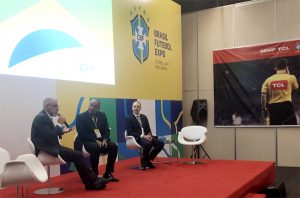
The Secretary of Evaluation, Planning, Energy and Lottery of the Ministry of Economy – SECAP/ME, Alexandre Manoel, reiterated the need to amend the Fixed-Odds Betting Law in the National Congress to improve its operation through three modifications: percentages, expired prizes, and criminalization of the conduct.
One of the proposals that could be submitted to Congress is the alteration of the percentages in the Physical and Virtual Environment with a tax regime of 1% of revenue, which would be equivalent to between 5% and 7% on the GGR (Gross Gaming Revenue): 99% to cover the operating and maintenance expenses of the operating agent; 0,1% for Social Security; 0,1% for educational entities; 0,1% for the FNSP (National Fund for Sports and Leisure); and 0,7% for sports entities in the football modality.
In addition to introducing rules for expired prizes, which were absent from Law No. 13.756, the proposal would also include criminalizing the conduct through imprisonment from one to five years and a fine for anyone who establishes, promotes, or operates any type of lottery without authorization. Furthermore, it would include imprisonment from two to eight years and a fine for anyone who defrauds, adulterates, controls results, or uses any means, manual or electronic, to manipulate the results or pays out prizes in violation of the law.
Considerations
At the end of the presentation, the Secretary of Evaluation, Planning, Energy and Lotteries of the Ministry of Economy – SECAP/ME presented three points:
– “Expected increase in lottery revenue of around 20 billion reais with the start of operations of Lotex and Fixed-Odds Sports Betting, more than doubling the current national lottery market;”
– “In other words, with the two aforementioned methods, the ratio between revenue and Gross Domestic Product should jump from the current level of 0,2% to 0,5% of GDP;”
– “Fixed-odds betting doesn't necessarily mean a large increase in resources allocated to the government: the goal is to curb illegality, promote the integrity of the sport, and improve the business environment.”
Panel suggestion
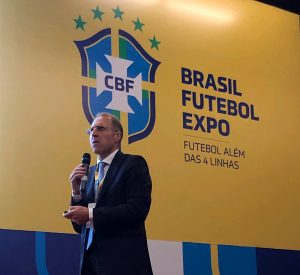
There is strong concern within the sector that, due to the need to amend Law No. 13.756, the processing of a bill in the National Congress will delay the regulation process and the start of sports betting operations.
One of the suggestions presented by the businesspeople participating in the panel, along with the president of the Global Lottery Monitoring System (GLMS) and sports betting consultant for the Oregon State Lottery, Ludovico Calvi, is that the government should immediately begin operating sports betting and submit the necessary adjustments to the National Congress afterward. Calvi cited the maturation of the operation in Italy and reported that several changes and adjustments to the legislation were necessary during the process.
Consultant Ludovico Calvi, who participated in the implementation of Italian sports betting legislation, gave a detailed presentation on the sports betting market and operations in various countries around the world.
According to Ludovico, casinos account for 34% of global bets, followed by lotteries with 27%. Next come slot machines with 22% and sports betting with 15%. Finally, there are bingo and other games with 2%.
Praise for Brazilian legislation.
Asked by the author of this column, who was moderating the panel, if Brazil was on the right track, Calvi answered affirmatively and added, "with adjustments to the tax system, Brazilian legislation will be the most modern in the world."

