
IAB approves opinion declaring unconstitutional the decree that prohibits casinos in the country.
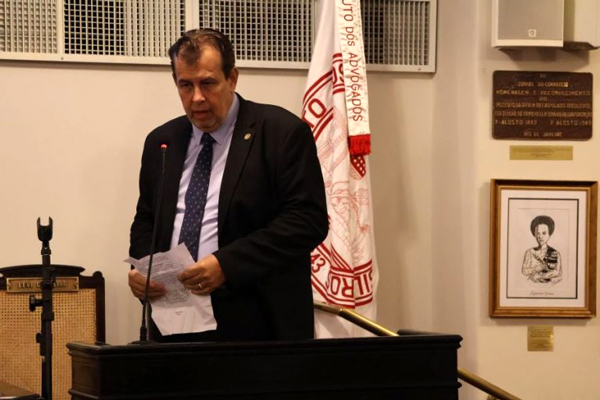
The Brazilian Bar Association (IAB) approved an opinion declaring Decree-Law No. 9.215/1946 unconstitutional. The law prohibits the operation of casinos and gambling in the country. The decision was made by a majority vote in a plenary session of the entity held this Wednesday (June 3).
The document was prepared by lawyer Paulo Horn, a member of the Constitutional Law Commission of the Brazilian Bar Association (IAB). The opinion establishes that the 1946 Decree-Law was not received by the 1988 Federal Constitution because it is materially incompatible with the current constitutional order, violating principles such as human dignity, private autonomy, free initiative, and economic freedom.
The rapporteur presented the technical arguments during the plenary session. Horn argued that the prohibition established eight decades ago contradicts constitutional principles. The Constitutional Law Committee highlighted that the pre-constitutional measure was enacted in a historical context of transition and of a contingent nature with the objective of prohibiting physical casinos. The lawyer cited free enterprise and economic development as principles violated by the old law, arguing that "the basis of the legislation reveals a normative choice founded on abstract value categories, historically situated and lacking sufficient legal density to legitimize the restriction of fundamental freedoms."
The rapporteur advocated for a transition to a formalized market. Horn argued that the current context demands rigorous regulation and oversight by the State. In the IAB's view, the solution lies in adopting a regulatory model focused on transparency, oversight, and user protection, especially given the controversies surrounding online betting and the resulting public debt.
Opinion questions the effectiveness of the prohibitionist model.
The commission also concluded that maintaining the absolute ban on casinos is not supported by modern criminal law theory. "The absolute prohibition of the activity does not identify a specific, concrete, and directly protected legal good that justifies criminal intervention," the opinion states. According to Horn, the prohibition constitutes a manifestation of "symbolic criminal law," incompatible with the principle of harm and with the constitutional limits of the state's punitive power.
Analyzing the practical effects of the policy, the report argues that the measure has failed: “The prohibitionist model has proven, over time, to be structurally ineffective, unable to eliminate the activity, but only to displace it underground and into informal and transnational environments.” The rapporteur added that this scenario results in a loss of state control, a lack of adequate protection for users, and the strengthening of parallel markets.
Another point highlighted by Horn is the recent evolution of Brazilian legislation on betting. The opinion notes that Laws 13.756/18 and 14.790/23 have come to recognize the legality of certain activities based on randomness, subjecting them to state oversight. According to the text, this normative evolution demonstrates "the progressive overcoming of the prohibitionist paradigm and highlights its structural incompatibility with the current constitutional order."

Disagreements mark debate at IAB.
The analysis of the report provoked extensive discussion among the members of the IAB. There were records of positions both for and against the document.
Dissenting votes expressed concerns related to the social impacts of the activity. Those who voted against highlighted the challenges related to oversight.
Members in favor of the text highlighted that the opinion provides a legal basis for the formalization of the sector. They cited the possibility of tax collection and the implementation of responsible gaming practices.
Attorney Roberto Brasil Fernandes used the podium to express his support for the rapporteur's conclusions. The jurist emphasized that overturning the rule enacted in 1946 is a necessary measure to ensure legal certainty and fiscal transparency in the country.
Brasil Fernandes' statement added technical arguments to the discussion. The lawyer addressed the compatibility of the old legislation with the current constitutional order.
The initiative stemmed from a proposal approved in March.
The initiative that resulted in the opinion originated from Recommendation No. 30/2026 , presented by lawyer Claudio Araújo Pinho. The proposal was approved by acclamation during the 41st Ordinary Session of the IAB, held on March 26, requesting the entity's constitutional law committee to analyze the compatibility of Decree-Law No. 9.215/1946 with the 1988 Federal Constitution.
After the initiative was approved, it was forwarded to the House Constitutional Committee, where lawyer Paulo Horn was assigned the role of rapporteur for the opinion. The document analyzed the legal basis for maintaining or not the prohibition of physical casinos in light of the 1988 Constitution.
The decision will inform debates in Congress and the Supreme Court.
The IAB Plenary ratified the opinion by majority vote after the discussions concluded and the vote was held. The position established by the institution will serve as technical input for discussions on Bill No. 2.234/2022. The proposal is currently being processed in the National Congress.
The understanding could also support the actions pending before the Supreme Federal Court on the matter. If approved internally by the IAB, the opinion could be forwarded to the Supreme Federal Court as technical support. The opinion establishes legal grounds regarding the incompatibility between the 1946 legislation and the constitutional principles established by the 1988 Constitution.
The institutional decision represents the technical position of a century-old Brazilian legal entity. The issue involves economic, tax, and state regulatory aspects. Experts point out that a possible position on the non-reception of the norm by the Constitution could pave the way for the regulation of the economic exploitation of physical casinos in the country. The document becomes part of the set of legal analyses available for the legislative and judicial debate on the regulation of casinos in Brazil.