Influencers from Ceará continue to promote illegal betting and defy federal ban.
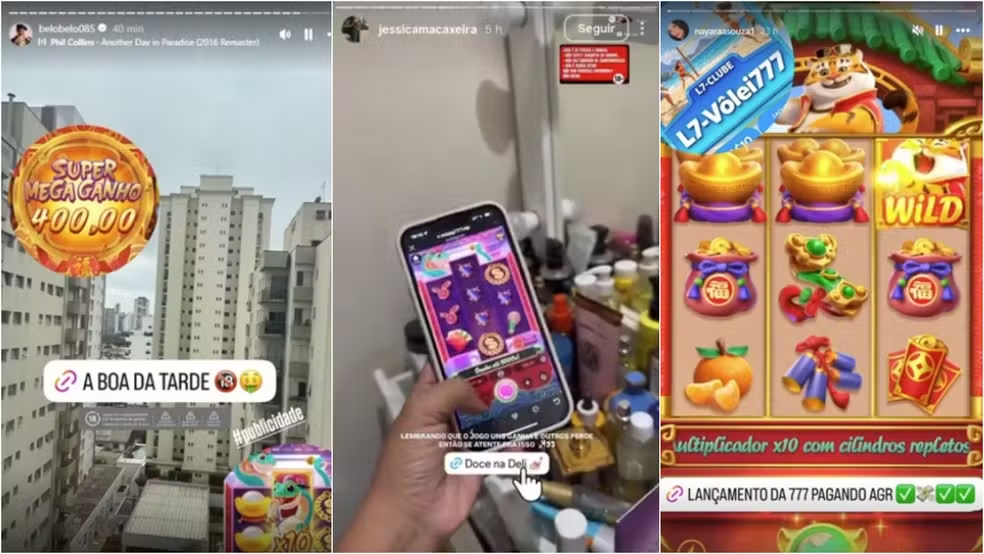
At least 40 digital influencers from Ceará continue to promote betting platforms and virtual casinos banned by the federal government. This promotion persists even after the entry into force of Provisional Measure (MP) No. 1.394, of Tuesday (September 25th), which prohibited the operation, offering, intermediation, and advertising of fixed-odds betting in Brazil.
G1 identified the profiles by accessing dozens of accounts belonging to influencers from Ceará between October 10th and 13th, a period after October 6th, when the betting sites ceased operating legally in the country. The posts explicitly promote the platforms through Instagram stories, on open profiles with thousands of followers and without any mention of the current ban.
Among the profiles caught are Nayara Souza, Italo Wendel (known as Belo Belo), and Jéssica Santos (known as Jessica Macaxeira), all with over 1 million followers on social media. Some of the posts link the influencers' own images to the platforms, with photos and videos accompanied by links to "little tigers," "bulls," "little bulls," and other gambling mascots.
Sanctions and draft law
The dissemination of information on these platforms does not constitute a crime under Provisional Measure 1.394, but it is classified as abusive advertising under the Consumer Protection Code, subjecting offenders to administrative sanctions. Lawyer Raquel Andrade detailed the range of possible punishments: “The administrative sanction is the starting point. These administrative and fiscal sanctions, possible fines, possible removal of the profile, possible removal of the advertising, possible claims for damages for moral and material harm caused, possible retroactive tax collection, administrative fines—all of this can be applied.”
According to Andrade, the instrument chosen by the government created a “sense of false impunity” among influencers. The lawyer went further, criticizing those who maintain their posts even in the face of reports of social harm: “An influencer who is not sensitive to news of suicides among young people, among workers, the fact that billions of reais are being taken from the budget for food, leisure, education, housing, and who, in the end, is only interested in profiting, because it is profiting from misfortune, profiting from the tragedy of others, I think that speaks more about the influencer than about the law itself, than about the norm itself.”
The federal government has submitted a bill to the National Congress to criminalize both the exploitation and advertising of gambling. The penalties foreseen in the text are;
⇒ Exploring or operating fixed-odds betting; imprisonment from 4 to 6 years and a fine;
⇒ Advertising bets or soliciting bettors; imprisonment from 2 to 4 years and a fine;
⇒ Using personal data to attract bettors; imprisonment from 2 to 4 years and a fine;
⇒ Financially facilitating exploitation; imprisonment from 2 to 4 years and a fine;
Providing an internet application for gambling; imprisonment from 2 to 4 years and a fine, with aggravating circumstances in certain situations.
Oversight and accountability
In a statement, the Ministry of Finance informed that the Secretariat of Prizes and Bets (SPA/MF) continuously monitors betting websites based on Provisional Measure 1.394. The agency described the process: upon identifying a website with a potentially illegal offer, the team confirms the irregularity and forwards the URL to the National Telecommunications Agency (Anatel), which then contacts internet providers to block it. In parallel, the SPA identifies the payment methods used and orders the blocking of financial accounts linked to the operation.
The ministry clarified, however, that the oversight of social networks and applications in online stores falls under the jurisdiction of the Ministry of Justice and Public Security. G1 contacted the ministry and the Federal Police; the Federal Police stated that it would not comment on its actions in combating gambling, and the Ministry of Justice did not respond by the time of publication.
Impact on mental health
Psychologist Magnum Freire warned that the promotion of illegal platforms by influencers can cause greater damage to mental health than that generated by regulated betting. According to him, in illegal environments there is no automatic referral of the user to support channels, rendering any search for treatment for gambling addiction ineffective and progressively isolating the individual.
Freire added that the stigma of illegality aggravates the situation; the player “develops extreme shame, hiding the problem from family and loved ones, until reaching total ruin,” which severely delays the search for therapeutic help. The psychologist also highlighted the role of influencers in the process; “When an influencer promotes illegal gambling, they are not just showing a website, a game, or an app. They are manipulating the brain of that potential person for behavioral shaping. The human mind tends to imitate and trust figures of authority or affection.”
Influencer's response
Jéssica Santos was the only one of the three identified influencers to respond to G1. She confirmed she was aware of the Provisional Measure, but justified maintaining the posts due to contractual obligations; “I am aware of the Provisional Measure, yes! But I had ongoing contracts that I needed to fulfill, and I have always valued responsibility and commitment to what I undertake. Therefore, I chose to fulfill my contractual obligations until the end, but I will not continue after these contracts.”
The influencer acknowledged the harm caused by gambling and advocated for policies to support people struggling with addiction; “I recognize how much gambling has harmed the lives of so many people and families. […] It’s not enough to prohibit it, we need to care for, support, and offer paths to recovery. We need measures that help these people break free from this cycle, with psychological support, treatment, and follow-up.” Nayara Souza and Italo Wendel did not respond by the time of publication.