
Digital influencers promoted an illegal scratch-off lottery scheme that sent 80% of the profits to a criminal organization in Mato Grosso.
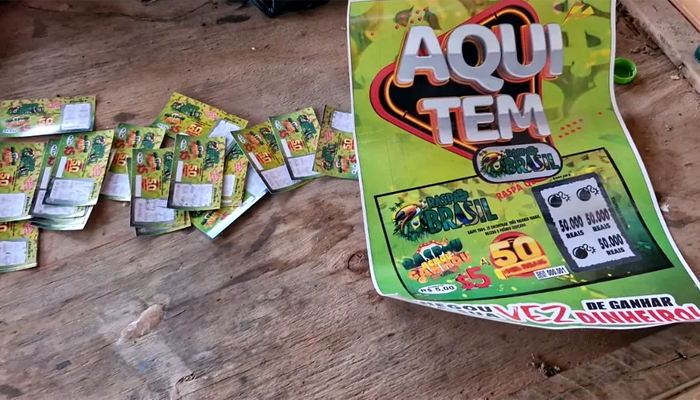
Digital influencers were promoting an illegal scratch-off scheme that sent 80% of the profits to a criminal faction in Mato Grosso, according to the Civil Police this Saturday (18). However, no identities were released, reports g1 Globo.
The scheme was dismantled in Operation Scratch Card of Crime, launched last Tuesday (14).
The scheme created by the criminal faction was uncovered by an investigation conducted by the Organized Crime Combat Management (GCCO) and the Specialized Organized Crime Repression Unit (Draco) of the Mato Grosso Civil Police, in conjunction with the Integrated Organized Crime Combat Force (Ficco).
The gang members set up regional hubs in the cities where the scratch-off tickets were resold, coordinated by the criminal group's own members, called "gang brothers," who were directly responsible for the points of sale, which were identified as "ghettos," according to the investigation.
Some of those involved in the scheme acted as digital influencers and small entrepreneurs, promoting the games on social media and spreading the false idea that it was a legitimate promotional campaign.
The police revealed a sophisticated hierarchical scheme, in which group members held key positions, such as distributing tickets to businesses to collect the proceeds, managing accounting, providing financial reports, and remitting the funds to the main group.
Regarding the actions of the "brothers," the investigation showed that they intimidated merchants or even activated the faction's "discipline" in case of non-compliance with the rules or threats to the progress of the scheme.
Thus, regional and local cells formed the territorial base of the criminal structure, ensuring its reach, profitability, and the maintenance of order imposed by the faction, according to the police.
How the scheme worked
The police discovered that the criminals divided the profits as follows:
⇒ 10% stayed with the local distributor (brother from the hood);
10% was passed on to the reseller merchant.
⇒ The remaining 80% was sent to the faction's financial core by the "brothers" who made the transfer to the designated "dummy" account after the monthly closing.
The first official publication of “Raspa Brasil” occurred on March 23 of this year, through an Instagram profile created specifically for the dissemination of the project. Shortly after, the profile began to have a large reach in the interior of the country.
To promote and expand their illicit activity, the criminal faction used digital influencers, including minors, who were recruited to advertise the lottery tickets on social media, creating a narrative of normalcy, luck, and financial success.
Several young people, with large numbers of followers on social media, were recruited by the criminal group to spread videos of alleged prizes, normalizing the practice and expanding the reach of the "brand" across the internet.
Merchants, bar owners, and distributors also played a role in promoting and expanding the product in the state.
A young influencer identified herself as a "representative" of the scheme, responsible for recording dozens of videos promoting the game and associating her image with the initiative. The idea was to avoid associating the games with the faction, and instead associate them with the influencer. This strategy allowed the group to grow rapidly.
Distribution and prizes
According to the police, the scratch-off lottery tickets were shipped via regular carriers, accompanied by fake shipping documents to disguise the contents of the packages. Each ticket was sold for R$ 5, with promises of prizes up to R$ 50.
Prize payments were made via a QR code, which directed winners to a WhatsApp number where direct communication took place to claim the supposed prizes.
Despite the promised amounts, no prize exceeding R$ 100 was found among the material seized during various actions and operations by the Civil Police.

