
Legal gambling: Casino legalization advances, and hotels are already planning investments.
The legalization of all forms of gambling in Brazil has become a priority in Congress. The president of the Tourism Commission of the Chamber of Deputies, Newton Cardoso Júnior (MDB), submitted a formal request to the president of the House, Rodrigo Maia (DEM), for this proposal to be voted on by September of this year. Bill 442/1991 combines approximately 20 existing gambling regulation proposals in Congress and will allow the establishment of casinos in several Brazilian cities, including at least nine in Minas Gerais. Even before its approval, hotel industry entrepreneurs are already planning multi-million dollar investments to reactivate gambling establishments in the state and generate jobs.
“We made an agreement with Rodrigo Maia to focus on this issue, which we consider fundamental for the development of tourism in Brazil, since it will increase the number of visitors, job creation and, consequently, the country's economy,” says the congressman. The current proposal under debate benefits Minas Gerais because it guarantees that cities with mineral water resorts and that have hosted casinos in the past can have gambling establishments. “Minas Gerais will be the most benefited state because it has the largest number of municipalities that fit this rule,” says the president of the Brazilian Institute of Legal Gaming (IBJL), Magno José Santos de Souza.
Established in 1942, the Palace Hotel in Caxambu, in southern Minas Gerais, housed a casino until 1946, when gambling was banned in the country. The owner, José Perez Gonzalez, eagerly awaits the legalization of gambling to reopen the roulette tables. He plans to invest R$ 50 million to adapt the structure and hire 190 more employees, increasing the current workforce from 60 to 250. He believes the return on investment will come in the medium term. "We currently have an occupancy rate of 25%. I think we can reach 80% with the casino," he states.
Marco Aurélio Lage, the current manager of the Hotel Brasil in São Lourenço, in southern Minas Gerais, sees the legalization of gambling as an opportunity to relive the stories he grew up hearing. And, as a bonus, increase the occupancy rate from the current 40% to 90%. “My grandfather, João Lage, opened the hotel in 1917. Casinos were officially opened in Brazil in 1920. At the time, all the hotels were full, many tourists came from abroad. With the prohibition, we lost ground to other Latin American countries,” he says. To “get ideas” for the investment, he visits casinos in other countries twice a year.
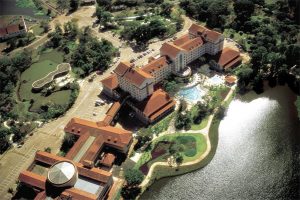
The Tauá Grande Hotel e Termas de Araxá, which was one of the most luxurious gambling establishments in the country, will also reopen to gamblers, according to the group's president, Daniel Chequer Ribeiro. In this case, the idea is to establish partnerships. “We are very interested in reopening a casino there, and I think we can get the project approved in a maximum of two years. We are considering partnering with an outside group to make the investment viable,” he explains.
State revenue would increase by R$ 2 billion.
The return of gambling in cities in Minas Gerais would represent a tax revenue of R$ 2 billion per year and the generation of approximately 18 direct jobs, according to the president of the Brazilian Institute of Legal Gambling (IBJL), Magno José Santos de Souza.
“The games can still bring a lot of development to the cities where they will be located. Just to give you an idea, I estimate that the municipalities will share a pie of R$ 100 million a year in taxes. In times of crisis, that makes a big difference,” he says.
According to Souza, only Brazil, Ecuador, and Cuba prohibit casinos in all of the Americas. “There is no plausible argument for this prohibition. Gambling has very high taxation to be used for money laundering. It's much better to use other activities. Furthermore, pathological gamblers already gamble, because gambling never ceased to exist with the prohibition. It's the country that stopped collecting revenue from the activity,” he states.
According to data from IBJL, Brazil has more than 600 gambling establishments, hundreds of which are in Minas Gerais. In addition, the country has at least 150 illegal casinos, dozens of which are located in cities in Minas Gerais.
Learn more about the project
What could be approved : All games of chance: casino, bingo, federal and state lottery games, jogo do bicho (illegal lottery), fixed-odds betting, and electronic betting.
Where casinos are allowed : States with a population of up to 15 million will have one casino. Those with a population between 15 million and 25 million, such as Minas Gerais and Rio de Janeiro, may have two. Those with more than 25 million inhabitants may have three. Only São Paulo has this population size.
Mineral Water Resorts : What will allow Minas Gerais to have more casinos is the amendment that gives cities with mineral water resorts that previously had casinos the right to reactivate old gambling establishments.
Where were the casinos in Minas Gerais in the past?
Araxá : It had the casinos of the Grande Hotel and the Araxá Casino.
Belo Horizonte : It had the Pampulha Casino, where the Pampulha Art Museum is currently located.
Cambuquira : Elite Casino
Caxambu : João Carlos Grand Hotel and Casino
Conceição do Rio Verde : It had a casino.
Lambari : Lake Casino
Poços de Caldas : It was considered the Brazilian Vegas with more than 20 casinos. Casino Ao Ponto, Casino Antigo, Casino Gibimba, Casino Imperial, among others.
São Lourenço : It once had eight establishments of this type, such as the Hotel Brasil (which still exists today). Source: IBJL. ( O Tempo – Tatiana Lagôa)

