
Federal Court orders Attorney General's Office to explain how authorized betting sites caused harm to the Brazilian public health system (SUS).
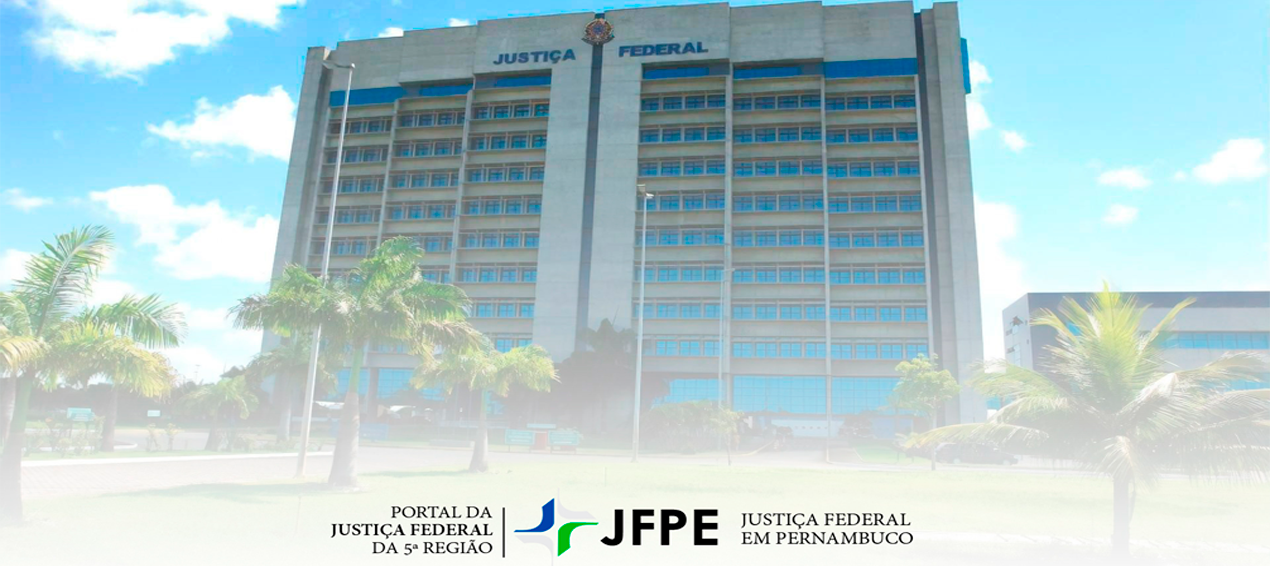
The Federal Court in Pernambuco has ordered the Brazilian government to amend the initial petition in the public civil action filed by the Attorney General's Office (AGU) against 17 fixed-odds betting operators. In the ruling, Judge Helio Silvio Ourem Campos, of the 6th Federal Court of Pernambuco, gives the government 30 days to clarify, "objectively," how the activity of the authorized companies (Betano, Bet365, Superbet, Sportingbet, Esportes da Sorte and Onabet, Blaze, Betnacional, Estrelabet, 7K and Cassino, 7Games and Betão, Vaidebet, H2 Bet, Pixbet, Novibet, Bullsbet, Betfair and KTO) allegedly caused the losses to the Unified Health System (SUS) pointed out in the action.
The decision was signed on Tuesday (September 29th), one day after the lawsuit was filed (case no. 0074433-17.2026.4.05.8300). The Attorney General's Office (AGU) is requesting reimbursement for SUS (Brazilian Public Health System) expenses related to gambling-related injuries over the past five years, as well as future expenses. It is also requesting compensation for collective moral damages of at least R$ 1 billion and double restitution of the amounts wagered by people diagnosed with gambling addiction. The request for an injunction has not yet been reviewed.
Six unanswered questions
The judge acknowledges that the petition presents the general grounds for the request and refers the quantification of damages to the liquidation phase. Even so, he considers clarifications necessary "for a better delimitation of the object of the claim" and for the proper formation of the adversarial process. The Union will have to provide the following information:
⇒ What health problems are covered by the request and how will they be identified?
Which public expenses do you want to reimburse, and does this include only direct spending by the federal government or also federal transfers to states and municipalities?
⇒ What data sources, administrative databases, budget lines, or systems will be used to verify the costs?
⇒ How do you intend to apply the Population Attributable Fraction (PAF) in practice, using epidemiological and temporal parameters?
⇒ What objective criteria will be used to individualize the responsibility of each operator, especially based on market share theory?
⇒ What is the exact period covered by the request, including any potential future damages?
The cigarette in the bets play
The ruling also includes a noteworthy stipulation. The judge orders the Federal Government to correct any reference to "diseases attributable to cigarettes" that appears in the initial petition and to clarify whether it was a mere clerical error.
The mention reinforces the interpretation that the action was structured based on the model used against the tobacco industry. The Population Attributable Fraction, for example, is a classic epidemiological tool for estimating the proportion of diseases caused by smoking. In 2019, the Attorney General's Office itself sued cigarette manufacturers seeking reimbursement for the Brazilian Unified Health System (SUS).
What does this mean for the sector?
The issues raised by the judge are precisely the weakest points of the case: proving the causal link between the operation of licensed companies and the expenses of the SUS (Brazilian Public Health System), and separating what is the responsibility of each operator. The Attorney General's Office (AGU) cited preliminary studies by the Ministry of Health that point to a minimum loss of R$ 2,6 billion to the SUS. Now it will have to show where the numbers come from and how they will be calculated. This is the same methodological demand that BNLData has been making regarding the estimates of "losses" attributed to the betting companies, as in the case of the IEPS study.
The report itself states that the defendants are "regularly authorized by the Prizes and Betting Secretariat of the Ministry of Finance." It also states that the Union affirms it does not intend to declare the activity authorized by the State illegal.
After the amendment is presented, the case returns to the judge, who will then decide on the next steps, including the request for an injunction.
Ruling by Judge Helio Silvio Ourem Campos, of the 6th Federal Court of Pernambuco.

