
Legalization of casinos is ready to be voted on in the Senate.
Amidst back-and-forth discussions, the Brazilian National Congress is attempting to put the legalization of casinos in Brazil on the agenda, a debate that spans generations and still sparks strong disagreements. The proposal under discussion envisions the regulation of gambling in integrated tourist complexes—known as casino resorts—with hotels, convention centers, and entertainment venues. According to its proponents, the measure could transform the national tourism sector and increase tax revenue. Critics, however, point to risks such as the expansion of gambling addiction, family debt, and the possibility of the sector being used for illicit activities.
Brazil once had a casino era. Between the 1920s and 1940s, luxurious gambling houses thrived in cities like Rio de Janeiro, Petrópolis, and Poços de Caldas. Renowned artists performed in these halls, and the sector was seen as a symbol of sophistication. This reality changed in 1946 when then-President Eurico Gaspar Dutra signed a decree prohibiting the activity, citing moral and religious reasons. Since then, only federal lotteries and, more recently, sports betting have operated legally.
In the international arena, currently, of the 197 member countries of the UN – United Nations Organization, 75,52% have already legalized gambling. Brazil is among the 24,48% that have not yet regulated the activity. Even so, around 200 Brazilians travel annually to gamble abroad, generating income and jobs outside the country.
What is at stake
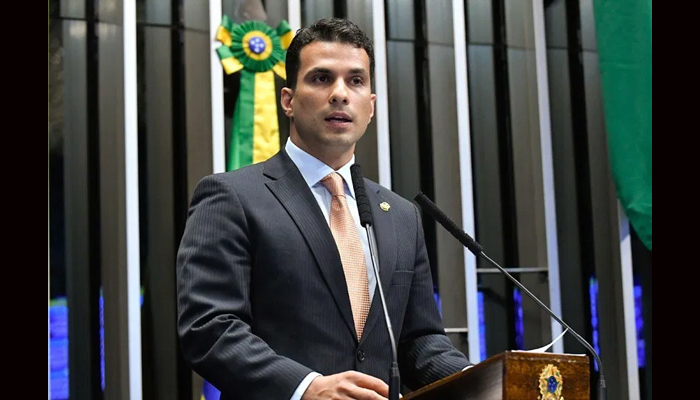
The bill under analysis, PL 2.234/2022, authored by Federal Deputy Renato Vianna (MDB/SC), authorizes the installation of casinos in integrated resorts, with a limited number per state and strict concession rules. Taxation of the activity would be significant: part of the revenue collected would go to public coffers, destined for areas such as health, education, and security. Furthermore, there would be transparency requirements to combat crimes such as money laundering. According to Senator Irajá (PSD/TO), the bill's rapporteur in the Senate, it is ready to be voted on in the plenary session. "The text we reported on is balanced, includes safeguards, control mechanisms, and is inspired by international best practices. The bill has already completed all stages in the committees, passed through the Chamber of Deputies, and is now in the hands of the President of the Senate, Davi Alcolumbre, to decide the best time to schedule the matter and promote debate in plenary," he says.
Furthermore, according to the Senator, this current moment is ideal for the processing of Bill 2.234/22. “Brazil has been living for decades with gambling and bingo operating 'in the shadows,' without revenue collection, without oversight, and without protection for citizens. In other words: gambling already exists, but outside the law. Regulation is the correct way to bring security, generate jobs, and increase revenue at a time when the country needs investment,” he emphasizes.
Studies presented by parliamentarians estimate that legalization could generate more than R$70 billion per year and create around 200 direct and indirect jobs. Neighboring countries such as Uruguay and Argentina are already reaping economic benefits from the sector, while the United States, Portugal, and Macau, in China, are examples of global hubs for integrated gaming and tourism.
According to Alexandre Sampaio, President of FBHA – Brazilian Federation of Lodging and Food, the benefits of legalization would be immediate. “With investments in practically all capital cities. But let's not be fooled, it wouldn't be large resorts that would be established, but rather bingo halls, because in the final vote in Congress there could be modifications and mergers of the Bills,” he states.
Bruno Omori, President of IDT-CEMA, defends the thesis of the macroeconomic impact of the approval of Bill 2.234/22. “It will, a priori, allow for the insertion of approximately 70 billion dollars in national and international investments, which will directly activate the real estate, construction, furniture, decoration, technology, and industrial markets. Following that, it will involve the qualification of professionals through academia and educational institutions, leading to operations and boosting Brazil as a destination with its 52 tourism segments, including hotels, gastronomy, events, culture, transportation, shows, and commerce in general,” he says.
Tourism

For the tourism sector, casinos could represent a new milestone, as Brazil has the potential to become one of the main destinations in Latin America for entertainment tourism. The expectation is that cities like Rio de Janeiro, São Paulo, and Foz do Iguaçu could receive significant foreign investment.
At a hotel industry event in June 2025, the IJL – Brazilian Legal Gaming Institute highlighted the potential economic impact that casino hotels could have: they would employ around 3,2 people per room (compared to 0,6 to 1 per room in conventional hotels).
FHORESP – the Federation of Hotels, Restaurants and Bars of São Paulo – estimates that the approval could attract up to US$70 billion in investments, generate 10 direct and indirect jobs, and raise approximately R$20 billion annually.
According to Senator Irajá's analysis, the hotel industry is one of the sectors that would benefit most from legalization, as resorts integrated with casinos would function as major tourist and business attractions. "The federal government estimates a 20% increase in the current 214 jobs related to tourism if gambling is legalized, in addition to a 1,2% growth in tourism's share of GDP. Currently, the tourism sector represents 8% of the Gross Domestic Product. With our natural vocation for tourism, studies indicate that legalization could attract R$ 44 billion in private investment in the first five years, generate approximately 650 jobs, and add R$ 20 billion per year in tax revenue," he states. This movement, according to him, is directly reflected in the hotel industry: higher occupancy rates, new ventures, increased event and business tourism, and strengthening of the entire chain of bars, restaurants, transportation, and commerce. "In other words, casinos would be engines for a new wave of growth in the Brazilian tourism and hotel sector," says the rapporteur of the bill in the Senate.
According to Magnho José, President of the IJL – Brazilian Institute of Legal Gaming, estimates indicate that the legalization of land-based gambling could generate approximately R$ 20 billion per year in taxes for Brazil. “Furthermore, the bidding process for casino resorts and tourist establishments should generate between R$ 7 and R$ 10 billion in concessions. As a reference, licenses for sports betting and online gaming raised almost R$ 3 billion for 80 authorizations, leading to the prediction of at least R$ 8 billion from casino concessions alone,” he informs.
The Brazilian Legal Gaming Institute estimates that there are currently around 350 professionals working in unregulated gambling in Brazil. With the approval of Bill 2.234/22 – which provides for the legalization of 61 casinos (27 tourist casinos and 34 resorts), in addition to bingo halls and the jogo do bicho (illegal lottery) – this number could reach 500 direct jobs. Considering also the production chain (tables, cards, furniture, carpets, curtains), the total number of direct and indirect jobs would reach approximately one million.
The legalization of casinos in Brazil could generate a significant positive impact on the hotel industry, with the forecast of 27 tourist casinos in already established lodging regions. “Examples like Olímpia, with 30 rooms, and Araxá, with the Grande Hotel Araxá, show the potential to revitalize areas and stimulate the entire service chain. Casinos don't attract tourists on their own, but they act as a decisive factor in choosing a destination and extend stays by offering diverse entertainment options,” says Magnho.
According to Bruno Omori, the greatest potential for attracting casino and bingo investors/operators lies in creating partnerships with capitals of smaller states, metropolitan business cities, and tourist cities. "Especially by creating synergies with existing tourism ventures such as resorts, farm hotels, and theme parks, with opportunities in all 27 states of Brazil," he says. The results of establishing casinos integrated with resorts, tourist casinos, and bingo halls are projected to generate millions of jobs, billions in taxes, and create numerous synergistic opportunities for Brazil's economic growth. "Gambling enhances tourist destinations, provides differentiated entertainment, generates millions of jobs, and positively impacts the economy," he concludes.
Betting vs. legalization of casinos
Online betting and gaming companies, known as "bets," grossed approximately R$ 17,4 billion in the first half of this year. Despite all the criticism they receive, mainly due to the gambling addiction they cause, they have managed to be regulated. But why is the legalization of casinos facing so much resistance? "Recently, the Minister of Finance, Fernando Haddad, said that the approval of online betting and the delay in regulating land-based betting is a 'reversal of priorities.' This is an accurate statement. Unlike online games, where all you need is a cell phone to access them, casinos are physical, in specific locations, with restricted entry. It's a much more controlled activity. I believe that the media appeal of sports betting and the exponential growth of the sector made the regulation of this market inevitable. Casinos, on the other hand, still carry a historical stigma, the result of prejudice and a vision that doesn't reflect global reality. Today, more than 70 countries allow integrated casino resorts, including established democracies like the United States, France, and Canada," reveals Senator Irajá.
According to Magnho José, the approval of online gambling in 2018 stemmed more from parliamentarians' lack of knowledge about 'fixed-odds betting' than from in-depth debate. "At the time, the Ministry of Finance proposed the provisional measure to generate resources for the Ministry of Justice and Public Security, and a conservative Congress approved it without difficulty," he states. "I believe that the federal government, in legalizing betting, aimed for immediate revenue, forgetting that informal gambling continues on the internet and the authorities are unable to curb it; hence perhaps the fear of legislation regarding casinos, bingo halls, and slot machines," says Alexandre Sampaio.
Regarding betting, Bruno Omori states that there are opportunities for the hotel market, such as the creation of Sport Bars in hotels in partnership with regulated and legal online gaming companies, creating a new differentiated point of sale, with new revenue share and increased audience and consumption of food and beverages. "And with State and Municipal Lotteries, there's a chance to have projects that can create new, differentiated, high-standard points of sale in destinations, with the law approved, and with strategic partnerships with international lottery operators with expertise in the hotel market," he emphasizes.
According to lawyer Victor Labate, from the Davi Tangerino Advogados law firm, the regulation of betting was a pressing need, given that any legislative omission led to the then-current scenario of a proliferation of unregulated operators who had no interest in assisting investigative authorities, much less in treating their clients with responsible gambling practices. "However, the success of this strategy has not yet been replicated for casinos due to pressure from representatives of the evangelical caucus in Congress," he states.
Control and strategies
For a long time, casinos and gambling in general have been associated with the stigmas of addiction and organized crime. According to Victor Labate, currently, with the advancement of control and supervision activities by government agencies aimed at preventing money laundering – COAF (Council for Financial Activities Control), the Federal Revenue Service, and the Ministry of Justice – there is a feeling that we are in a safer scenario for the resumption of casino activities in Brazil. “What we have observed with the legalization of betting is the legal and institutional maturation of the bodies involved in combating criminal activities that may surround sports betting. Unlike the strategy of criminalizing gambling, which ends up generating monopolies of exploitation by criminal organizations, legalization recognizes the risks inherent in the commercial activities developed and addresses them to the competent authorities and the casinos themselves. Finally, the exploitation of these activities generates revenue for the Union as a consequence of its taxation. Between January and May of this year alone, betting had already collected almost R$ 3 billion for public coffers,” he tells us.
Criticisms and risks
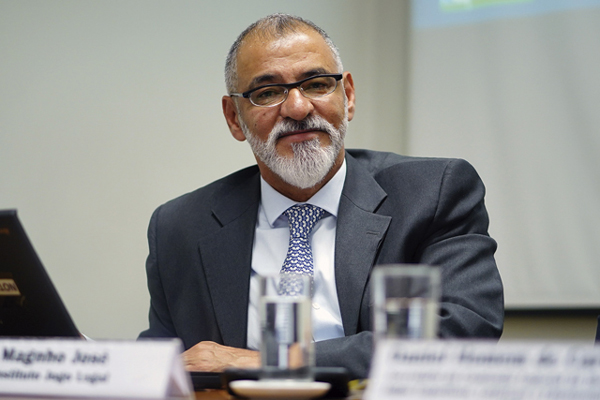
Despite economic optimism, health experts and religious organizations warn of the social impacts. According to data from the WHO – World Health Organization, about 2% of the world's population suffers from disorders related to compulsive gambling. Critics argue that legalization could exacerbate this problem in Brazil, particularly affecting people in economically vulnerable situations. Furthermore, financial oversight bodies point to the risk of casinos being used for money laundering, despite the safeguards foreseen in the bill. “Money laundering in casinos and gambling is a myth and a narrative constructed by opponents of legal gambling. The Bill provides for a cashless system (bets only via PIX), mandatory CPF registration, and notification to COAF for amounts exceeding R$ 10, guaranteeing total control over who bets and effectively preventing the use of the activity for money laundering,” says the President of the Legal Gambling Institute.
According to Alexandre Sampaio, as the federal government distributes concessions and oversight responsibilities to states and municipalities, it relinquishes power and all the implications that entails. “Even if the control of prizes and bets can be done solely through credit cards, we have numerous interacting entities, which could allow organized crime to infiltrate disguised as legitimate businesses. Even the arrival of structures from abroad wouldn't guarantee that money laundering wouldn't occur. There is currently a lack of control and monitoring policies for the scale this will require,” he analyzes.
Historically, betting houses and casinos have been targeted by criminal organizations due to their capacity to handle large volumes of money. “Thus, even if these establishments operate within legal limits, they may be exposed to money laundering risks from clients who, seeking to give a legitimate appearance to a certain amount obtained through crime (as a quid pro quo for an act of corruption, for example), bet these amounts on games or tables at the establishment,” points out Victor Labate. Often, the result doesn't even need to be financially positive, so the small amount of money won through betting can be disguised and declared as if it came from a legitimate source, for later use in the formal economy, such as for the acquisition of assets and payment of debts. “In Japan, there are current records of casinos and online betting sites managed by groups related to the mafia, with the intention of using these places to launder money from criminal activities, such as drug trafficking,” adds the lawyer.
Legal point of view
Victor Labate tells us that by linking the legalization of casinos and other gambling games to rules for preventing money laundering and reporting suspicious transactions to COAF (Council for Financial Activities Control), it is possible to affirm that Bill 2.234/2022 has more merits than flaws. According to the lawyer, as is expected from the regulation of any activity with a high risk of exposure to money laundering, the economic entity exploiting the risky activity will be expected to develop and implement a money laundering prevention policy that includes internal rules for the reliable identification of its clients; the risk profile related to the services provided by the operator; mechanisms for capturing suspicious transactions; and subsequent reporting of these suspicious transactions to the intelligence agency. "The merits of the Bill also extend to points such as the prohibition of commercial advertising of games and bets, as well as determinations for operators prohibiting the advance payment of funds to clients or the formation of agreements that facilitate obtaining credit for bets," he informs.
Labate's main criticisms of the Bill refer to the new crimes it intends to institute, such as fraud in the outcome of a game or bet, which provides for a penalty of four to seven years for anyone who defrauds, adulterates, conceals, or directs the outcome of a game or bet, by any means or form, or pays out its prize in violation of the law. "It is a relatively high penalty and, due to the breadth of the terms used, it does not provide security or clarity as to what is protected by this rule or even in relation to how this crime can be committed," he points out.
Political perspectives
The project still faces resistance in Congress, where religious and conservative groups are working against the proposal. Some lawmakers argue that the priority should be strengthening the regulation of sports betting, which is already legal, before moving on to gambling in casinos.
However, there is also pressure from business and tourism sectors, which see the issue as an opportunity to boost economic growth in a scenario where new sources of revenue are needed. “There is a conservative component, yes, but I believe the biggest obstacle is still the lack of information. Many parliamentarians are unaware of the positive economic impacts of the measure and end up reproducing old prejudices. When we show concrete data, international examples, and the control mechanisms that the project establishes, support increases. It's a pedagogical and persuasive process,” reveals Senator Irajá.
According to Magnho José, the main obstacle to the legalization of land-based casinos and bingo halls today comes from an even more conservative Senate with a strong religious bloc, mainly evangelicals. “The real problem isn't legalized gambling, but unregulated gambling, which causes social harm. The most relevant benefit of regulation is protecting the citizen who gambles, in addition to tax gains, job creation, and investment,” he points out. Furthermore, according to Magnho, despite the image of a 'liberal' country due to football, beaches, and Carnival, Brazil is conservative, which is reflected in a Congress resistant to the legalization of gambling. “While in the rest of the world casinos are treated as an economic activity, in Brazil they are grouped together with issues like abortion, drugs, and same-sex marriage, which hinders and harms the regulation of the sector,” he adds.
The future
The latest DataSenado survey, conducted in March of this year, shows that 60% of Brazilians are in favor of legalization, provided it is accompanied by clear rules, transparency, and mechanisms to combat addiction and money laundering. "This popular support needs to be considered in the debate," concludes the rapporteur of the bill in the Senate.
Bill 2.234/22 is considered complete and well-written, aligned with international best practices, according to Magnho José. “It meets the demands of the State, society, and bettors, introducing modern control mechanisms to prevent money laundering and protecting problem gamblers through exclusion measures. The proposal has already been approved in the Chamber of Deputies and the Senate's Constitution, Justice and Citizenship Committee, and is only awaiting approval by the Senate plenary. After approval without changes, it will go to President Lula for his signature, who has already stated in interviews that if Congress legalizes it, he will sign it,” he concludes.
According to Alexandre Sampaio, in a country where there are deficient public policies for infrastructure and excessive spending on social programs with an electoral focus, "reconciling the expected economic benefits with the need for public policies is a social and legal security challenge," he says. "I think the debate should be broad, taken to the State Legislative Assemblies as well, because the more light is shed on the subject, the better," he concludes.
According to Bruno Omori, after the law is enacted, hotel developments will need to partner with a casino operator, submit a project to the gaming commission or the National Gaming Agency (which is to be created), and pay the concession fee. If approved, this fee will allow for the construction or adaptation of the casino, and then the start of operations. "We will see a transformation in the Brazilian hotel market, a large influx of investors, and a strengthening of demand from both domestic and international tourists," he states.
According to Victor Labate, the alternative to legalization is criminalization, a strategy that has been in place for over eighty years without any apparent positive results. "In truth, the result of this strategy has been the creation of a state monopoly for the exclusive exploitation of betting activities by criminal organizations, generating revenue that finances other activities carried out by these organizations, such as paying bribes to officials, acquiring firearms, etc.," he says.
There is still no date set for the plenary vote on the proposal. The federal government is monitoring the process, but remains cautious publicly to avoid exacerbating internal divisions. Meanwhile, the legalization of casinos continues to be a topic that sparks both expectations of progress and deep social concerns, a dilemma that Brazil will still have to face. ( With information from Revista Hotéis )

