Lula bets on video games and forgets that they can also be addictive.
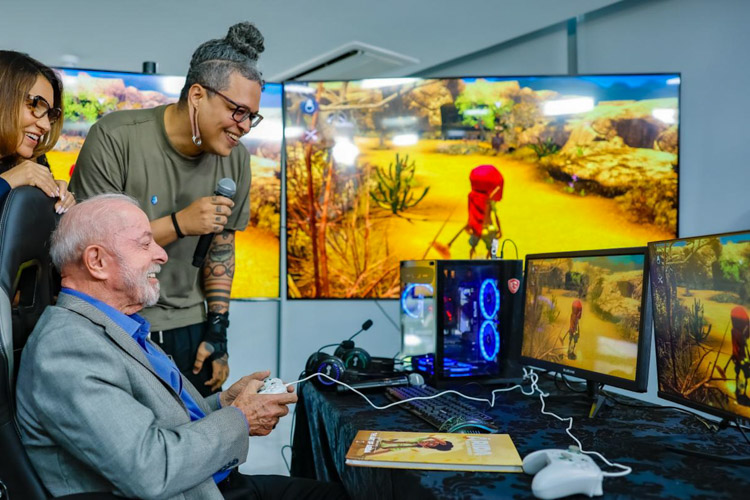
On Wednesday (14), President Lula signed, at the Planalto Palace, Decree No. 13.138/2026, which regulates the Legal Framework for the Electronic Games Industry (Law No. 14.852/2024). The package was named “Develop Gamers Brazil”. It provides for promotion via Ancine and the Audiovisual Sector Fund, an initiative called Rouanet Games, simplification of registrations at INPI and a public platform, Game Brasil, to promote national games.
The ceremony had a specific target audience: young people, three months before the end of his term and in the midst of an election campaign. The same government that, weeks earlier, issued a provisional measure to prohibit fixed-odds betting now presents video games as a healthy, creative, and innocent universe. The contrast does not withstand serious analysis.
We've seen this movie before.
The betting industry knows the script well. The government called on entrepreneurs to invest in Brazil, charged R$ 30 million for each license, demanded headquarters in the country, certified technology, and responsible gambling rules, and collected revenue from it. Then, it pulled the rug out from under them. The companies that complied with every requirement of Law 14.790 became the villains in the presidential discourse.
Who can guarantee that the gaming industry, celebrated today in the Presidential Palace, won't suffer the same fate when political expediency changes?
The government itself knows that video games have a gambling mechanic.
The most eloquent contradiction comes from the Esplanade itself. On Tuesday (13), a day before the ceremony, the Ministry of Justice sent a technical note to the National Data Protection Agency (ANPD) requesting the inspection of six games with loot boxes, reward boxes paid with random prizes. According to the ministry, these games expose children and adolescents to risks similar to those of gambling.
The article links the purchase of these boxes to problematic gambling, depression, anxiety, impulsivity, and financial harm. The games are rated for ages 18 and up, but do not verify the users' age. In practice, children are able to pay for random prizes.
Another note from the Ministry, prepared in cooperation with UNESCO, goes further. It identifies commercial practices in the video game industry similar to gambling, including betting with virtual items, and links them to gambling disorder, the same pathology that the government attributes to betting.
Congress has also recognized the problem. Law No. 15.211/2025, the Digital ECA (Statute of the Child and Adolescent), prohibits loot boxes for minors. In other words, the Brazilian State has already classified this mechanism as close to gambling. Only the presidential discourse has not yet realized this.
The father's card
The risks are not abstract. In Brazil, an 8-year-old boy, the son of a businessman, spent around R$ 40 in three days buying coins and cosmetic items in Free Fire and Roblox, using the card registered on his cell phone. In Goiânia, a mother only discovered that her son had used her credit card on Free Fire after resorting to the courts.
Cases like this are repeated throughout the country. These are in-game purchases, season passes, and skins, designed to encourage continuous consumption, often by those who are not yet old enough to understand the value of money.
The world is already suing the industry.
International experience dismantles the narrative of innocence:
⇒ United States, Valve: New York Attorney General Letitia James has sued Valve, owner of the Steam platform, for promoting illegal gambling through loot boxes in Counter-Strike 2, Dota 2, and Team Fortress 2. According to her, the company "made billions by allowing children and adults to illegally gamble" for virtual prizes, in a feature that is "addictive, harmful, and illegal."
⇒ United States, Epic Games: the creator of Fortnite reached a $520 million settlement with the FTC, the American consumer protection agency. Of that total, $275 million was for violating the Children's Privacy Act, the largest fine ever imposed under this law. The remainder was earmarked for reimbursing consumers who were misled into making unwanted purchases.
⇒ Belgium: the country treats paid loot boxes as gambling, with fines that can reach €800 and the possibility of imprisonment.
The parallel casino of skins
There's another market that few people outside the gaming world know about. Counter-Strike 2 skins, virtual cosmetic items, form a market estimated at over US$6 billion, according to the analysis platform Pricempire. It grew by about 40% in the first seven months of 2025.
The volatility is like that of a casino. A common AK-47 skin jumped from around US$3 to US$58 in a month. Around this market operate websites that function like full-fledged casinos, with roulette, crash games, mines, and box battles, where the chip is the skin. Many accept cryptocurrencies and present themselves as "no red tape." They are not licensed in Brazil, do not pay taxes in the country, and operate without the identification and age control requirements imposed on regulated betting sites. There are also reports of scammers buying skins with cloned cards to launder money.
This parallel casino is not affected by either gaming regulations or Law 14.790, which regulates betting. It exists in a gray area that the government prefers not to see.
Two weights, two measures
Let's be clear: the Brazilian video game industry deserves support. It generates skilled jobs and exports talent and culture. The problem isn't funding. It's the inconsistency.
The government demonizes a regulated sector that pays fees and taxes and is required to adopt responsible gaming tools. At the same time, it celebrates without reservation another sector whose monetization mechanisms the Ministry of Justice itself compares to gambling. If the concern is with the mental health of young people, with family debt, and with addiction, it needs to apply to everyone. Otherwise, it's not public policy. It's just political grandstanding.