Illegal betting market multiplies after betting ban, monitoring shows.
The ban on betting sites did not end online gambling in Brazil; it only changed their location. This is shown in a report from the LegitBet system, dated October 9th and shared by the National Association of Games and Lotteries (ANJL), which monitors suspicious websites targeting the Brazilian public.
By October 8th, the monitoring system had detected 41.716 suspicious websites , of which 30.593 were confirmed . On that day alone, two days after authorized platforms took websites and applications offline, 79 new suspicious websites emerged, 55 of which were confirmed . Between October 2nd and 7th, the system registered between 70 and 233 new domains per day.
Dissemination of information skyrocketed after the Provisional Measure.
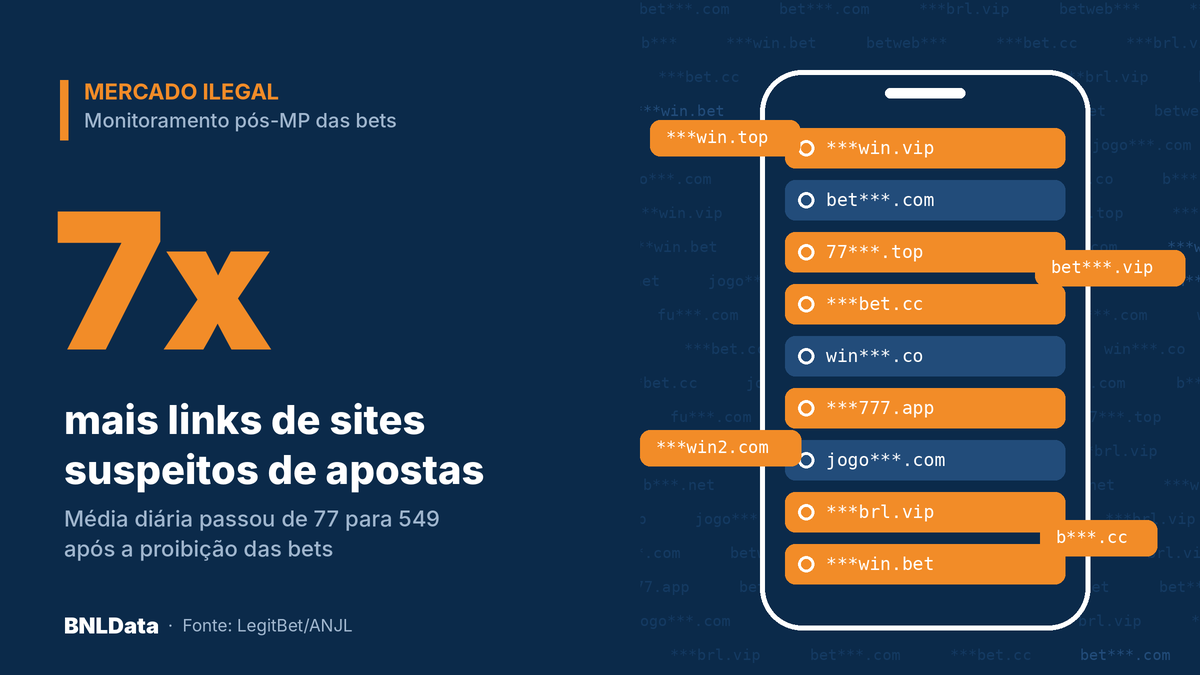
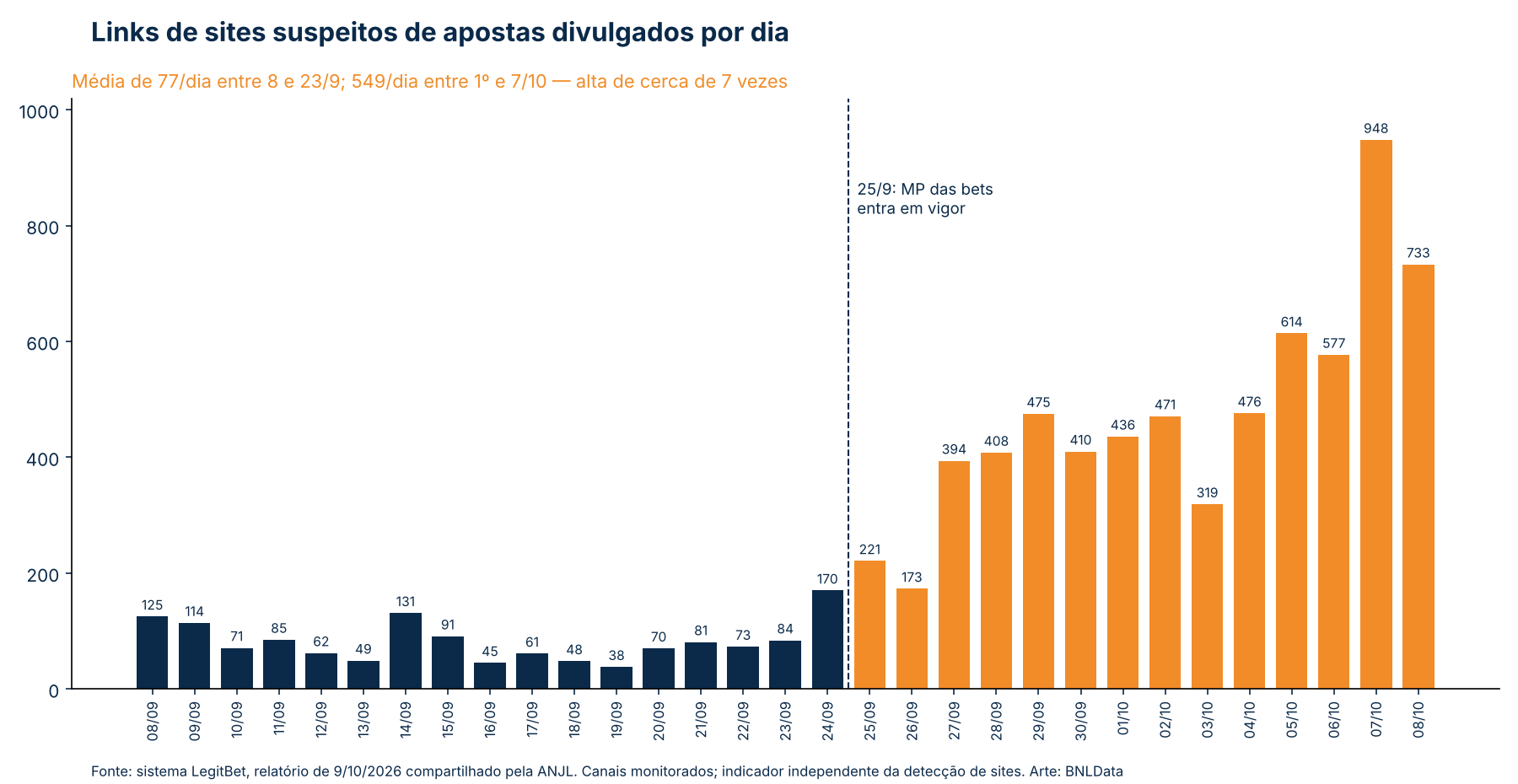
The most striking data point is the dissemination of information through monitored channels. Between September 8th and 23rd, the average was 77 suspicious links per day . The provisional measure prohibiting betting came into effect on September 25th, and the trend shifted. Between October 1st and 7th, the average reached 549 links per day , approximately seven times more. The peak was on October 7th, with 948 links, one day after the removal of legal sites. On October 8th, there were 733.
The profile of the sites
The 55 sites confirmed on October 8th have the typical profile of the illegal market:
Disposable domains. 82% have numbers in the name, and there are entire families of addresses that only vary in numbers: the same name appears in 13 different domains.
⇒ Generic extensions. .com predominates (43,6%), followed by .vip (12,7%) and .bet (7,3%). .org, .cc, .co, .net and .top also appear.
⇒ Aggressive offers. The pages offer "Fortune games," payment via PIX (Brazilian instant payment system), registration using only a cell phone, daily bonuses, and referral bonuses, which in one case reach R$ 1 million.
Where do they come from?
On that day, the main source of detections was internet searches (32%), followed by inclusion from other databases (30%), networks of already monitored websites (18%), Telegram channels (13%), and social networks (8%), such as Kwai, Instagram, Reddit, and Snapchat. On Telegram, 90% of the detected websites were confirmed as suspicious.
Conservative figures
The report makes some reservations. It doesn't assign illegality to any address, it only points out those that meet the characteristics monitored. The situation of each site depends on analysis by the authorities. Since October 5th, only sites aimed at the Brazilian public are counted. Domains on Anatel's block list are excluded from all counts, and pages of authorized operators are also excluded. In practice, the numbers tend to underestimate the size of the clandestine market.
The "change of hands" that doesn't happen.
The data contradicts the argument repeated by the economic team. In an interview with O Globo this Wednesday (14), the executive secretary of the Ministry of Planning, Guilherme Mello, said he had doubts about the loss of revenue with the end of bets. In his assessment, the bettor would stop spending on the bet to spend on something else: “So it’s a change of hands of money”. It is the same thesis defended by the Secretary of the Federal Revenue, Robinson Barreirinhas, in an interview with the same newspaper on October 8.
This reasoning only holds true if the bettor stops betting altogether. If they migrate to illegal platforms, the money continues to go to betting, only now it goes out of the country. They stop paying taxes and fees and cease funding legal programs that supported public safety, sports, health, and tourism, including the Federal Police fund. The bettor also loses all the protections that regulation guaranteed. Before the Provisional Measure, the illegal market already accounted for more than 40% of bets, even after 22 months of regulation. Now, according to monitoring, it occupies the space left by authorized operators.