
Growing micro-markets: corner kicks, cards, and shots on goal – how to price them without losing margin.

On nights with heavy betting activity, traffic and bets shift to "detail" markets—corners, cards, shots on target—and the trader's margin becomes more dependent on risk management than on guesswork. In Brazil, this becomes even more evident when the Copa do Brasil enters its decisive phase: the audience increases, the excitement rises, and the tolerance for price (and limits) decreases. The challenge for product, trading, and compliance is the same: how to offer variety without sacrificing exposure control and integrity.
The good news is that it's possible to grow the average ticket price responsibly. It requires three pillars: context-respective modeling, dynamic liquidity limits, and operations that react to game latency (referee, VAR, quick corner kicks, set pieces).
Peak windows: pricing when games overlap
Midweek nights, with Champions League and national championships happening simultaneously, create "peak windows" where simultaneous entries put pressure on odds and limits. The typical effect: runs in micro-markets after a "trigger" play (e.g., a sequence of corners or hard fouls that anticipate cards). If the trader does not synchronize exposure lock-in with the game state (time, score, substitutions, recent card), the margin evaporates in the short term, and the variance explodes in the long term.
Three underestimated risks in micro-markets.
01. Low relative liquidity
Even with high traffic, liquidity in "first half corners" is much lower than in 1X2. Small coordinated bets easily shift the price.
Resposta: Limits per user/market proportional to liquidity; stake increases as the market absorbs volume (tiering).
02. Feed latency and arbitrage
Seconds matter. Delay between the field, data provider, and platform becomes an advantage for those who "snipe" after a corner is called or a card is indicated.
Resposta: Automatic suspensions for trigger events (dangerous foul, VAR, corner awarded), staggered reopening timeout based on the criticality of the play.
03. Hidden correlation
"Cards + fouls + corner kicks" move together in fragmented games. Pricing each one as if it were isolated increases exposure.
Resposta: risk budget per game (risk budget) that aggregates all related micro-markets before releasing new boosts or increasing limits.
Modeling that respects the game (and not just the table)
Corner kicks. A simple Poisson analysis based on historical averages helps, but needs situational adjustments: score pressure (home team losing corner kick strength at the end), the team's crossing map, an attacking full-back on the field, and weather/pitch conditions . Use variables such as "crosses per 90", "long passes per 90" and "attacks down the flank" to calibrate the expected rate.
Cards. Include referee profile (average yellow/red cards), rivalry, game importance, and substitutions (midfielders who receive yellow cards tend to be substituted; whoever stays changes the risk). A competitive risk model (yellow vs. non-yellow over time) provides better adherence than a pure Poisson model.
Shots on target. Prefer xThreat/xShot on Target derived from finishing zones + quality of incoming pass. Adjust for fatigue (intensity drops after 75'), coach's style and score (winning team retreats and swaps shooting for area protection).
Practical tip: run Monte Carlo simulations by minute state. In micro-markets, minute 82 with a score of 0-1 is not the same "game" as minute 18 with a score of 0-0.
Dynamic limits and "risk budget" per game
⇒ Base limit per market (e.g., R$ X for “Asian corners 1st Quarter”), with a release ladder as the market receives organic volume without risk alarms.
⇒ Capping by customer Sensitive to track record of success in the specific market (skill-based throttling).
⇒ Stop-loss by eventWhen the game reaches a "risk consumption" point (sum of exposures in micro-markets), the system automatically reduces limits or closes non-essential markets.
⇒ Intra-platform hedgingUse correlation to reduce net exposure (e.g., accept slightly more "fewer corners" when the book is loaded with "more corners").
Real-time operation: suspend, reopen, communicate
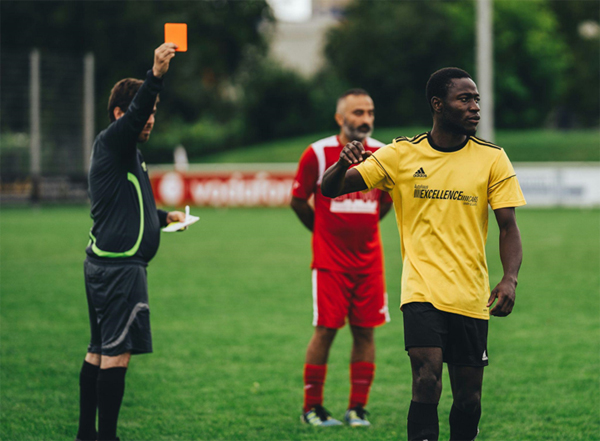
Operational discipline is the buffer against margins:
⇒ Suspend on trigger events (Foul from the front, corner awarded, VAR review) is mandatory in micro-markets.
⇒ Phased reopeningMarkets with higher sensitivity (next corner/card) have a longer delay than total corner kicks.
⇒ Clear rules in betslipCommunicating "preventive suspensions" avoids frustration and abandoned tickets.
⇒ Health monitor Related: Micro-markets are prime targets for manipulation; indicators of atypical patterns need to trigger human analysis.
Useful reference: The International Betting Integrity Association (IBIA) publishes alerts and reports that help calibrate monitoring of unusual patterns, especially in niche markets and games with lower visibility.
UX that protects margins (and helps the customer bet better)
⇒ Smart default: In the micro-market hub, prioritize totals by time With improved price robustness, bring ultra-granular markets just a click away.
⇒ Game status alerts: Discreet banners (“team under VAR review”, “dangerous foul”) explain temporary suspensions.
⇒ Betting platform with guardrails: Limit highly correlated combinations (e.g., "+ corner kicks + cards + fouls" in the same game) or price the correlation into the final price.
⇒ Focus on transparency: Tickets with a visible timestamp + "result settled by provider X" reduce support contacts.
Marketing without "burning" the book.
⇒ Boosts in markets with higher liquidity and lower correlation . On nights with high traffic, avoid boosting weaker micro-markets.
⇒ Profile segmentation : recreational bettors receive educational suggestions (“how do Asian corners work?”); professional segmentation sees more transparent limits and less promotion.
Responsive education : short in-product content explaining suspension due to critical bids reduces churn and support ticket requests.
Quick checklist for your next peak night
Before the whistle:
⇒ Calibrate base rates with context (referee, weather, lineup).
⇒ Configure dynamic limits by market and by customer.
⇒ Define trigger events for automatic suspension and reopening times.
During the game:
Monitor aggregate exposure per game (risk budget).
⇒ Apply intra-platform hedging whenever possible.
⇒ Log feed integrity and latency alerts.
After the game:
⇒ Perform a post-mortem analysis by market (predicted vs. actual deviation).
Update correlation parameters and thresholds for similar scenarios.
⇒ Populate the knowledge base with plays that triggered runs (e.g., a sequence of corner kicks in the 80th–90th minute).
Micro-markets are great for engagement and average order value, but they only generate sustainable margins when the operator accepts three truths: not every game accommodates every market, suspending bets is about protecting prices, and limits need to be balanced with liquidity. On nights when the audience is divided between national and international tournaments, the betting site that balances contextual modeling, dynamic limits, and disciplined operation delivers a better experience without opening itself up to variance, and keeps the book healthy when the action stops.

