
Betting bill: 17 clubs appeal to the Supreme Court against the ban on online gambling.
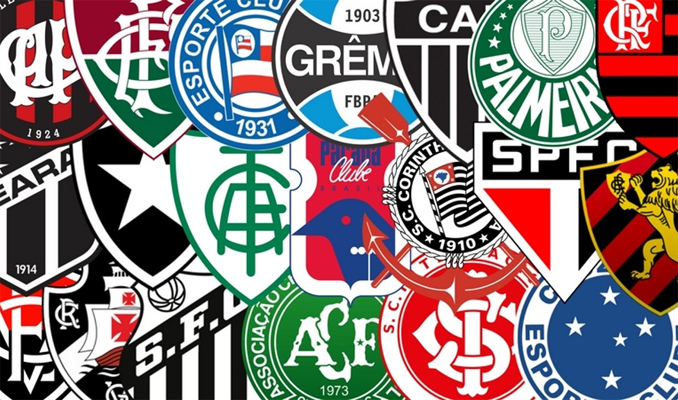
Fluminense, Botafogo, and 15 other clubs went to the Supreme Federal Court to request to join as parties in the unconstitutionality lawsuits challenging the federal government's ban on betting. The requests were filed this Friday (October 2nd), and the move follows that of Flamengo, which filed a lawsuit with the STF individually days earlier.
In total, 17 clubs from Series A and B have joined the movement initiated by Flamengo. Besides Fluminense and Botafogo, the group includes: América, Athletic, Atlético-GO, Avaí, Botafogo-SP, Ceará, Chapecoense, CRB, Criciúma, Cruzeiro, Goiás, Juventude, Mirassol, Novorizontino, and Vila Nova. The requests are linked to Direct Action of Unconstitutionality 8027.
On the same day, five additional clubs, São Paulo, Ponte Preta, Guarani, Vitória and Portuguesa, submitted a separate petition to Minister Luiz Fux, rapporteur of other cases regarding betting at the STF (Supreme Federal Court). These clubs had filed a request this Thursday (October 1st) and are requesting a period of six months to one year to adapt to the provisions of Provisional Measure No. 1.394, of September 25, 2026, which prohibited online gambling in Brazil.
Risk to the Brazilian Championship
The five clubs argue that football constitutes the country's "cultural heritage," according to the Federal Constitution, and cite the concrete risk of the Brazilian Championship being interrupted. "Club leaders and the national union of football associations are discussing the possibility of halting the Brazilian Championship," they state in the lawsuit. The clubs add that "the plaintiffs are not presenting this news as a means of pressure, which they do not endorse, but as an objective symptom of the scale of the crisis: the country's main championship is discussing its own interruption just weeks before its conclusion."
In the document, the clubs argue that "MP [1.394] does exactly the opposite: it unilaterally and provisionally breaks the economic soundness that the law mandates the State to preserve." According to them, the line of credit offered by the Executive as a counterpart is insufficient and does not replace, during the season, the revenues eliminated by the MP.
The clubs also point to the deadline set by the provisional measure as the problem: the removal of all advertising and sponsorship material from betting sites must occur within ten days, which would force the clubs to seek new sponsors immediately.
Timeframe and financial impact
Meanwhile, the National Association of Games and Lotteries (ANJL) filed a new lawsuit with the Supreme Federal Court (STF) requesting urgent consideration of the appeals before 23:59 pm on October 5, 2026, when the effects of Provisional Measure 1.394 come into force. The organization warns of the financial impact of the ban on Brazilian sports as a whole.
Between January 2025 and July 2026, betting companies allocated R$ 437,9 million to various sports entities, according to ANJL. Among the beneficiaries are the Brazilian Olympic Committee, the Brazilian Paralympic Committee, the Brazilian Club Committee, university and school sports entities, the Brazilian Paralympic Club Committee, master sports entities , APAEs (Association of Parents and Friends of Exceptional Children), Pestalozzi and the Red Cross, as well as various sports disciplines. Football reportedly received approximately R$ 175 million during this period, according to the association.
In the lawsuit, ANJL argues that "the interruption of this flow, therefore, does not produce an isolated sectoral effect: it immediately affects sports institutions, social projects, and structures of public interest that have come to rely on these resources, creating concrete consequences for their financing capacity and continuity of activities. In addition to interrupting public allocations for health, security, social security, sports, and tourism."
Previous dissatisfaction with the government
The relationship between clubs and the government was already strained before the betting law. Club directors report behind the scenes that the entities have not been heard by the Executive branch, citing as an example the General Sports Law, sanctioned in 2023, when dozens of vetoed provisions provoked a widespread reaction from the sector. The main complaint is the lack of dialogue; according to club officials, the government had four years to discuss these issues and did not.
The dissatisfaction reached the point where the clubs organized a boycott of the meeting called by the government to discuss the end of betting. The meeting ended up being canceled; although the official justification was "logistical issues," the lack of attendance caused by the clubs weighed heavily on the decision.
There is no set deadline for Minister Luiz Fux to rule on the lawsuits challenging Provisional Measure 1.394 before the Supreme Federal Court.

