
Brazilian prosecutors ask the Federal Audit Court to investigate alleged government irregularities in auditing betting sites.
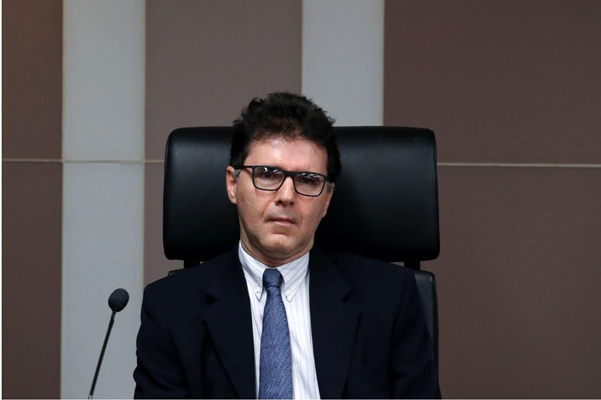
The Deputy Attorney General of the Public Prosecutor's Office at the TCU (Federal Court of Accounts), Lucas Furtado, asked the court to investigate the occurrence of "uncoordinated actions and other irregularities" in the federal government's oversight of betting and in addressing the negative effects of online betting and gambling on society, reveals the Radar Column of VEJA magazine.
According to Furtado, betting houses "continue without adequate regulation" and have created "a fertile environment for the commission of crimes, the formation of gangs, the manipulation of games, and the amassing of fortunes from illicit gains, while at the same time discrediting and demoralizing legitimate activities, such as football."
“The ‘betting’ sector has become one with a major impact on economic activity, now concerning the government beyond issues involving the public of social programs and income policies,” Furtado writes in his representation to the TCU (Brazilian Federal Court of Accounts).
"The reduction in the level of activity in various sectors of the economy, with the corresponding negative effects on tax revenue, has been attributed by government agents to the exponential growth of gambling," he adds.
In the representation, the Deputy Attorney General of the Public Prosecutor's Office at the TCU (Federal Court of Accounts) argues that, based on news reports indicating that resources from social programs are being allocated to gambling, "it is up to the State to react to the illegality on several fronts: administrative, legislative and judicial, involving bodies such as the Federal Police, the Comptroller General of the Union and instances of the Judiciary."
“I understand that, through this Representation, I must urge the TCU (Brazilian Federal Court of Accounts) to anticipate the difficulties that the Public Administration will face in coordinating efforts of unusual dimensions, which, as experience shows, are always invoked, a posteriori, to justify irregularities discovered in the actions of external control,” says Furtado.

