
In the Globo interview, Lula forgets the bets.
For weeks, the ban on betting was presented as a trump card in the reelection campaign. "I'm going to end betting, no matter who it hurts," Lula said on the Flow Podcast. In the same conversation, he added provocatively: "Globo [TV network] is going to be upset."
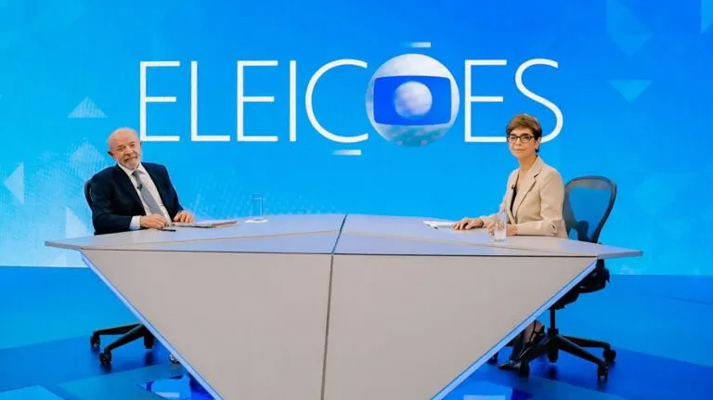
On Thursday night (15), in front of Globo itself and one of the biggest audiences of the campaign, the topic simply disappeared.
In the interview conducted by Renata Lo Prete, Lula answered questions about rejection of the government, his relationship with Congress, the United States, public security, the Supreme Federal Court (STF), the Master case, the Bolsa Família program, and fiscal policy. When the journalist asked about household debt, he admitted that the "Desenrola" program "did not solve" the problem and presented the third edition of the program. He did not mention gambling even once.
The absence is striking because this was the natural ground for the argument. It was precisely by linking debtors to gambling that the president justified the provisional measure issued on September 25th. On Globo, family debt was once again framed as a problem of interest rates, banks, and Serasa (a Brazilian credit bureau).
Silence was also a choice. In his closing remarks, Lula used his allotted minute to highlight the end of the 6x1 work schedule and the promise of free public transportation on weekends, topics that hadn't even been addressed in the interview. The ban on betting, which had been featured prominently on a campaign screen and given airtime in election propaganda, was not included in the discussion.
The most likely interpretation is that the measure didn't yield the results the campaign hoped for. The ban was announced when Lula and Flávio Bolsonaro were tied. Lula finished the first round behind, and the Datafolha poll released on the same day as the debate showed Flávio with 51% of the valid votes, compared to 49% for the Workers' Party candidate. Members of the campaign itself had already pointed to the measure as one of the mistakes of the first round, and clubs, organized fan groups, and broadcasters remain mobilized against the provisional measure.
Meanwhile, Provisional Measure 1.394/2026 has accumulated 99 amendments in Congress, most of them aimed at making it more flexible. At the Supreme Court, Justice Luiz Fux is considering postponing the decision until after the second round of voting. The government, which turned the ban into a slogan, now prefers not to discuss it.
There are nine days left until the election. If the measure were synonymous with votes, it would hardly have been left out of prime time.

