
'It makes no sense to tax those who are legal without closing the door to illegality,' says rapporteur of bill on betting.
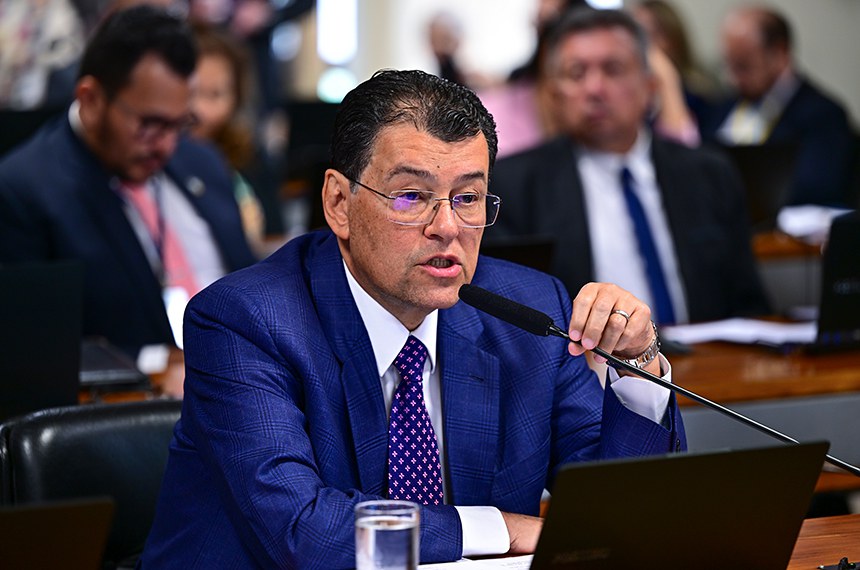
Senator Eduardo Braga (MDB-AM), rapporteur for the bill that increases taxes on companies that operate online betting sites, says he will not discuss raising tax rates until the government cracks down on illegal operations. According to him, unauthorized websites generate around R$ 100 billion per year in the country.
In an interview with GLOBO , the congressman says that the Ministry of Finance and the Central Bank may delay the vote on the bill if they do not present measures to block irregular transactions via Pix, and describes a "vacuum of oversight" that favors clandestine betting sites, unregulated fintechs, and organized crime.
Considered an ally by the Presidential Palace, the senator also stated that the close vote in the Senate to reappoint the Attorney General of the Republic, Paulo Gonet, was a "worrying warning" for Lula. He received only four more votes than needed to secure a new term at the head of the investigative body.
The senator, a former governor of Amazonas, also states that public safety needs to be a shared responsibility and argues that the country should abandon the "hypocrisy" of delegating the fight against crime solely to the states.
Currently, betting sites pay 12% on gross betting revenue, and Senator Renan's proposal suggests 24%. What rate will you propose?
First, we need to understand that there's a segment of bettors who don't pay 12%, they don't pay anything, because they operate illegally. So, it doesn't make sense to increase the tax from 12% to 24% for those who are legal if you don't close the door on illegality. Otherwise, it will only increase illegality. The person who is legal will say: "I'm a sucker, I pay taxes, I'm legal, I'll pay double, while my neighbor here doesn't pay a cent and nothing happens to him." The government's first task is to close the door on what's happening with illegal fintechs and illegal payment processing companies, which are the entry and exit points for money from illegal betting, organized crime, and money laundering.
You said the bill could be voted on next week if the Treasury does its "homework." What exactly is left to deliver?
I'm still waiting. I spent 30 minutes of my morning talking to (Central Bank President Ricardo) Galípolo and saying, "I'm waiting for you to do your homework." The Federal Revenue Service has identified, in round numbers, the movement of R$ 50 billion by illegal fintechs and illegal betting companies. If we want to combat organized crime, we have to have control over the money. Brazil has 93% of the circulating money in the banking system, but it can't monitor the digital environment.
Are you referring to Pix?
Paper money today represents no more than 5% or 7% of the money supply. All the money is held in banks and passes through digital payments or credit cards. Illegal betting, illegal fintechs, organized crime money, and money laundering are all passing through where? Through bank accounts and PIX keys. I don't need to control PIX itself; I need to control remittances to electronic keys with atypical transactions. If one thousand, two thousand, ten thousand people send PIX payments to the same address, that's atypical activity.
Are you considering a progressive tax system for betting companies that operate legally?
If we close the door to illegality, bettors will stop betting illegally. They will migrate to legality. If they bet legally, volume, profitability, and results increase. Then I can gradually increase taxation. And nobody will complain.
Do you believe that raising taxes could cause these companies to leave the country?
If they stopped operating in the country, it would be the most wonderful thing in the world. The tragedy these betting sites are causing is horrific. If I had the strength, I would put an end to them. I've heard so much about people who are desperate, depressed, and some who have committed suicide because of debt from these betting sites.
Regarding the CSLL (Social Contribution on Net Profit), the bill increases the rate for banks from 15% to 20% and for fintechs from 9% to 15%. Will you maintain these rates?
Everything depends on the overall scenario. We can't treat it in isolation. The sector needs to contribute in a balanced and proportional way. We are obliged to differentiate. Fintech has much higher profitability.
Will the project cover the projected R$18 billion with the income tax exemption?
If it's true that tax evasion by fintechs and illegal betting companies amounts to R$100 billion, then the 12% they should be paying today would only amount to R$12,2 billion. If we close the door, some of it will come to the legal sector. The tax base increases. I don't need to go to 24%, I can implement a phased increase. And we will reach the R$18 billion target much more easily.
The opposition has criticized the government for raising taxes instead of cutting spending. Do you agree with this criticism?
The criticism has a political bias, but where there's smoke, there's fire. The government's biggest problem today is the quality of spending. If it were more efficient, the results would be much better—and they are already positive. What the opposition doesn't mention is that we brought inflation back within the target, that we are concluding our fourth consecutive year of GDP growth, that we have one of the lowest exchange rates in history, and that we are breaking records on the stock market. For months I have been advocating for a project approved in the Senate that provides for a review of sub-constitutional tax benefits. It is stalled in the Chamber of Deputies. This would result in a linear cut of 10%, something between R$ 30 billion and R$ 40 billion per year.
President Lula is expected to nominate a new name for the Supreme Federal Court soon, and the most likely candidate today is Jorge Messias, the current Attorney General of the Union. Do you believe the Senate will approve this nomination?
I find the vote for the Attorney General of the Republic, Paulo Gonet, a very worrying sign for the government.
What is your view on the back-and-forth of discussions regarding the Antifaction bill in the Chamber of Deputies?
Public safety is not just the responsibility of the states. It's everyone's responsibility: municipalities, states, and the federal government. Brazil is the 11th largest economy in the world and has worse crime rates than poor countries. This is wrong. We need to join forces to defeat organized crime. And one way to do that is to shut down financial transactions through the banking system.

