
The number of Brazilians trafficked to work in gambling dens is growing, says the Ministry of Justice.
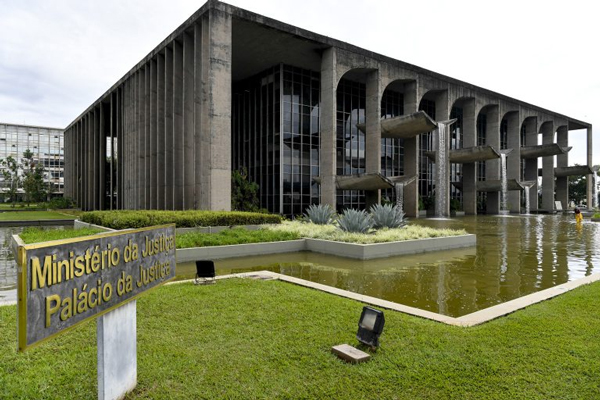
Human trafficking for work on illegal betting platforms, known as "bets," has become a new criminal trend, according to the 2024 National Report on Human Trafficking, released by the Ministry of Justice and Public Security (MJSP), as reported by Fabio Serapião's column in Metrópoles.
With promises of employment abroad, especially in Southeast Asian countries, Brazilians are being lured through social media and, upon arrival, find themselves facing working conditions analogous to slavery in technology companies that operate illegal gambling and digital fraud websites.
According to data compiled by the General Coordination for Combating Human Trafficking (CGETP), there are at least 35 registered cases involving this type of exploitation, mainly in the Philippines, Cambodia, Laos, and Myanmar.
The victims are often recruited online, by acquaintances or intermediaries, and end up being forced to work under strict control, having documents such as their passports withheld, working exhausting hours, and facing constant threats.
“That region has been consolidating itself as a major center for online gambling, so it already had this favorable context. And for this type of crime, they need people. Several countries identified this flow precisely because the networks operating there needed people from all over the world who spoke various languages. So, Brazilians, even Americans, ended up there,” explains Marina Bernardes, coordinator of CGETP.
She reports that, initially, recruiters offer jobs in areas such as virtual customer service, telemarketing, or digital support, a trend that has intensified since the pandemic.
However, upon arriving at the location, the victims find themselves trapped in guarded facilities, forced to carry out all sorts of scams, including so-called "love scams," in which the victim is deceived with a supposed fictitious romantic partner, financial fraud, and also to participate in illegal sports betting systems.
"It has every scam you can imagine, from romance scams to pyramid schemes, gambling, it's everything. It's a complete menu there," says Marina.
One of the most recent cases involving this type of platform, which gained national attention, involves two Brazilians - Phelipe Ferreira and Liukas Santos - both victims of human trafficking rescued in Myanmar.
The story of the two follows a very similar script to the one described by Bernardes. Both Phelippe and Luckas accepted false promises of employment and ended up in the hands of a cyber scam mafia in 2024.
In KK Park, where they were rescued, both were forced to work about 16 hours a day, watched over by members of the criminal organization, and were forced to scam people of various nationalities.
Phelipe even reported at the time the physical assaults he was subjected to for not meeting daily targets set by the criminals. According to him, he had to do up to 500 squats on a surface with sharp objects, such as nails, and was beaten with a baton.
The report also shows that Brazilian authorities are monitoring a possible migration of the problem to Africa, with Brazilians already identified in similar schemes in Nigeria. At least five cases have been registered so far.
"It's possible they are already looking for other countries to settle in. We are observing this trend, but for now there are only a few; five Brazilians have been identified in Nigeria, and they are working in this field," he reports.
According to the Ministry of Foreign Affairs (MRE), the body responsible for reporting the identification of potential victims of international trafficking to the authorities, 49 Brazilians were identified as victims in 2024. But the numbers may be much higher, since underreporting is present in these cases.
“Many think that with this they will make a nest egg, sometimes they will have money there, even in these working conditions, in conditions analogous to slavery. But then they manage to leave, they go to another place. We have heard several reports that they keep changing locations, even recruiters, criminal groups. So, it is a relatively recent phenomenon,” reports Marina.
Handling these cases involves coordination between public agencies, and the increasing trend of these cases led to the creation of an inter-institutional rescue protocol. Through this protocol, there was a clearer organization of the entire support process for victims, from communication with the consulate to the repatriation process.
When Brazilians seek assistance from a consulate, the case is forwarded to the Ministry of Justice, the Federal Police (PF), and the Public Defender's Office of the Union (DPU), which organizes their return and provides legal support.
Investigations are progressing.
As the column showed, last year the Federal Police reached a peak in new investigations, with 149 investigations opened. Since 2017, there have been 662 cases.
In addition to repression, Marina also warns of the need for prevention campaigns aimed at young people, who represent the most common profile in this type of international trafficking.
"These are young people who have this desire to travel the world, to seek things abroad, to have new experiences, and they end up finding themselves in these situations," he explains.
She also highlights the new challenge of purely virtual exploitation, without the victim physically traveling. In some cases, Bernardes explains, people are lured, blackmailed, and exploited online in their own countries.
“[This scenario] dismantles a common misconception that trafficking requires the victim to be displaced […] There are countless possibilities for how this crime can occur. So, what we have seen, and have been trying to track and monitor, are cases of online sexual exploitation of people, where they are lured through the internet, via platforms and social networks,” he states.

