
O Globo: Arthur Lira pushes the agenda in the Chamber of Deputies and brings the legalization of gambling to a vote this Tuesday.
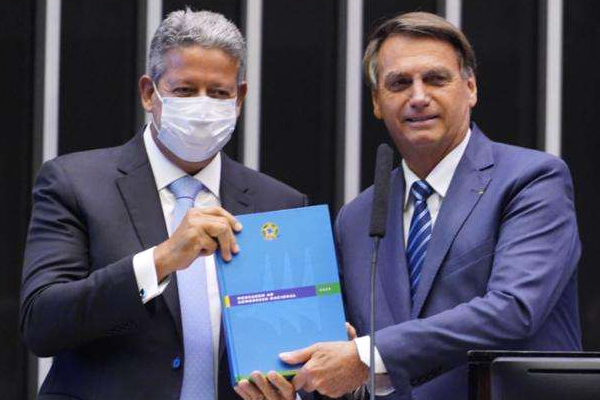
The Speaker of the House, Arthur Lira (PP-AL), has scheduled a vote today on the bill that legalizes gambling in the country, a proposal he himself is a major supporter of, but which lacks the support of the Presidential Palace, with whom the congressman from Alagoas is allied. President Jair Bolsonaro has already promised to veto the changes if they are approved by Congress. This is yet another initiative by Lira to advance matters of interest to his political group in 2022, something he has been doing since the beginning of the legislative year.
In the first three weeks of the year, members of parliament prioritized projects on the agenda of the Speaker of the House and his allies. For example, the House approved raising the maximum age for judges and ministers to enter higher courts. This is a demand from the Judiciary, where cases involving several parliamentarians are being processed. A proposal to facilitate the granting of pesticide registrations was also approved—a long-standing request from rural landowners, a sector that maintains good relations with Lira.
In the case of raising the maximum age limit for judges in the higher courts, the ease with which the Proposed Amendment to the Constitution (PEC) was approved in the special committee, without resistance, was noteworthy. Furthermore, just a few days later, the plenary approved the bill in two rounds. Normally, PECs have a longer legislative process.
The current focus, however, is on legalizing gambling, an undertaking that Lira has been advocating for since last year. The bill's rapporteur, Deputy Felipe Carreras (PSB-PE), said he has not yet finalized his report. Party leaders expect, however, to address the issue and negotiate adjustments to the final text this morning, in order to try to vote on it in the afternoon.
Carreras has been going weekly to the official residence of the Speaker of the House to finalize the version with Lira and House leaders. Although Bolsonaro has officially positioned himself against the bill, the government leader in the House, Ricardo Barros (PP-PR), is working to expedite its approval.
In its current version, the bill in question, which has been under consideration in the Chamber of Deputies since 1991, legalizes casinos, bingo halls, and the jogo do bicho (a type of illegal lottery). However, the rapporteur intends to impose restrictions, including limiting casinos to tourist areas and, even then, only as part of hotel complexes, such as resorts. The locations would be defined by regulations from the Executive Branch. Bingo halls would only be permitted in specialized establishments or football stadiums. They could also be operated by philanthropic entities, religious organizations, and charitable hospitals to raise funds. In the case of jogo do bicho, the most controversial of these modalities, operating licenses would be auctioned. In each state, one license could be granted for every million inhabitants. The minimum capital to participate in the bidding process would be R$ 10 million.
The evangelical caucus is pushing for the proposal to be considered only after Carnival, when in-person work will resume. Yesterday, Lira was criticized by the group for putting the topic on the agenda. Since the return to work, he has stated that the matter can be voted on "at any time," and that an agreement was reached last year.
The Speaker of the House has shared with allies, since the end of last year, a list of projects he considers important. These are proposals that he wants to put on the agenda or that have already been approved by the deputies and that he would like to see proceed in the Senate.
In addition to games, the list includes topics such as the framework for the electricity sector, the Refis (tax amnesty program), and some texts of interest to the government, such as the New Guarantee Framework — a project that creates institutions to manage the guarantees provided by debtors.
Lira has also been working to expedite the bill, already approved by the Senate, that criminalizes the mass dissemination of fake news, but completely reformulated by the Chamber of Deputies. Reported by Congressman Orlando Silva (PCdoB-SP), the text is currently being analyzed by party caucuses.
Last week, Lira authorized the addition of another project to the original version, which included the possibility of tracking the origin of shared content, whether through messaging apps or social networks.
"The Senate text already has traceability, meaning this debate is open. We already have about 90 attached bills, which demonstrates the interest of parliamentarians, and the relevance and urgency of the issue," said Orlando Silva.
Beyond this point, there are discussions about the sanctions model foreseen for networks that violate the legislation. In parallel, the government released a list of topics it considers essential—and which have not yet received the same attention from Lira.
Complaint from the opposition
Although this issue was raised by an opposition MP, parliamentarians are complaining about the absence of leaders from left-wing parties at meetings scheduled by the Speaker of the House to discuss the matters under consideration.
In the session where the bill facilitating the registration of pesticides was approved, the leader of the PSOL party, Sâmia Bomfim (SP), criticized the lack of a leaders' meeting to discuss the votes that week. Lira countered by saying that the agreement was made at the end of last year, when the proposal was withdrawn from the agenda on the condition that it be included at the beginning of 2022.
When contacted, Lira's press office said that he meets every week with both groups, the government and the opposition. Last week, Congressman Orlando Silva (PCdoB-SP) was present to present the fake news bill. Lira has told allies that even when he doesn't have a formal meeting, he usually calls to hear from the opposition.
The agenda of the Speaker of the House
Last week, the Chamber of Deputies approved a Proposed Amendment to the Constitution (PEC) that increases the maximum age for the appointment of judges and ministers to higher courts from 65 to 70 years. If confirmed by the Senate, the ministers of the Superior Court of Justice (STJ), João Otávio Noronha and Humberto Martins, who have good relations with the political class, will once again be eligible to fill vacancies on the Supreme Federal Court (STF).
Legalization of gambling
Lira wants to vote today on a bill that would legalize gambling in Brazil. The evangelical caucus is against it, and President Jair Bolsonaro has already stated that he will veto the proposal, although the economic team is in favor due to the increased revenue it would generate.
Guarantees for the legal profession
Brazilian lawmakers approved a bill that expands the protections of law firms in cases of suspected crime. One of the changes made to the Statute of the Brazilian Bar Association (OAB) prohibits search and seizure operations based solely on reports from informants. Presented in 2020, the proposal is a reaction to investigative actions considered abusive.
Combating fake news
The Speaker of the House wants to vote on a bill that criminalizes the mass dissemination of misinformation and creates rules of conduct for digital platforms, such as social networks, search engines, and messaging apps.
'Poison Bill'
The House approved a proposal that loosens legislation and speeds up the licensing of pesticides.
Key points of the games proposal
Regulation
The bill, which has been under consideration in the Chamber of Deputies since 1991, legalizes gambling in Brazil, including casinos, bingo, and the jogo do bicho (a type of lottery). The bill's rapporteur, Felipe Carreras (PSB-PE), has not yet finalized the text and is still negotiating the main points.
casinos
The congressman intends to include in the final report the possibility of casinos being integrated into resorts in some regions. These locations need to be within a large leisure complex and also offer "high-standard hotel accommodations."
Bingos
The opinion allows the permanent operation of bingo only in establishments dedicated to that purpose, or in football stadiums, prohibiting occasional games, except those conducted by philanthropic or religious entities.
Animal game
Licenses for the jogo do bicho (animal lottery) would be auctioned off. In each state, one license could be granted for every million inhabitants. The minimum capital to enter the bidding for the right to operate this type of game would be R$ 10 million.
Online Betting
Betting through electronic channels would be limited to the same population criteria as the illegal lottery game known as "jogo do bicho." There is also a provision for an auction to grant licenses that would allow operators to exploit this type of betting, with a minimum capital of R$100 million.
Slot machine
Slot machines that replicate casino games may only be installed within the physical premises of integrated leisure complexes, such as resorts. In other locations, the practice would remain prohibited. ( O Globo – Bruno Góes and Julia Lindner)

