
Macau's interest in Japanese casinos
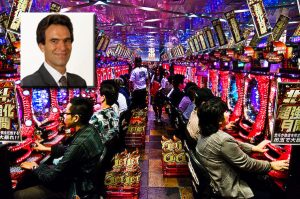
In an article published by This Week In Asia , expert Muhammad Cohen, who writes for Forbes magazine about the gambling landscape in Asia, suggests that casinos in Macau and the rest of the world may be betting on a losing hand in Japan.
Macau's casino companies, and almost every other gaming company on Earth, have been buzzing with the prospect of casinos in Japan for decades. The excitement grew when Shinzo Abe returned as prime minister in September 2012 and declared that integrated resorts – multifaceted casino complexes exemplified by Singapore's Marina Bay Sands – were fundamental to pulling Japan out of its quarter-century economic malaise.
Japan is the most tempting virgin casino market in the world, except for the impossible dream of mainland China. Japan remains the world's third-largest economy and has a strong gambling culture. Even without casinos, Japan's estimated gross gaming revenue has practically reached Macau's US$36 billion.
Pachinko, the ubiquitous Japanese version of pinball that pays out cash prizes under the table, generates over US$30 billion annually.
“All Macau dealerships are active in the Japanese market,” stated Brendan Bussmann, director of government affairs at Global Market Advisers.
All six Macau concessionaires, through their parent companies – Galaxy Entertainment, Melco Resorts, MGM Resorts International, Las Vegas Sands, SJM Holdings, and Wynn Resorts – have set up offices in Japan seeking integrated resort roles, some with a dozen employees. Galaxy hired former Melco Resorts COO Ted Chan, until then the most prominent executive in the sector, and appointed him COO of Tokyo-based Japan Development. Lawrence Ho's Melco has offices in Tokyo and Osaka, the latter considered a roadblock for one of the three licenses the implementation project envisions.
Research shows that about two-thirds of the Japanese public oppose integrated resorts. Many fear the social costs of casinos, especially the increase in problem gambling.
“Public opposition to gambling has been a constant in Japan during the 20 years I’ve been visiting the country,” says Frederic Gushin, managing director of the consulting firm Spectrum Gaming. “It’s concerning that those who advocate for integrated resorts haven’t spent the same effort building public support for them.”
This casual approach may reflect the belief that opposition to integrated resorts is mild. "Public unpopularity stems from the difficulty in understanding what an integrated resort is and the misconception that casinos can be created like pachinko parlors," commented government consultant Toru Mihara.
Following the legalization of integrated resorts, there are no guarantees that Macau operators will receive a share of these concessions. Macau primarily caters to mainland Chinese tourists, but Japan prefers to pretend that the expansion in the number of foreign tourists does not translate into a considerable increase in Chinese visitors. Mainland Chinese tourists helped boost Japan's growth, from 8,4 million foreign arrivals in 2012 to 28,7 million in 2017.
At the Japan Gaming Congress, held in May 2018, a Japanese speaker insisted that the government's goals of 40 million foreign visitors by 2030 and 60 million by 2040 could be achieved by maintaining Japan's current mix of arrivals, which is split equally between Korea, mainland China, and Hong Kong, plus Taiwan and the rest of the world (never mind that this would require half the combined population of Hong Kong and Taiwan).
The rapidly growing number of mainland Chinese tourists, from a pool of 1,3 billion, suggests they will account for the largest share of new arrivals. A Macau operator could help profit from this trend, but that would require Japan to acknowledge it.
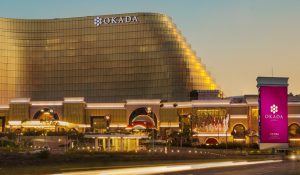
According to Muhammad Cohen, Japan's integrated resorts must be distinctly Japanese to maximize their appeal to tourists and the lucrative domestic market.
Once legalization is complete, expect Japan Inc. to step in. They won't need Macau's help to create attractive Japanese-style integrated resorts.
According to experts, Japanese gaming machine manufacturers Universal Entertainment and Sega Sammy are learning casino operations through their ventures in Okada Manila and South Korea's Paradise City, improving their prospects for partnerships with integrated resort owner groups. Furthermore, Galaxy has proven that a company without gaming experience can create a market-leading integrated resort. "If Macau loses to Japan, it may be solely to blame," they conclude.

