Sponsorship of betting through the Rouanet Law is not detrimental to the cultural sector.
Access to culture and the full exercise of cultural rights are guaranteed by the Federal Constitution. According to Article 215 of the Magna Carta, this guarantee is the responsibility of the State. In 1991, just three years after the approval of the constitutional text, the National Congress approved one of the main mechanisms for promoting culture in the country, the Rouanet Law.
Also in the entertainment field, at the end of 2023, congressmen approved the regulation of sports betting and online gaming through Law 14.790/2023, after a legislative vacuum of almost five years. This marked the beginning of activities in one of the sectors that would contribute most to the country through taxes, for various purposes—including culture.
The allocation of resources to artistic projects is nothing more than a means for the betting industry to encourage, through tax breaks, the strengthening of culture throughout the country, which includes artists and service providers working in theater, shows, and other events. Any statement beyond that would constitute a biased analysis, with the sole purpose of fueling prejudices about a sector.
In 2025 alone, resources raised through the Rouanet Law totaled R$ 3,41 billion. And betting companies, although already among the companies that have adopted the mechanism, were not even among the 20 largest investors. Among the top ten, there were two oil companies, two mining companies, and three large financial institutions. Although they contribute, respectively, to the emission of greenhouse gases and to the increase in the population's indebtedness, through the granting of credit at high interest rates, none of them had their actions questioned as promoters of culture.
It is important to highlight that, while frivolous discussions arise about which sectors of the economy should receive resources from betting, education, public safety, health, and sports already benefit from the regulated betting market, as established by Law 14.790/2023. All of these are related to constitutional rights, essential to the well-being of the population. What would justify giving culture preferential treatment?
The same ideological bias that attempts to justify a supposed incompatibility between gambling and culture, under the argument of the negative externality of gambling addiction, remains silent regarding sponsorships by alcoholic beverage manufacturers, even though alcoholism kills approximately 3 million people annually, according to the World Health Organization (WHO). In Brazil alone, it is estimated that excessive alcohol consumption causes 12 deaths every hour, according to research by the Oswaldo Cruz Foundation (Fiocruz).
In a frantic attempt to hide from society the brands operating in the regulated—and therefore state-legitimized—betting market, city governments have been disregarding the regulatory framework built collaboratively, including the National Congress, and restricting sponsorship of cultural events.
The biggest beneficiaries in this scenario are the thousands of illegal betting operations, which contribute nothing to the country, much less by funding artistic projects. And those most harmed, unfortunately, are the artists themselves, who will need to seek resources from other sources, and the attendees of these events, who, unaware of which ones are authorized by the Ministry of Finance, will be at the mercy of these illegal companies.
To question the presence and promotion of betting in Brazilian culture aims only, once again, to marginalize a legalized industry. Thus, ignorance and hostility prevail towards a sector that has actively contributed to diverse areas, benefiting the population.
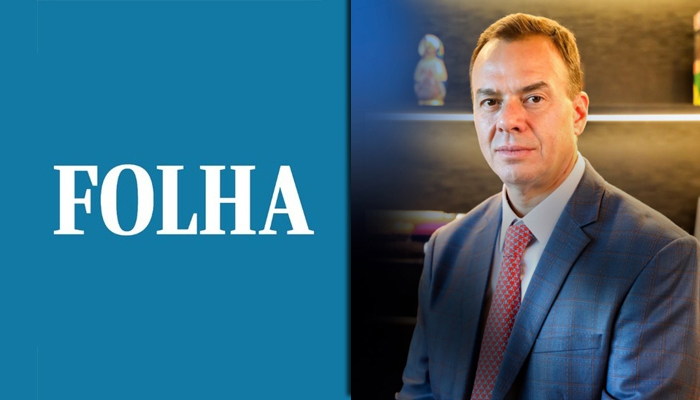
(*) Plínio Lemos Jorge is a lawyer and president of the National Association of Games and Lotteries (ANJL). The article was published by Folha de S.Paulo.
Cultural producer Paula Lavigne criticizes the Rouanet Law for its application to betting houses.
An article in Folha de S.Paulo argues that the mechanism should not be used for advertising purposes by betting companies; the cultural sector would be harmed by public indebtedness.
Cultural producer Paula Lavigne argues, in an article published in Folha de S.Paulo this Saturday (September 12th), that sponsorship by betting companies through the Rouanet Law is detrimental to the Brazilian cultural sector. According to her, the mechanism created to finance culture should not become an advertising tool for betting companies.
In the article, Lavigne argues that online betting already occupies excessive space in society and that allowing it access to tax incentives exacerbates this problem. With 40 years of experience as a businesswoman and cultural producer, she states that she has witnessed the arrival of betting in the festival and concert market with unprecedented speed.
According to Lavigne, betting companies have become the main sponsors of the country's festivals, with their names appearing on stages, VIP areas, and broadcasts. At the same time, he believes that the industry erodes the audience base of culture: the money that would previously circulate in tickets and cultural programs disappears into debt and gambling. The social cost of the sector is estimated by IEPS (Institute for Studies on Health Policies) at R$ 38,8 billion per year, a value that more than triples what the companies collect.
Small artists at the heart of the problem.
The producer points out that the use of the Rouanet Law by betting companies creates a particularly unfair situation for lesser-known artists. She argues that sponsorship doesn't end with the financial transfer: by contract, the artist may be obligated to promote the brand and produce content for the company, ceasing to be a sponsored artist and becoming a marketing platform.
Lavigne acknowledges speaking from a privileged position. She presides over Procure Saber, an association whose board brings together artists who do not depend on the Rouanet Law to work. For those who do depend on it, the scenario is different: the proposal arrives ready-made, and the real choice is between signing the contract with the funding agency or not premiering the project.
The producer draws a parallel with the ban on cultural sponsorship by the tobacco industry, approved by Congress in 2000. At the time, she says, the question was not whether the measure would harm the sector, but whether the State should allow a harmful brand to buy space in people's lives. The answer was no, and music continued to exist.
Position in favor of prohibition
In the article, Lavigne announces a change in her personal position. She states that she previously advocated for the regulation of betting, but now considers it necessary to seriously discuss ending betting in Brazil. As a minimum standard, she argues that companies in the sector should be prevented from accessing tax incentive laws.
“It is unreasonable for a mechanism created to finance culture to become a marketing tool for those who already occupy excessive space in society,” the producer wrote. For her, culture cannot be held hostage by a sector that, in her words, profits from indebtedness and addiction.