
The first Jogo do Bicho (Animal Game) draw turns 133 years old this Thursday.
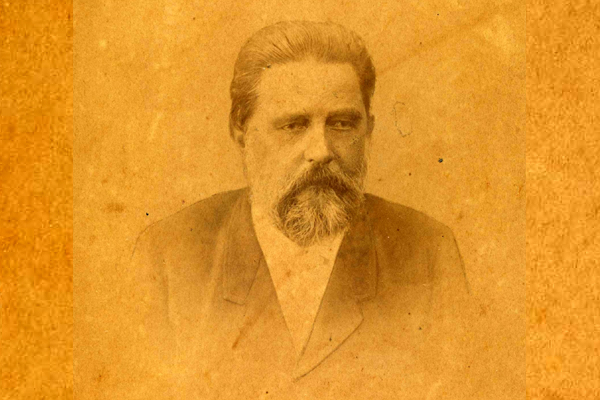
This Monday, July 3rd, the jogo do bicho (animal lottery) celebrates 133 years of operation. The first draw took place on a Sunday, July 3rd, 1892, and on October 3rd of this year, it will be 84 years since its prohibition by the Law of Criminal Offenses. The prohibitive legislation has not altered the illegality of the game in Brazil; quite the contrary.
The petition to create this type of lottery was accepted on October 13, 1890, and an addendum to the contract for the creation of the Vila Isabel Zoo was signed. Thus, officially, on that date, the jogo do bicho (animal lottery) was created in Brazil.
Even though it was prohibited, the quintessentially Brazilian jogo do bicho (animal lottery) spread through the streets of Rio de Janeiro, reaching the entire population and gaining popular approval, giving it social legitimacy, and it continues to operate to this day.
Originally created on Rua do Ouvidor in Rio de Janeiro as the 'Game of Flowers', the 'Number Lottery' modality was presented to Baron Drummond by the Mexican Manuel Ismael Zevada, with the aim of obtaining financial resources for the Zoological Garden.
After Marshal Deodoro da Fonseca overthrew the imperial family from power and proclaimed the Republic, Baron Drummond lost government support and had little funding to maintain his zoo, so he embraced the idea of a lottery.

Without government assistance, the Baron even considered permanently closing the Rio zoo. But the solution came through the Mexican, who was a fan of the zoo and suggested adapting the Flower Lottery into an Animal Lottery, which would allow the establishment to remain open.
Baron Drummond was enthusiastic about the idea and submitted a petition to the Municipal Council requesting that some games be allowed in exchange for a small contribution, since only in this way would it be possible to maintain the zoo, a place so beloved and important to the city.
The petition was accepted on October 13, 1890, and an addendum to the contract for the creation of the Vila Isabel Zoo was signed. Thus, officially, on that date, the jogo do bicho (animal lottery) was created in Brazil.
Mexican Zevada was appointed the first manager of the operation, which had its first official extraction on July 4, 1892.

This lottery gave each zoo visitor a ticket with a picture of one of the zoo's 25 animals and a number. Every day at 17 pm, a cloth was lowered revealing the 'animal of the day'. Whoever had that animal on their ticket won twenty times the entrance fee. The customer paid 1$ (réis) to enter and left with 20$ (réis) if the animal matched the one on their ticket.
Regarding his preference for animals, the Baron told the Diário do Commércio at the time: “Flowers are beautiful. But animals are man's suburbs, our relatives.”
It was a success, it became a craze back then. There were people who went to the zoo just because of the prize. The trams to Vila Isabel, especially on Sundays, were always packed.

The first animal was the ostrich.
The first drawing took place on a Sunday, July 3, 1892. The animal drawn was the ostrich. The Diário do Commércio newspaper reported the event the following day:
"As we had announced, the inauguration of the new company at the Zoo took place yesterday."
At 3 p.m., two special trams from that company departed from Largo do Rocio towards Vila Isabel, carrying the company's guests, preceded by a band. Upon arrival, the guests were received by the administration of the Jardim (Garden), who kindly accompanied them on a general tour.
At 5 o'clock, the box containing the image of the animal that dominated the day, according to the program, was lowered. The ostrich was the winning animal and gave the owners of the respective tickets the $20 prize.
After the ostrich's victory came the victory of the stomach. Thus began a lavish and abundant banquet for 100 people, with toasts and reciprocal greetings exchanged on this occasion.
"Many distinguished ladies, representatives of the press, and many other guests attended the party." (Diário do Commércio, July 4, 1892)
Ban on gambling
With the prohibition of gambling in 1895, and the death of Baron Drummond on August 7, 1897, racketeers took over the operation of the jogo do bicho (animal lottery), which they began organizing in warehouses and taverns, and it was the only way for the less fortunate to earn a little extra money.
The game's growth stemmed from its association with the poorest segments of the population. Consider this: the game fosters the belief in luck, the illusion that one day you'll win – "only those who play win," that hope common among the poor that life is waiting for the right moment to smile brightly – and the mysticism of dream interpretation. This created a very close connection between the game and the population, this informality, the fact that the bookmaker was often a neighborhood friend. Then came the almost marital relationship between the jogo do bicho (animal lottery) and Carnival. The jogo do bicho gained popular approval, giving it social legitimacy that continues to this day.

Origin of the connection with Carnival
While the origins of the jogo do bicho (animal lottery) date back to the time of Baron Drummond, the connection between the game and Carnival came a little later, in the 1930s with Natalino José do Nascimento. Natal da Portela, the one-armed man from the samba school of Paulo, Rufino, and Caetano, had a poor childhood but eventually became an employee of the Central Railway of Brazil.
Natal da Portela, the one-armed man from the samba school of Paulo, Rufino, and Caetano, had a poor childhood but became an employee of the Central Railway of Brazil. Due to an accident on the tracks, where he lost his right arm, he was dismissed due to disability after six years of service. This led him to live off odd jobs until he started as a numbers game bookie. His rise was rapid and notorious until he became a banker for the numbers game in Madureira.
This heroic, law-abiding citizen persona not only elevated Natal to the status of a benefactor of the Madureira region, but also showed other illegal gambling operators that they could win over the population through the same method. Following Natal's lead, many other illegal gambling operators followed in his footsteps and began the tradition of professionalized schools.

Deep roots
In 1911, the jurist and academic José Macedo Soares observed that gambling had become so ingrained in Brazilian social habits that it was impossible to eradicate it through law and police repression. The concept expressed by this jurist 114 years ago has never been more relevant today.
"The game has proliferated and taken root so deeply that it certainly won't be through legal maneuvers or police arbitrariness that the public authorities will be able to eradicate it from our customs," he commented.
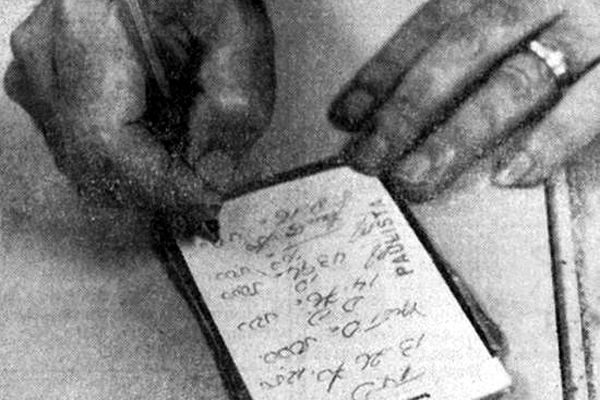
Even to this day
On October 3, 1941, Decree-Law No. 3.688 made gambling a "criminal offense," and betting increased even more.
It is estimated that 20 million Brazilians place a bet on the jogo do bicho (animal lottery) every day, and its legalization would be profitable for the State and for society, since it would free millions of Brazilians from the embarrassment of being considered offenders, and they would then be able to carry out a lawful and socially productive activity.
Despite being illegal and clandestine, the jogo do bicho (animal game) remains alive as one of the most popular and ubiquitous Brazilian cultural traditions.


