
The first Jogo do Bicho (Animal Game) draw turns 134 years old, and legalization advances in the Senate.

On July 3, 1892, on a Sunday afternoon in Rio de Janeiro, overcrowded streetcars ran along the line to Vila Isabel. The crowd wanted to see the moment when a curtain would be lowered, revealing the animal of the day. The ostrich appeared. Whoever had the animal's image on their ticket left with 20 réis in their pocket, twenty times the price paid for admission.
This was the first drawing of the jogo do bicho (animal game), held exactly 134 years ago. The date marks the beginning of one of Brazil's most persistent traditions, which survived prohibitions, decades of clandestinity, and police persecution to reach the 21st century as a daily practice for an estimated 20 million Brazilians. On October 3rd of this year, it will also be 85 years since Decree-Law No. 3.688 classified the game as a criminal offense, making all those who bet on it offenders.
From the baron's farm to the street
The story begins two years before the first lottery. Baron Drummond maintained the Vila Isabel Zoo, but the fall of the monarchy with the Proclamation of the Republic by Marshal Deodoro da Fonseca removed government support. Without funds, the Baron even considered closing the zoo permanently.
The solution came from an unlikely fan: the Mexican Manuel Ismael Zevada, who had introduced the Baron to a game called the Flower Lottery, originally created on Rua do Ouvidor. Zevada suggested adapting the idea to animals, using the zoo's own animals as the central element of the bet. The Baron was enthusiastic, submitted a petition to the Municipal Council, and on October 13, 1890, the addendum to the contract of the Vila Isabel Zoo was signed. The jogo do bicho (animal game) was officially created in Brazil. Zevada became the first Director of Lotteries for the operation.
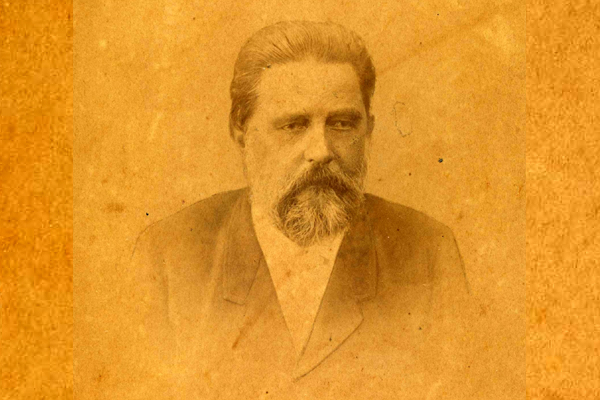
The system was simple: each zoo visitor received a ticket with a picture of one of the zoo's 25 animals and a number. At 17 pm, the curtain fell. The winning animal determined the prize winners. When the ostrich won on Sunday, July 3, 1892, the Diário do Commércio newspaper enthusiastically covered the inauguration in its next day's edition:
“As we had announced, the inauguration of the new Zoo company took place yesterday. At 3 pm, two special trams from this company departed from Largo do Rocio towards Vila Isabel, carrying the company's guests, preceded by a band. Upon arrival, the guests were received by the Zoo's administration, who kindly accompanied them on a general tour. At 5 pm, the box containing the figure of the animal that would dominate the day, according to the program, was unloaded. The ostrich was the winning animal, giving the ticket holders their respective 20$ prize. After the ostrich's victory came the victory of the stomach. A lavish and profuse banquet for 100 people then began, with toasts of mutual greetings. Many distinguished ladies, representatives of the press, and many other guests attended the party.”

The success was immediate. Regarding the choice of animals instead of flowers, Baron Drummond himself explained to the Diário do Commércio: “Flowers are beautiful. But animals are man's suburbs, our relatives.”
Mania and first enemies
The streetcars to Vila Isabel were overcrowded, especially on Sundays. Within a few months, the tickets left the zoo gates and arrived at the city's shops, which began holding parallel raffles. Dreams and premonitions fueled the bettors' choices. A crowd gathered daily to hear the results.
However, its success quickly attracted resistance. Just 19 days after its creation, newspaper campaigns were already accusing the game of threatening public morals. The game was classified as gambling, therefore condemned by the good customs of the time. Even President Marshal Floriano Peixoto went to the zoo to see the draw, but this did not protect the activity; the government began to repress it by the end of the 1890s. In 1895, the prohibition was formalized.
The death of Baron Drummond on August 7, 1897, brought an end to the original phase. The racketeers took over the operation, transferring the games to warehouses and taverns. The change of location also meant a change of clientele: the jogo do bicho (animal game) became the main bet of the poorest, offering them the possibility of extra income without requiring anything more than a cheap ticket and the hope of a sure winning number.

The law that did not eradicate
In 1911, the jurist José Macedo Soares had already perceived what the following decades would confirm. His observation remains valid more than a century later: “The game has proliferated and taken such deep root that it will certainly not be through legal maneuvers or police arbitrariness that public power will be able to eradicate it from our customs.”
The legislative trajectory reflects this resistance. The activity oscillated between tolerance and persecution for decades. In 1941, Decree-Law No. 3.688 transformed gambling into a criminal offense. Betting increased. In 1958, the governor of Rio de Janeiro, Roberto Silveira, even legalized the practice in the state, conditioning its release on the transfer of funds for social programs. The government of Jânio Quadros again prohibited it throughout the national territory. Paraíba became the only state to resist the federal prohibition; when President Castelo Branco asked the governor of Paraíba to ban gambling in the state, the refusal was justified by the lack of jobs that the measure would generate.

From animals to carnival
The connection with Carnival has a specific date and character. In the 1930s, Natalino José do Nascimento, known as Natal da Portela, was a one-armed man at the samba school run by Paulo, Rufino, and Caetano. His impoverished childhood led him to work as a railroad worker for the Central do Brasil Railroad. An accident on the tracks cost him his right arm and, along with it, his job due to disability, after six years of service.
Natal went from odd jobs to becoming a numbers game bookmaker. His rise was rapid until he became a banker for the game in Madureira. There he built a reputation as a benefactor of the region, a status of a criminal hero that paved the way for other numbers game operators. Starting with Natal, the tradition of professional samba schools financed by the numbers game was consolidated, tying together the two greatest popular traditions of Rio de Janeiro in a relationship that persists to this day.

134 years later
The ban persisted. The game too. With 134 years of uninterrupted operation, the daily practice of 20 million Brazilians remains classified as a criminal offense, while Bill 2234/22, approved by the Chamber of Deputies, is being processed in the Plenary of the Federal Senate. If approved without changes, the text will go to President Luiz Inácio Lula da Silva for his signature.
Legalization, its proponents argue, would free millions of gamblers from being classified as offenders and open up to taxation an activity that already moves money daily throughout the country. What the jurist Macedo Soares foresaw in 1911 is the same argument that anchors the debate in the Senate 115 years later: the law has never managed to eradicate gambling from Brazilian customs. The question now is whether the State prefers to regulate what it has failed to prohibit.

