
Prosecutor reveals that betting sites may be being used by organized crime for money laundering.
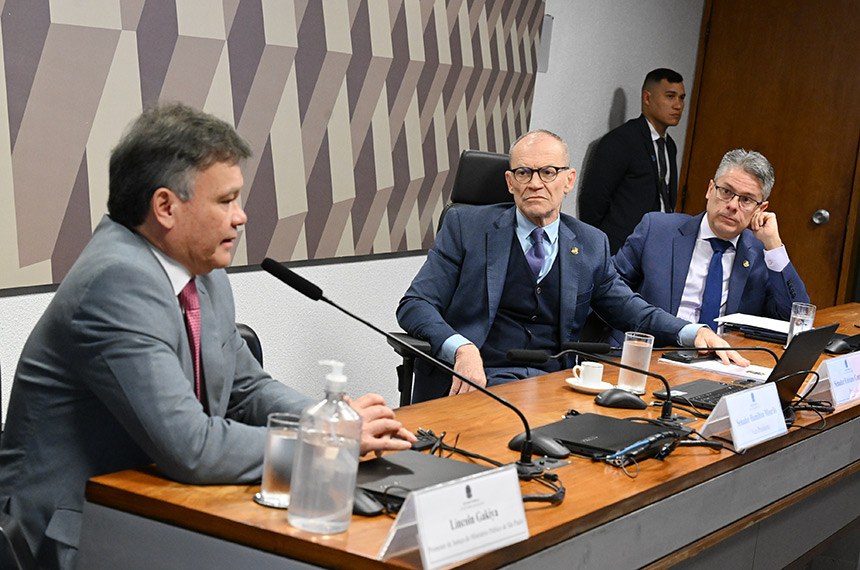
The Public Prosecutor of the Public Ministry of São Paulo, Paulo Lincoln Gakiya, revealed that criminal organizations are using betting houses (bets) for money laundering, including through contracts with digital influencers. The statement occurred during a meeting of the Parliamentary Commission of Inquiry (CPI) on Organized Crime this Tuesday (25), in the Federal Senate. In parallel, in the Economic Affairs Committee (CAE), senators questioned the president of the Central Bank, Gabriel Galípolo, about the control of irregular financial transactions, especially related to betting companies and fintechs.
The debate in the Parliamentary Commission of Inquiry highlighted that the growth of organized crime in Brazil is mainly due to failures in oversight and structural weaknesses in the State. Participants emphasized that criminal organizations exploit loopholes in the prison system, infiltrate the financial system, and engage in disputes between institutions, which hinder efforts to combat these factions.
The chairman of the committee, Senator Fabiano Contarato (PT-ES), defined organized crime as a state problem, with the capacity to corrupt public policies and capture institutions.
During the CPI meeting, Gakiya issued a specific warning about betting companies: “In reality, we no longer use cash. So, it's something that needs to be regulated. And also, if you'll allow me, one more observation about betting companies. I won't give away any spoilers, but I can tell you that many of these companies are being used by organized crime for money laundering, mainly through contracts with digital influencers. So, they use some digital influencers, who manage to make a fortune in a few years, who have contracts with these betting companies, but who are intimately linked to money laundering by organized crime. This will soon come to light.”
The rapporteur of the Parliamentary Commission of Inquiry (CPI), Senator Alessandro Vieira (MDB-SE), also commented on the topic: “This issue was discussed here at the time. The Federal Police, the Internal Revenue Service, and the Federal Public Prosecutor's Office warned about the consequences of legalizing gambling for money laundering. Unfortunately, all of this was discussed here. On this point, we were also in the minority. I would also like to say, regarding this disorderly growth, that this evidently occurs when we talk about the absence of the State; we realize that organized crime seeks out areas of opacity, whether in legal regulation or oversight.”
The prosecutor did not clarify whether the investigation concerns legal or illegal betting.
This is not the first time Lincoln Gakiya has warned about the possibility of an investigation into the relationship between betting sites and influencers, but the prosecutor does not specify whether these platforms are illegal or regulated.
In early September, in an interview on TV Cultura's "Roda Viva," when asked if he had identified anything related to sports betting in any operation, Gakiya revealed...
“I’ve already identified it, but I can’t tell you. Actually, what I can say is this, and this isn’t just my observation: whenever there’s a lack of legal regulation, low control, low oversight, high profitability, and low risk, organized crime will certainly be present. And I don’t doubt that they’re already in the betting industry. We do have strong evidence of money laundering using betting sites and also using influencers who advertise betting sites,” he commented.
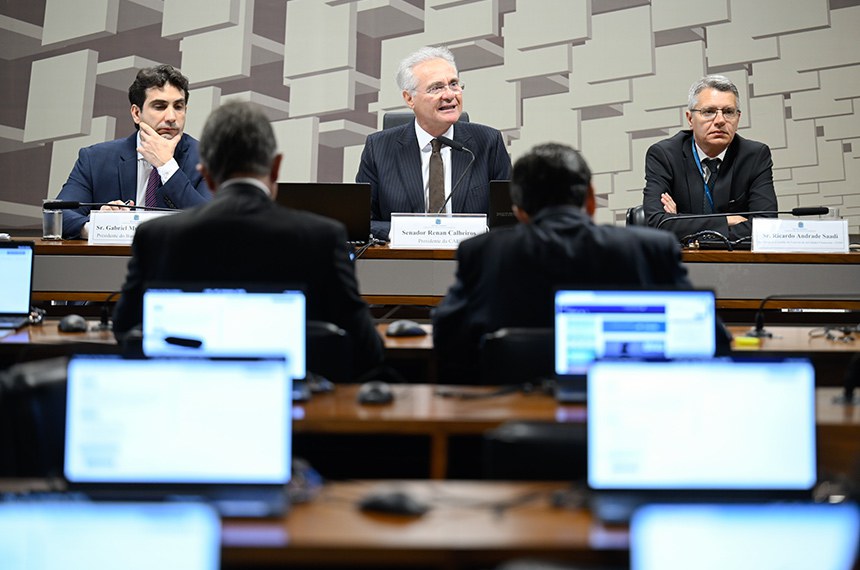
Senators urge Galípolo to take action from the Central Bank to combat irregularities.
During the CAE hearing, Senator Eduardo Braga (MDB-AM) presented data on the financial sector: of the 1.592 fintechs operating in Brazil, only 335 are supervised by the Central Bank. This means that more than 1.200 of these institutions operate without adequate monitoring. “Notice the disproportion. This means that more than 1,2 fintechs are operating in Brazil without monitoring by the Central Bank. Without information for the COAF (Council for Financial Activities Control). This has become a free-for-all,” Braga stated during the hearing.
Information from the Brazilian Public Security Forum and the Esfera Institute indicates that criminal factions moved R$ 350 billion in three years within the banking system, with tax evasion of R$ 90 billion. Losses from cybercrimes and cell phone thefts reach R$ 186 billion, totaling approximately half a trillion reais in economic impact.
In the CAE (Committee on Economic Affairs), Senator Eduardo Braga stated that "the Brazilian financial system is becoming a laughingstock" and that this needs to stop. He emphasized that "bolsão" accounts (bank accounts opened by institutions like fintechs in traditional banks) are a key escape route for tax evasion and criminal activity in the country, noting that the money from betting sites is held in these bank accounts.
Senator Izalci Lucas (PL-DF) highlighted: “In the Betting CPI we saw that fintechs were used to send funds abroad. Billions and billions. Precisely the fintechs that are not controlled by the Central Bank, much less by the Ministry of Finance.”
The president of COAF (Council for Financial Activities Control), Ricardo Saadi, explained that after identifying the use of accounts by criminal organizations, COAF, the Central Bank, and the Federal Police worked together to identify the problems with these large, fraudulent accounts. Saadi reported that the Central Bank published regulations that should make it more difficult for "this type of account to become a problem again." He added that "when we create an instrument, we create it thinking about its positive aspects, and that's what was done when these accounts were expanded. This facilitates payments to large conglomerates, such as Amazon, Mercado Livre, and others. But criminals are always adapting and looking for loopholes."
In the same CAE session, Galípolo requested the senators' support for the analysis and voting on the Proposed Amendment to the Constitution (PEC 65/2023), which seeks to expand the financial, fiscal, and budgetary autonomy of the Central Bank. The president of the Central Bank argued that it is very important for the institution to have resources to make investments.
In addition to discussions about betting and fintechs, several senators questioned the case of Banco Master, recently liquidated by the Central Bank. Senator Leila Barros (PDT-DF) reported that signatures are already being collected among senators to open a Parliamentary Commission of Inquiry (CPI) on the case. Galípolo stated that "all banks are fallible institutions" and that the institution complied with all the legal steps required in the process that resulted in the liquidation of Banco Master.

