A taboo subject in Congress, online betting could fund the Bolsa Família program for 8 months.
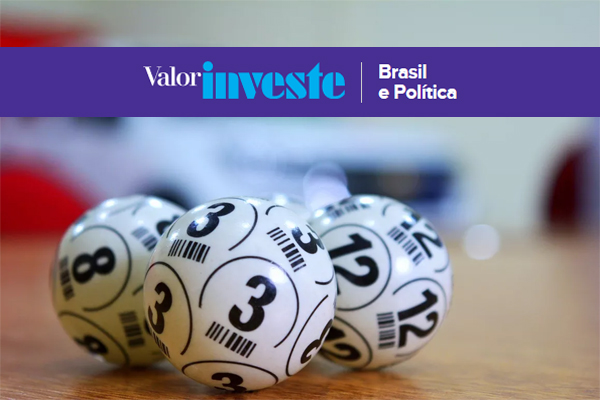
Lotteries, in a broader sense, and online games generate voluntary taxes and could help reduce the current deficit in Brazilian public accounts. At least, that's what proponents of legalizing these games in the country say.
Data from the Legal Gaming Institute indicates that Brazil currently fails to collect R$ 20 billion in taxes annually, an amount sufficient to fund eight months of the budget allocated to the Bolsa Família Program in 2019, which is expected to consume R$ 30 billion.
This value is calculated based on statistics from countries that already have games of chance, now considered "gambling" in Brazil, such as casinos and bingo halls.
In general, gambling revenue in these countries represents 1% of GDP (Gross Domestic Product), and in Brazil, the estimated tax rate would be 30% on this turnover.
But that number could be even higher.
"That's a pessimistic number; there's pent-up demand in the country, with people afraid to enter an illegal gambling establishment," says Magno José Santos, president of the Brazilian Institute of Legal Gambling.
A 2015 study by the Getulio Vargas Foundation (FGV), commissioned by the Ministry of Finance at the time, indicated that gambling could generate R$ 174,7 billion in revenue, with estimated annual tax collection of R$ 58,8 billion. In other words, enough to fund the Bolsa Família program for almost two years.
A report released in early July by GamblingCompliance, a regulatory intelligence firm for the gaming and blockchain industry, indicates that legalizing gambling in Brazil opens up the opportunity to generate US$1 billion in revenue.
"For a population reluctant to raise taxes, increasing revenue would be great," says Leonardo Palhares, partner at Almeida Advogados, which hosted a debate on the topic in May.
Furthermore, regulating online betting would help curb illegal activities. This was the conclusion reached by participants in the Sports Committee of the Chamber of Deputies at the end of May.
Despite the positive outcome of the evaluation in the Chamber of Deputies, the subject remains taboo in the country, so much so that there are 16 bills for the regulation of so-called "games of chance" currently under consideration in the House.
Some of them were introduced more than 25 years ago and have barely progressed in all that time. Meanwhile, online gaming is already regulated in more than 60 countries.
Recently, a law from last year (Law 13.576/18) that authorizes sports betting, both physically and online, in Brazil has gained traction in discussions. However, the law still needs to be regulated.
According to Representative Evandro Roman (PSD-PR), who requested the debate held in May, the regulation of betting could curb illegal activities such as money laundering, and help protect consumers and generate tax revenue.
R$ 50 billion in lotteries
The Brazilian lottery and gaming market currently generates at least R$ 50 billion per year. Of this total, 44% comes from capitalization bonds, which he calls "lottery in disguise".
Another 30% comes from federal lotteries, 8% from sports betting, 6% from the jogo do bicho (illegal lottery), 6% from casinos, 4,7% from bingo, 0,7% from state lotteries, and 0,6% from horse racing.
In the case of games that are currently illegal, the most reliable source for estimating costs is the Family Budget Survey by IBGE (Brazilian Institute of Geography and Statistics). In this survey, individuals self-declare their expenses.
Nevertheless, Pedro Trengrouse, vice-president of the Special Commission on Sports Gaming, Lottery and Entertainment Law of the Federal Council of the Brazilian Bar Association, believes that the numbers are underestimated.
In the lantern
The expert points out that Brazilian revenue from lotteries and online betting is still far from its potential and lags behind many countries where the regulatory framework is more efficient.
According to data presented by Caixa Econômica Federal at a public hearing in the Chamber of Deputies, lottery revenue in Italy reaches US$34 billion per year, with a per capita value of US$565.
France generates US$16 billion in revenue, with US$249 per capita, while New York City alone collects US$9 billion annually, or US$456 per capita.
Meanwhile, in Brazil, this revenue does not exceed US$4 billion, with per capita sales of US$18,53, falling behind Portugal (US$228), Uruguay (US$40), and Argentina (US$36).
One of the factors that explains the low revenue from lotteries in Brazil is the fact that the legislation allocates a smaller share of prizes in Brazil compared to other countries. The world average is over 50%.
1 million jobs
Legalizing so-called "games of chance" could potentially generate 1,3 million jobs, according to the president of the Brazilian Legal Gaming Institute, Magno José Santos, with 659 of those jobs being direct.
This estimated number of vacancies is more than double the net number of formal jobs created in the country last year (529.554).
For this calculation, Santos says he takes into account data from BNDES (National Bank for Economic and Social Development) on the service sector and informal figures on "gambling".
"The jogo do bicho [illegal lottery] has 350 points of sale with 450 workers today," says Santos.
The American casino industry generates approximately 1,7 million jobs.
Are capitalization bonds competition?
According to Pedro Trengrouse, yes. He described capitalization bonds, during a public hearing in the Chamber of Deputies, as "an attack against the popular economy."
Trengrouse believes that this type of financial service "cannibalizes" the country's lottery market.
The Caixa Econômica lotteries raised R$ 13,85 billion in 2018, while capitalization bonds had a 51,6% higher revenue, at R$ 21 billion.
According to Trengrouse, this movement stems from outdated and confusing legislation.
"This unfair competition needs to be resolved by law," writes Pedro Trengrouse in a memo.
Trengrouse pointed out the following advantages of capitalization bonds over lotteries in his presentation to the House committee:
– Lottery tickets are available at over 23 bank branches and nearly 40 banking outlets, while lottery tickets are available at 14 lottery outlets.
– Securities are offered “actively and persistently”, while lotteries are sold passively.
– Bonds pay out smaller prizes than lotteries
"It is quite likely that one of the reasons why there were no bids at all in the Lotex auction was precisely the authorization for capitalization bonds to offer instant prizes," assesses Trengrouse.
The Lotex auction had seven failed attempts, and now the government has decided to relax the rules for granting "scratch-off" tickets, as instant lotteries are known.
The lines also work against lottery outlets. According to Trengrouse, the enormous lines generated by other services offered, such as banking, lead people to abandon their bets impulsively.
In defense of capitalization bonds, Carlos Alberto Corrêa, executive director of FenaCap (National Federation of Capitalization), states that a person who buys a lottery ticket and does not win a prize loses all their money, while the bond is "a financial capitalization instrument" and is not solely aimed at winning prizes through a draw.
Corrêa also mentions that the sector generates more than 70 direct and indirect jobs.
Harmful effects
A survey by Paraná Pesquisas, conducted in May at the request of the Brazilian Institute of Legal Gaming, indicates that 52,1% of the 513 federal deputies would approve the legalization of "games of chance," including casinos, the jogo do bicho (a type of lottery), bingo, and online betting.
Those undecided totaled 7,1%, and those opposed to legalization represented 40,8%. Among the reasons given for not legalizing gambling were:
– Ease of money laundering (20,6%)
– Increase in addiction (17,2%)
Religion (10,1%)
– Deficient oversight (9,7%)
– Lack of government control (9,2%)
– It is against gambling (0,4%)
– Influence of minors to gamble (0,4%)
– Other citations (1,2%)
– They were unable to cite (2,9%)
The concern about the rise in gambling addiction is not unfounded. In Portugal, 0,6% of adults admit to having pathological gambling problems, and 1,2% admit to having problems with gambling abuse.
Last year, 125 Portuguese people started gambling, bringing the total number of registered gamblers to 1,3 million. Also within those 12 months, more than 14 players requested to be banned from betting sites. The reason? They recognized that their relationship with gambling was unhealthy.
Addiction generates costs for the healthcare system. It is estimated that 0,2% to 3% of adults suffer from some problem related to gambling and betting.
Hermano Tavares, a psychiatrist and professor in the psychiatry department at the University of São Paulo (USP), said in an interview with Agência Brasil in 2016 that the demand for treatment of compulsive gamblers practically triples when betting is legalized.
"I advocate that the industry itself should foot the bill, that there should be a fee with the regulatory body so that part of the costs is allocated to the treatment of pathological gamblers," says the president of the Brazilian Institute of Legal Gambling.
Regarding money laundering, another important concern raised by the deputies, Trengrouse explained in his presentation to the Chamber that it is the lack of regulation in gambling that creates loopholes for illegal activities.
He cited the case of the "budget dwarfs" and that, a few years ago, the COAF (Council for Financial Activities Control) identified 30 people who, together, won the lottery 1.802 times.
On July 10th, the president of the Tourism Commission, Newton Cardoso Jr. (MDB-MG), delivered to the president of the Chamber, Rodrigo Maia (DEM-RJ), the priority projects of the Tourism Commission, including the project (Law 442/1991) that deals with the legalization of gambling.
“Since World Tourism Day is celebrated on September 27th, we thought this would be the ideal week to consolidate this effort. For this reason, I am hereby requesting support for the inclusion of tourism-related bills on the agenda of the House Plenary's Order of the Day,” wrote Newton Cardoso Jr.
Online betting is legal in 97% of OECD (Organisation for Economic Co-operation and Development) countries and in 93% of G-20 countries, a group formed by the world's largest economies. ( Valor Invest – Weruska Goeking – São Paulo)