
TCU identifies serious flaws in preventing money laundering in illegal betting.
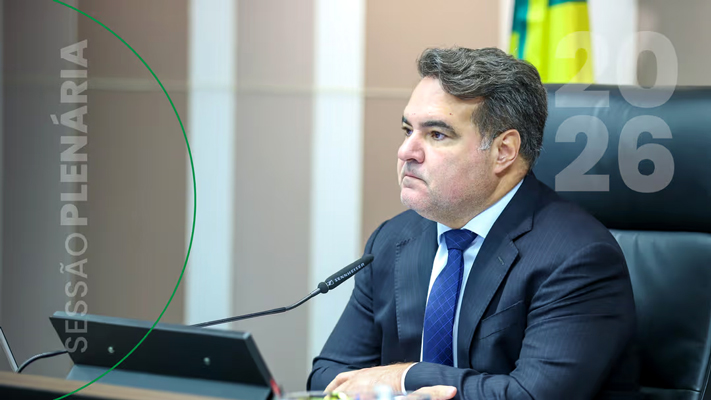
The Brazilian Federal Court of Accounts (TCU) conducted an operational audit of public administration controls to prevent and combat money laundering on online virtual betting platforms . The work was reported by Minister Jorge Oliveira. The analysis examined measures to combat illegal betting operations.
The Court also assessed the role of the National Strategy to Combat Corruption and Money Laundering in coordinating prevention policies. The audit revealed significant deficiencies in the governance and coordination mechanisms between the bodies responsible for the sector. The inspection aimed to evaluate the adequacy and effectiveness of the Federal Public Administration's controls to prevent and combat money laundering and the financing of terrorism through online games and virtual betting.
Minister Jorge Oliveira explained the objective of the work: “Through this work, the TCU (Brazilian Federal Court of Accounts) seeks to contribute to enabling the Brazilian state to act more effectively in combating money laundering practiced through virtual games and betting, with the consequent reduction of related illicit activities, such as tax evasion.”
The audit examined how different public bodies operate in controlling betting platforms. The Court reviewed the inter-institutional coordination of policies for preventing and combating money laundering and the financing of terrorism. The audit analyzed the oversight of operators working outside the country's current regulations. Among the bodies evaluated are the Secretariat of Prizes and Bets of the Ministry of Finance (SPA/MF), the Council for the Control of Financial Activities (Coaf), the Central Bank of Brazil (BCB), the National Telecommunications Agency (Anatel), and the Executive Secretariat of the National Strategy for Combating Corruption and Money Laundering (ENCCLA).
The sector recorded gross revenue of R$ 38 billion in the first half of 2025.
The online betting market showed significant growth in the first half of 2025. The sector's gross revenue reached R$ 38 billion. This value represents the difference between the amounts wagered and the prizes distributed to players.
The Brazilian Federal Revenue Service collected R$ 3,8 billion in federal taxes from this activity. The sector allocated R$ 2,14 billion to social purposes during the analyzed period. Approximately 28 million Brazilians placed bets on authorized platforms during these six months.
Each gambler spent, on average, approximately R$ 164 per month. The data was collected by an audit from the TCU (Brazilian Federal Court of Accounts). The numbers highlight risks related to gambling addiction and personal debt among users.
The audit identified that the volume of resources allocated to betting could compromise the financial capacity of a significant portion of bettors. The situation especially affects those in situations of economic vulnerability. The report indicates that the sports betting and online gaming market generated approximately R$ 100 billion in 2024, considering both regular and irregular operators.
Bolsa Família funds compromised by online gambling.
Minister Jorge Oliveira highlighted the impact of betting platforms on beneficiaries of social programs. "Data from the Central Bank indicates that some beneficiaries of the Bolsa Família Program (PBF) spent a whopping R$ 3 billion on online betting in August 2024 alone, equivalent to a staggering 21% of the total amount disbursed by the program, compromising the results of the public policy," he stated.
The percentage indicates that more than a fifth of the resources transferred by the program were directed to online gambling in a single month. This situation raises questions about the effectiveness of public income transfer policies. A significant portion of the funds is not being used for the purposes intended by the social program.
The use of Bolsa Família funds for online gambling represents an additional challenge for the management of social policies. The Court's audit identified this issue as a relevant element in assessing the necessary controls for the virtual gambling sector in the country. According to the report, this situation highlights the need for measures to protect vulnerable groups and for public policies aimed at preventing pathological gambling.
Irregular platforms account for up to half of the market.
Illegal operators are responsible for 41% to 51% of the total volume of bets placed in the country. The amount moved by these unauthorized platforms reaches up to R$ 40 billion annually. The data was presented in the audit.
The operation of illegal betting sites generates risks of money laundering, match-fixing, and tax evasion. Minister Jorge Oliveira warned about the dangers associated with these platforms: "The existence of illegal gambling leads to fraud and exposes users to scams through the manipulation of algorithms."
The manipulation of algorithms in games offered by irregular operators exposes users to fraud. These platforms operate without the controls and oversight applicable to authorized operators. This scenario creates an environment conducive to illicit practices and losses for bettors. The audit found that the actions of irregular operators represent a serious threat to the integrity of the market, facilitating money laundering, tax evasion, and the manipulation of sports results.
Information sharing between agencies has flaws.
The Court's inspection highlighted the importance of inter-institutional coordination in combating illegal betting houses. The audit's conclusion revealed significant deficiencies in the governance and coordination mechanisms between the bodies responsible for regulating and overseeing the online betting sector.
Minister Jorge Oliveira, rapporteur for the case at the TCU (Brazilian Federal Court of Accounts), identified the main weaknesses: "The main weaknesses identified were the absence of formalized protocols for sharing information between agencies and the lack of integrated actions for blocking, monitoring, and sanctioning irregular operators."
The lack of formalized protocols hinders the sharing of information between different public bodies. The absence of integrated actions compromises the effectiveness of blocking, monitoring, and sanctioning operators who act irregularly. The audit pointed to these deficiencies as obstacles to effectively combating money laundering associated with online betting.
The report identified a lack of a permanent inter-institutional coordination mechanism for combating illegal betting operations, resulting in fragmented and ineffective actions. The absence of integration between the databases of different agencies prevents a systemic view of the problem and hinders the identification of irregular operators active on multiple platforms.
The Prizes and Betting Department has operational deficiencies.
The audit revealed inadequacies in the instruments used to detect unauthorized betting establishments. The Prizes and Betting Secretariat of the Ministry of Finance has deficiencies in its operational capacity. The survey was conducted by the Court.
The TCU (Brazilian Federal Court of Accounts) identified structural technical limitations that hinder the fight against illegal operators. The lack of domain monitoring capacity represents a significant obstacle. Oversight is reactive and dependent on complaints and manual searches to identify new or hidden operators.
The analysis revealed delays in the procedures for identifying irregular operations. The audit found a lack of clear rules and integration with state databases for classifying irregular operators. This situation fragments enforcement efforts.
The report points out that SPA/MF lacks adequate technological tools for automated monitoring of betting domains and applications, relying instead on manual and reactive methods that prove insufficient given the dynamics of the digital market. Furthermore, the absence of objective and transparent criteria for classifying operators as irregular creates legal uncertainty and hinders the application of sanctions.
Anatel faces limitations in blocking illegal platforms.
The National Telecommunications Agency also faces significant limitations in its operations. The TCU (Brazilian Federal Court of Accounts) report identified that Anatel lacks adequate technological and methodological tools to proactively detect unauthorized betting houses, relying exclusively on lists provided by SPA/MF (Brazilian Federal Revenue Service/Ministry of Finance).
The audit found that the process of blocking irregular websites is slow and ineffective, since illegal operators are able to quickly migrate to new domains or use circumventing techniques. The lack of coordination between Anatel and SPA/MF results in delays in updating the blocklists and implementing restrictive measures.
The report also points out that there is no effective mechanism for monitoring the effectiveness of the blocking measures adopted, which prevents the evaluation of results and the improvement of strategies to combat illegal operators.
The Central Bank and financial institutions show weaknesses in their control.
The audit identified weaknesses in the sanctions regime applicable to financial and payment institutions that facilitate operations of illegal betting houses. The Central Bank of Brazil lacks effective mechanisms to prevent these institutions from processing transactions for unauthorized operators.
The report points out that the sanctions foreseen in the current regulations are insufficient to curb the actions of financial institutions that, even aware of the irregularity, continue to process payments from illegal betting houses. The lack of coordination between the Central Bank of Brazil (BCB) and the Portuguese Securities and Exchange Commission (SPA/MF) hinders the identification of these institutions and the application of penalties.
The audit also found that there is no systematic sharing of information between the Central Bank of Brazil (BCB) and other regulatory bodies regarding financial institutions that facilitate irregular operations, which compromises the effectiveness of actions to combat money laundering in the online betting sector.
Coaf faces challenges in analyzing suspicious transactions.
The Council for the Control of Financial Activities (CFC) faces limitations in its capacity to analyze suspicious transactions related to online gambling. The TCU (Brazilian Federal Court of Accounts) report identified that the increasing volume of reports of suspicious transactions related to the gambling sector is overburdening the agency's structure.
The audit found that there is no adequate prioritization of analyses related to online betting, resulting in delays in processing information and identifying money laundering schemes. The lack of specialization among analysts in specific issues within the betting sector also compromises the quality of the analyses.
The report also points out that COAF (Council for Financial Activities Control) lacks adequate technological tools for the automated analysis of large volumes of data related to online betting, relying instead on manual methods that prove insufficient given the complexity and volume of the transactions.
The court recommends the creation of a permanent coordination mechanism.
The Court recommended that the Ministry of Finance's Prize and Betting Secretariat establish a permanent inter-institutional coordination mechanism to combat illegal betting houses. This mechanism should include the participation of, at least, the National Telecommunications Agency, the Central Bank of Brazil, the Council for the Control of Financial Activities, the Federal Revenue Service of Brazil, and criminal prosecution agencies.
The TCU (Brazilian Federal Court of Accounts) also recommended that the Secretariat of Prizes and Betting of the Ministry of Finance and Anatel (Brazilian National Telecommunications Agency) improve, in a coordinated manner, the technological and methodological instruments for detecting unauthorized betting houses. The recommendation includes the development of automated domain and application monitoring tools, as well as the implementation of more effective blocking techniques that hinder the migration of irregular operators to new addresses.
The Court also recommended that the Ministry of Finance's Prize and Betting Secretariat and the Central Bank of Brazil adopt measures to strengthen the sanctioning regime applicable to financial and payment institutions that facilitate the operations of illegal betting houses. The recommendation includes the establishment of stricter penalties and the creation of mechanisms for sharing information about institutions that process transactions of unauthorized operators.
The national strategy requires a computerized monitoring system.
The Court recommended that the Department of Asset Recovery and International Legal Cooperation of the Ministry of Justice and Public Security, in its capacity as Executive Secretariat of ENCCLA, develop and implement a computerized system for monitoring the coordinated actions of the strategy.
The audit found that ENCCLA lacks adequate tools to monitor the implementation of the actions foreseen in its strategy, which compromises the effectiveness of coordinating anti-money laundering policies. The report points out that the absence of a computerized system hinders the evaluation of results achieved and the identification of bottlenecks in the execution of actions.
The TCU (Brazilian Federal Court of Accounts) recommended that the computerized system allow for real-time monitoring of the execution of actions, identification of those responsible, deadlines and expected results, as well as the generation of management reports to support decision-making by the Executive Secretariat of ENCCLA (National Strategy for Combating Corruption and Money Laundering).
The TCU's (Brazilian Federal Court of Accounts) deliberations seek to establish a more solid foundation for the integrated action of government agencies in combating illegal gambling. The implementation of the recommendations will depend on coordination between the different institutions involved in overseeing the sector. The report emphasizes that the effectiveness of measures to combat money laundering and the financing of terrorism through online gambling fundamentally depends on strengthening inter-institutional coordination and improving the oversight and control instruments available to the responsible agencies.
Read the full text of the decision: Ruling 1296/2026 – Plenary Session
Case Number: TC 015.852/2025-3.
Extraordinary session: 19/5/2026

