
Gambling addiction can have its roots in childhood, experts warn.
The warning comes from those in the consulting room. Psychoanalysts who work with children, adolescents, and families observe that gambling addiction in adolescence rarely begins at this stage. It has older roots, planted in the first years of life. The numbers confirm the seriousness of the situation. More than 1 million Brazilian teenagers between 14 and 17 years old have gambled at least once in the last year, and 55,2% of them are already at risk or have a disorder related to addiction, according to the National Survey on Alcohol and Drugs (LENAD III) from the Federal University of São Paulo (UNIFESP).
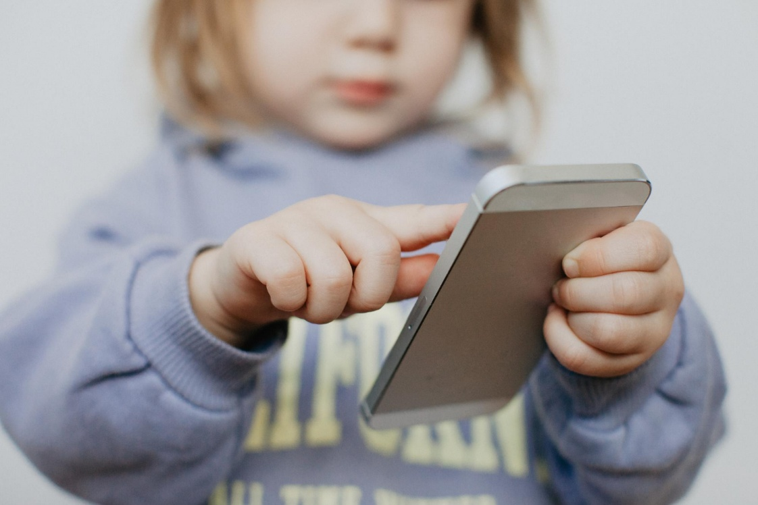
The explanation for this path begins long before adolescence. In the first years of life, the baby depends on the gaze of the caregiver to learn to recognize what they feel, to tolerate discomfort, and to relate to the world. It is a process that happens in the body, in affective exchanges, in the presence of someone who responds. And it is precisely there that the screen interferes in a way that many families still do not realize.
“The precursor to the mirror is the mother's gaze. When the baby looks at the face of the caregiver, it sees itself reflected. The screen does not return this affective contour. It captures through the saturation of stimuli, but does not offer the support that the child needs to integrate what it feels. Where there should be exchange, repetition takes hold,” explains Jailza Peguim, psychoanalyst at Sow Saúde Integral.
According to the TIC Kids Online Brasil 2025 survey, conducted by the Regional Center for Studies on the Development of the Information Society (Cetic.br), 28% of Brazilian children and adolescents started using the internet before the age of six, almost triple the number recorded in 2016.
This gap, built in the early years of life, doesn't disappear. It accompanies the child and, in adolescence, finds an environment designed to exploit it. Unlike social media, betting platforms operate with an additional element: unpredictable reward. The gambler never knows when they will win, and it is precisely this uncertainty that fuels the compulsion. The consequences reach the doctor's office in ways that the family rarely immediately associates with gambling.
The same TIC Kids Online Brasil survey revealed that more than half of teenagers between 11 and 17 years old have already been exposed to online gambling advertising, a number that rises to 63% among those aged 15 to 17, even though this advertising is prohibited for minors by law.
“What clinical experience shows is that adolescent suffering rarely appears in isolation. It comes accompanied by shame, hidden debts, broken bonds, and a family that often only realizes the magnitude of the problem when it is already within their grasp,” says Flávia Anjos, psychoanalyst and vice-president director of Sow Saúde Integral.
In practice, the signs come in concrete forms. Teenagers who compulsively check their cell phones, who feel irritated or guilty after gambling, who lose sleep and have difficulty concentrating on their studies. Often, parents notice these signs late and, when they do, tend to place the blame exclusively on technology.
According to Jailza, this perception functions as a defense mechanism. “By placing the blame on the screen, the family disengages itself from the machinery of the child's suffering, avoiding confronting the failures in mediation or the fissures in everyday emotional bonds. What clinical experience shows is that abusive use is almost always an attempt at psychological self-medication. And parents are often also trapped by their own screens,” explains the specialist.
For families already dealing with this problem in adolescence, the solution is not blame or sudden control. It's seeking specialized help, because the mechanisms involved are complex and rarely resolve themselves through willpower alone. The school also plays a role in this network, being able to identify behavioral changes early and bring the family closer to the situation.
New law, old challenges
In March 2026, the Digital ECA (Law No. 15.211/2025) came into effect, the most comprehensive regulatory framework ever created in Brazil to protect children and adolescents in the digital environment. Among other measures, the law prohibits the use of data and emotional profiles of minors for advertising purposes and bans content that encourages reward-based games, such as betting.
For Flávia, the law represents progress, but its effectiveness remains to be proven. The legislation has been in effect for less than three months, and there is no real-world record of its application. In the meantime, the family cannot wait for the State to solve the problem.
“The bond built within the home is what will determine whether or not the child will have someone to talk to when a problem arises. The adolescent is still developing. They don't have full discernment and are very susceptible to peer pressure, the need to belong, to be accepted. When the family is truly present, not just physically, the child has a better chance of speaking up before the problem escalates beyond their control,” she concludes.
About Sow Integral Health
Founded in August 2023, Sow Saúde Integral is a non-profit organization dedicated to promoting the mental health of children, adolescents, and their families, especially those in situations of social vulnerability. With an interdisciplinary approach centered on psychoanalysis, it offers individual, family, and group therapy, therapeutic workshops, psychoeducational activities, and professional training, both in person and online. Since its founding, it has served nearly one hundred people in therapeutic support and has a clinical staff of 10 professionals. It regularly conducts lectures in public schools, online discussion groups, therapeutic groups, and activities in companies and communities. It is registered with the Municipal Council for the Rights of Children and Adolescents (CMDCA) and works in a network with partners in São Paulo, Rio de Janeiro, Minas Gerais, Paraná, and Rio Grande do Sul.

