Central Bank and Treasury gain power to block accounts and Pix payments linked to illegal gambling.
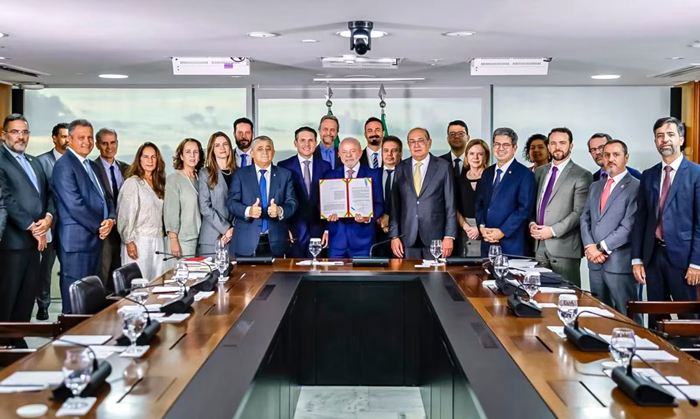
President Luiz Inácio Lula da Silva has signed into law legislation that establishes harsher penalties for participation in criminal organizations or militias. The signing took place on Tuesday (March 24). The text was published in the Official Gazette of the Union this Wednesday (March 25) as Law No. 15.358/25.
The legislation establishes the Legal Framework for Combating Organized Crime in Brazil, known as the Raul Jungmann Law. The text introduces specific mechanisms to combat the illegal fixed-odds betting market, establishing instruments that allow regulatory authorities to block bank accounts, prevent transactions via Pix (Brazil's instant payment system), and apply administrative and criminal penalties against unauthorized operators and their intermediaries. The law facilitates the seizure of assets from those involved in criminal activities.
The Chamber of Deputies approved the final version of the bill at the end of February. Deputies removed the CIDE-Bets tax from the text during the legislative process. This tax, which levied a 15% levy on betting deposits, had been included by the Senate to finance public security.
The plenary approved an amendment that will transform this section into a separate bill. The Speaker of the House, Hugo Motta (Republicanos-PB), reported that there was an agreement to address the CIDE-Bets issue separately. The decision allowed the main legislation to move forward without compromising the other approved provisions.
The Anti-Fraud Bill approved by Congress incorporated specific provisions to combat the illegal fixed-odds betting market. The measures establish stricter licensing and supervision requirements for legal operators. The text provides for increased administrative and criminal penalties for illegal activities and intermediaries.
Account blocking and transaction prevention
Law No. 14.790, of December 29, 2023, came into effect with amendments establishing mechanisms to combat the irregular operation of fixed-odds betting lotteries. The changes were introduced by Article 42 of legislation that also amends several decrees and laws. The text modifies the Penal Code of 1940, the Code of Criminal Procedure of 1941, the Law on Heinous Crimes of 1990, and the Law on Criminal Execution of 1984.
The new Article 21-A stipulates that financial institutions, payment institutions, and payment arrangement providers must block accounts when the competent regulatory or supervisory authority finds that an unauthorized individual or legal entity is operating a fixed-odds betting lottery. The blocking covers deposit accounts, payment accounts, and other registration accounts of irregular operators.
Institutions are obligated to prevent new transactions that aim to directly or indirectly enable the irregular operation of fixed-odds betting lotteries. The blocking must observe due administrative process. This measure guarantees the right to a fair hearing and full defense for the interested party, without prejudicing the reimbursement of amounts owed to bettors.
The Central Bank of Brazil and the Ministry of Finance are responsible for regulating the operational procedures necessary to comply with these determinations. This responsibility falls within the scope of their respective attributions. The funds held in the blocked accounts that are declared forfeited to the Union will be allocated to the National Public Security Fund (FNSP), in accordance with Law No. 13.756, of December 12, 2018.
The allocation to the National Fund for Public Security (FNSP) includes amounts forfeited as taxes, fines, and other penalties applied due to the irregular operation of fixed-odds betting lotteries. The legislation grants expanded powers of oversight and investigation to regulatory bodies. These powers include mechanisms for auditing and electronic monitoring.
The competent authorities have been granted the power to block payment services, accounts, and transactions linked to unlicensed operators.
Fraud information sharing system
Article 24-A establishes that payment and financial institutions must integrate into interoperable systems for sharing information on evidence of electronic fraud. This integration will follow the terms of current regulations. The systems aim to communicate evidence of individuals or legal entities operating as unauthorized betting operators.
Institutions should consult the shared information to prevent, detect, or respond to attempts to conduct transactions with illegal operators. They should apply appropriate prevention and response measures, according to the degree of risk identified. These measures include blocking, refusal, or enhanced review.
The communication and handling of information must comply with the technical and legal requirements set forth in a joint act of the Central Bank of Brazil and the Securities and Exchange Commission. The Prizes and Betting Secretariat of the Ministry of Finance shall receive information on indications of electronic fraud. The secretariat may maintain a public and up-to-date reference database of unauthorized operators.
The reference database serves as a source for input and cross-referencing with fraud prevention systems used by institutions. The Central Bank of Brazil and the National Monetary Council must, within a maximum period of 60 days from the publication of the law, issue or update the necessary regulations to ensure the full implementation of Article 24-A. The sharing of information between banks, operators, regulatory bodies, and security forces has become mandatory.
Specific regulations for Pix
Article 24-B stipulates that the Central Bank of Brazil will regulate, within the scope of the Pix payment system, specific mechanisms to prevent the misuse of infrastructure for the movement of funds linked to unauthorized betting operators. Among the measures that may be adopted is the creation of a transaction modality exclusively for betting. This modality will be linked to a positive registration of authorized operators.
The legislation provides for automated filters based on the National Classification of Economic Activities (CNAE) and Pix keys to block irregular transactions. Integration with centralized risk directories and self-exclusion options is possible. The text also includes provisions for the insertion of visual markings on transaction statements with betting operators.
Participating institutions in the Pix system will need to implement mechanisms to detect suspicious patterns of use for unauthorized betting. The criteria will be defined by the Central Bank of Brazil and the Secretariat of Prizes and Betting of the Ministry of Finance.
Article 24-C establishes that payment institutions and financial institutions must adopt enhanced due diligence procedures to prevent payment transactions with unauthorized agents. The approved text establishes international cooperation for the identification and blocking of illegal foreign platforms. The law sets rules on odds transparency , operational reporting, and money laundering prevention.
New administrative offenses and penalties
Article 39 of the law now includes new administrative offenses. Failure to comply with the provisions of articles 21, 24-A, 24-B and 24-C and their respective regulations constitutes an offense. Maintaining, renewing or entering into a direct or indirect contractual, commercial or operational relationship with a natural or legal person that operates a fixed-odds betting lottery without valid authorization also constitutes an offense.
The infraction occurs after unequivocal knowledge of the irregularity. This knowledge can be given through official notification, administrative decision, or publication in official media. Failure to implement or apply internal control, compliance , or anti-money laundering and counter-terrorism financing mechanisms designed to prevent the facilitation of operations associated with an unauthorized fixed-odds betting lottery operator constitutes an infraction.
The obligation applies when the mechanisms are required due to the size, nature, or institutional function of the regulated agent. Disseminating, promoting, boosting, or monetizing advertising content, sponsorships, campaigns, or other communication actions associated with an unauthorized fixed-odds betting lottery operator constitutes an infraction. The infraction is characterized by unequivocal knowledge of the irregularity.
The prohibition covers actions carried out through digital platforms, social networks, content producers, influencers, or advertising or marketing companies . Denying or hindering access to data and information systems constitutes obstruction of oversight. Failure to display or provide documents, papers, and accounting books, including in electronic format, also constitutes obstruction.
Obstruction is characterized when the refusal or difficulty occurs within the deadlines, forms, and conditions established by the competent administrative body in the exercise of its supervisory activity. The unequivocal knowledge referred to in infractions related to contractual relations and advertising may be established through formal notification, a prior administrative decision, or official publication. It may also occur through elements that demonstrate the notoriety of the irregular status of the agent being investigated.
Article 40 of the law now includes a new ground for suspension or cancellation of authorization. The measure applies to agents who directly or indirectly carry out any form of advertising or publicity in physical or virtual media for an agent who, without proper authorization, engages in activities related to fixed-odds betting.
Law No. 15.358 defines the crimes of structured social domination and facilitating structured social domination. The text amends Decree-Laws Nos. 2.848, of December 7, 1940 (Penal Code), and 3.689, of October 3, 1941 (Code of Criminal Procedure). It modifies Law No. 8.072, of July 25, 1990 (Law on Heinous Crimes).
The legislation amends Law No. 7.210, of July 11, 1984 (Penal Execution Law), and Law No. 11.343, of August 23, 2006. The text alters Laws No. 10.826, of December 22, 2003, 9.613, of March 3, 1998, and 4.737, of July 15, 1965 (Electoral Code). The modifications encompass Law No. 13.756, of December 12, 2018, and Law No. 14.790, of December 29, 2023.
Check out the approved text of LAW No. 15.358, OF MARCH 24, 2026 published in the Official Gazette of the Union this Wednesday (25):
Establishes the Legal Framework for Combating Organized Crime in Brazil (Raul Jungmann Law); defines crimes of structured social domination and facilitating structured social domination; and amends Decree-Laws Nos. 2.848, of December 7, 1940 (Penal Code), and 3.689, of October 3, 1941 (Code of Criminal Procedure), and Laws Nos. 8.072, of July 25, 1990 (Law on Heinous Crimes), 7.210, of July 11, 1984 (Law on Criminal Execution), 11.343, of August 23, 2006, 10.826, of December 22, 2003, 9.613, of March 3, 1998, 4.737, of July 15, 1965 (Electoral Code); 13.756, of December 12, 2018; and 14.790, of December 29, 2023.
(...)
Article 42. Law No. 14.790, of December 29, 2023, shall enter into force with the following amendments:
"Article 21-A. If the competent regulatory or supervisory authority finds that a fixed-odds betting lottery is being operated by an unauthorized natural or legal person, financial institutions, payment institutions, and payment arrangement providers shall, in accordance with the regulations:"
I – proceed with the blocking of deposit accounts, payment accounts, and other registration accounts held by irregular operators; and
II – to prevent the execution of new transactions that aim to enable, directly or indirectly, the irregular operation of fixed-odds betting lotteries.
§ 1 The blocking referred to in the heading of this article shall observe due administrative process, guaranteeing the right to a fair hearing and full defense to the interested party, and shall not prejudice the reimbursement of amounts owed to bettors.
§ 2. The Central Bank of Brazil and the Ministry of Finance, within their respective areas of responsibility, are responsible for regulating the operational procedures necessary to comply with the provisions of this article.
§ 3. The funds held in accounts blocked as provided for in this article that are declared forfeited to the Union, including taxes, fines, and other penalties applied as a result of the irregular operation of fixed-odds betting lotteries, shall be allocated to the National Public Security Fund (FNSP), pursuant to Law No. 13.756, of December 12, 2018.
"Article 24-A. Payment institutions and financial institutions must integrate, in accordance with current regulations, into interoperable systems for sharing information on evidence of electronic fraud, with the objective of:"
I – to report evidence of individuals or legal entities acting as unauthorized betting operators;
II – consult the shared information to prevent, detect, or respond to attempts to conduct transactions with illegal operators;
III – Apply appropriate prevention and response measures, according to the identified risk level, including blocking, refusal, or enhanced analysis.
§ 1 The communication and processing of information must comply with the technical and legal requirements set forth in a joint act of the Central Bank of Brazil and the Securities and Exchange Commission.
§ 2 The Prizes and Betting Secretariat of the Ministry of Finance shall receive information on evidence of electronic fraud as referred to in the heading and may maintain a public and up-to-date reference database of unauthorized operators, for the purpose of feeding and cross-referencing with the fraud prevention systems used by the institutions.
§ 3 The Central Bank of Brazil and the National Monetary Council shall, within a maximum period of 60 (sixty) days from the publication of this Law, issue or update the regulations necessary to ensure the full implementation of the provisions of this article.”
"Article 24-B. The Central Bank of Brazil will regulate, within the scope of the Pix payment system, specific mechanisms to prevent the misuse of the infrastructure for the movement of funds linked to unauthorized betting operators."
§ 1. The following measures, among others, may be adopted:
I – creation of a transaction method exclusively for betting, linked to a positive registration of authorized operators;
II – Automated filters for the National Classification of Economic Activities (CNAE) and Pix keys with blocking of irregular transactions;
III – Integration with centralized risk and self-exclusion directories;
IV – Insertion of visual markings in transaction statements with betting operators.
§ 2. Institutions participating in Pix must implement mechanisms to detect suspicious patterns of use for unauthorized betting, based on criteria defined by the Central Bank of Brazil and the Secretariat of Prizes and Betting of the Ministry of Finance.
"Article 24-C. Payment institutions and financial institutions must adopt enhanced due diligence procedures to prevent payment transactions with unauthorized agents."
“Article 39. ………………………………………………………………………………………………………………….
……………………………………………………………………………………………………………………… ..
IX – to fail to comply with the provisions of articles 21, 24-A, 24-B and 24-C and their respective regulations;
X – To maintain, renew, or enter into a direct or indirect contractual, commercial, or operational relationship with a natural or legal person that operates a fixed-odds betting lottery without valid authorization, after unequivocal knowledge of the irregularity, including through official notification, administrative decision, or publication in official media;
XI – Failure to implement or apply internal control, compliance, or anti-money laundering and counter-terrorism financing mechanisms designed to prevent the facilitation of transactions associated with an unauthorized fixed-odds betting lottery operator, when required due to the size, nature, or institutional function of the regulated agent;
XII – to disseminate, promote, boost, or monetize advertising content, sponsorships, campaigns, or other communication actions, including through digital platforms, social networks, content producers, influencers, or advertising or marketing companies, that are associated with an unauthorized fixed-odds betting lottery operator, provided there is unequivocal knowledge of the irregularity.
§ 1. Obstruction of inspection includes denying or hindering access to data and information systems and failing to display or provide documents, papers, and accounting books, including in electronic format, within the deadlines, forms, and conditions established by the competent administrative body in the exercise of its inspection activity.
§ 2 The characterization of the unequivocal knowledge referred to in items X and XII of the caput of this article may occur through formal notification, prior administrative decision, official publication or through elements that demonstrate the notoriety of the irregular condition of the promoted agent.” (NR)
“Article 40. ………………………………………………………………………………………………………………………..
……………………………………………………………………………………………………………………… ..
III – directly or indirectly carry out any form of advertising or publicity in physical or virtual media for an agent who, without proper authorization, engages in activities related to fixed-odds betting.” (NR)