
Camilo Santana, the senator who requested the Provisional Measure on Betting, will head the Civil House.
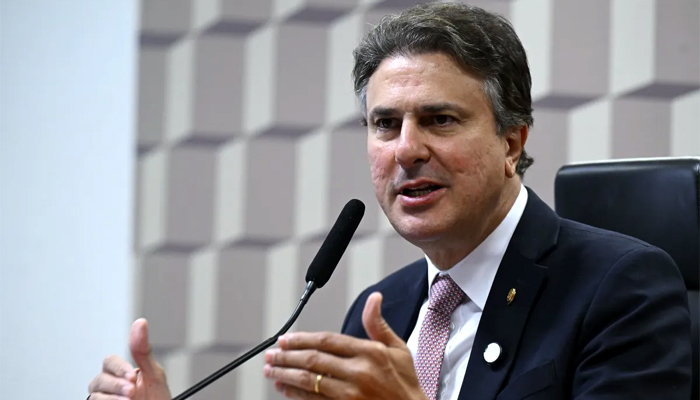
President Lula invited Senator Camilo Santana (PT-CE) on Thursday night (26) to take over the Ministry of the Civil House from next year, according to columnist Ana Flor, from GloboNews. Camilo accepted the invitation. The announcement may occur between this Friday (27) and the beginning of next week. The choice was confirmed by three interlocutors from the Planalto Palace. His name gained strength after Fernando Haddad agreed with Lula that he will be out of the first echelon. For the Treasury, the choice is Luiz Carlos Trabuco, president of the Board of Directors of Bradesco.
The Civil House is the department that coordinates the other ministries and filters the demands forwarded to the president. For the betting sector, the choice has a clear meaning. Starting in January, the most powerful pen in the Esplanade will be in the hands of one of the first politicians to publicly ask Lula for a provisional measure to end betting.
On social media, a video resurfaced this Friday in which Camilo defends the end of online gambling and proposes three "urgent measures": prohibiting the use of Bolsa Família (a Brazilian social welfare program) for gambling, limiting spending to 5% of declared income, and ending the "bombardment" of advertising on TV. BNLData investigated the origin and consistency of these statements.
The request that became a Provisional Measure
On September 21st, in an interview with the newspaper Alerta Geral, Camilo defended the end of online sports betting in Brazil and stated that the growth of this market has caused serious damage to the mental health and financial situation of millions of Brazilians. Regarding the law that regulated the sector, he was direct: "There was a national error in approving them." And he made the request that would become a reality four days later: "I advocate that President Lula issue a provisional measure ending these games in Brazil."
In the same interview, he said that those receiving social programs would not be allowed to gamble and that those earning above the minimum wage would have a limit of 5% of their income for betting. He also complained about corporate lobbying and the volume of advertising on television. It was this content that resurfaced.
On September 25th, Provisional Measure 1.394/2026 prohibited fixed-odds betting in the country. With this, the "restrictions" advocated by the senator became irrelevant: there is nothing to limit in a market that has been banned.
FactCheck of the three locks
⇒ Bolsa Família: the prohibition already existed. The restriction, presented as "urgent," had been in effect for almost a year. The SPA (Secretariat of Public Administration) created a query that allows operators to identify beneficiaries of Bolsa Família and BPC (Continuous Cash Benefit) and prevent them from registering or gambling. The regulations are in SPA/MF Ordinance No. 2.217 and Normative Instruction SPA/MF No. 22, both dated September 30, 2025. The rule complied with a decision of the STF (Supreme Federal Court) and, according to the Treasury, all 27 million beneficiaries of Bolsa Família and BPC are prohibited from registering for betting sites, but 2,8 million had accounts and had their access revoked. Later, the block also extended to FIES (Student Financing Fund) and debt renegotiation programs, such as Desenrola Brasil.
⇒ 5% of income: the senator's own proposal says otherwise. The proposal is in Bill 3.765/2026, presented on July 16, 2026, which sets a monthly limit for deposits in bets linked to the bettor's income. The standard limit is R$ 80, but it can rise to up to 5% of income, upon proof of financial capacity. In other words, the general rule is not 5% of income. It is a fixed ceiling of R$ 80, close to 5% of the minimum wage. As BNLData already showed in August, this value is below the average ticket price registered today in the regulated market, which raises the possibility of bettors migrating to unlicensed platforms. The bill is awaiting the appointment of a rapporteur in the Committee on Transparency, Governance, Oversight and Control and Consumer Protection (CTFC) and has never been voted on.
⇒ TV advertising: it ended along with the market. Since the Provisional Measure, authorized operators can no longer advertise because they have ceased to exist legally. The advertising that continues is that of illegal platforms, which never respected the rules of Law 14.790 nor the regulations of the SPA (Brazilian Society of Advertising Agencies). It migrated from free-to-air TV to Telegram, Instagram, and influencer groups, where no restrictions can reach it.
From "progress" to "national mistake" in two months.
The phrase "national mistake" has a problem originating from it. The regulation of betting was not a matter of chance nor of the opposition. It originated from a provisional measure and a bill from Lula's own government, and the president sanctioned Law 14.790 on December 29, 2023. At the time, Camilo was Minister of Education.
And the Ministry of Education (MEC) was not left out of the distribution. The law reserves 10% for the education sector ( 6,50% – Basic education schools in state and municipal public networks and 3,50% – Public technical schools at the secondary level), according to an act of the Ministry of Education. This act came with Ordinance No. 1.240, of December 31, 2024, from the Minister's Office, which establishes the procedures for the collection, allocation, and breakdown of the proceeds from the fixed-odds betting lottery. It was issued when the ministry was headed by Camilo. The resources went to public basic education schools, through the PDDE (National Program for School Development), and to the Federal Network of Professional Education.
The change in tone is also evident in the senator's own bill. In the justification for Bill 3.765, presented in July, Camilo Santana states that the regulation of betting has brought progress, but advocates for the creation of new mechanisms to reduce the financial impact. Two months later, in the midst of the campaign, the "progress" has become a "national mistake."
What to expect from the Civil House
Camilo arrives at the center of the government at a crucial moment for the sector. According to BNLData's calculations, Provisional Measure 1.394 expires on March 4, 2027, if it is not voted on. Until then, it is up to the Planalto Palace to decide how much political capital it will spend to approve it, in addition to Bill 5.477/2026, which criminalizes betting. According to allies, the future minister is already gathering data on the federal government apparatus, helping to outline the priorities of the next government alongside Lula, and listing projects that could become hallmarks of the administration.
The Civil House is also one of the bodies that BNLData questioned via the Access to Information Law. In response to a request for information on the impact studies that underpinned the ban, the ministry gave an evasive answer. Regarding the inter-institutional committee for monitoring illegal betting, the response was so unsatisfactory that BNLData appealed. The new minister inherits these unanswered questions.
Lula chose for the Chief of Staff position the ally who requested the ban, not someone willing to measure its effect. And the effect is there: the illegal market is growing, bettors are unprotected, legal beneficiaries are not receiving payments, and tax revenue has ceased to exist. None of the restrictions proposed by Camilo affect illegal platforms, which do not ask for CPF (Brazilian taxpayer ID), do not consult Sigap (Brazilian government data processing system), and do not respect deposit limits.
The 'prohibition industry' is a very lucrative activity, and this defense of keeping this activity illegal as if it were possible is worrying. The real question is not whether it should exist, but who governs it—the State or illegality.

