
How do you buy a lottery outlet? See the rules, how much it costs, and understand if it's worth it.
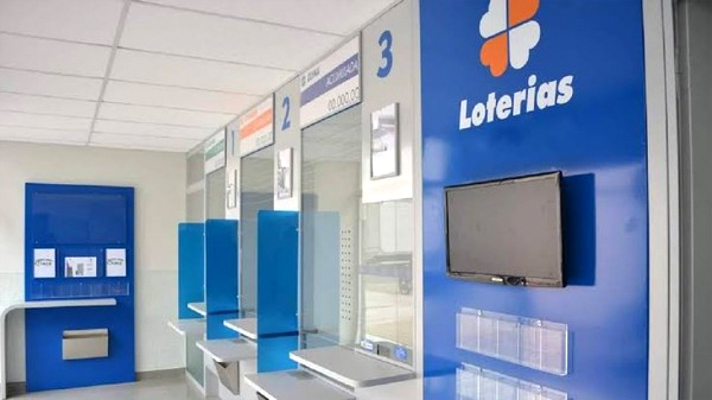
How do you get a lottery outlet and how much does it cost? First, it's not possible to "own" a lottery outlet, but rather to have a permit.
The process used by Caixa Econômica Federal (Brazilian Federal Savings Bank) to grant the right to use lottery products and visual identity is called a permit system. In other words, an authorization is issued to potential interested parties, who will be called permit holders after the process. Unlike the Post Office, for example, lottery outlets are not a franchise, as reported by Estadão newspaper.
There are two ways to obtain a permit to operate a lottery outlet:
⇒ Through the opening of new tenders by Caixa, with the opening of new lottery outlets.
⇒ By purchasing the rights of other permit holders, in a transaction that also requires Caixa's approval.
See the following guidelines, based on new calls for bids currently underway on Caixa's official website , and learn about the main topics for acquiring the right to operate in the lottery sector in the country.
First, the values. In a statement to Estadão, Caixa affirms that the locations where the new units will be installed are subject to exclusive evaluation by the entity, in a process "based on market potential studies."
Furthermore, candidates will always be evaluated based on the criteria outlined in the respective public notices. According to Caixa, there are no estimates of expenses, potential revenues, or profit margins for non-existent units, because rent, renovations, and employees are the sole responsibility of the lottery business owner, and margins will always vary according to the region, "making it impossible to estimate."
However, there is an estimated minimum income required to enter the selection process.
For the opening of new units, a public bidding process is held, and the model used for selecting candidates is the highest bid proposal.
It's not officially called an auction, but it's a kind of bidding process.
Call for proposals in progress.
Using tender notice 0186/24 as an example , which was underway during the reporting process, it is possible to access the proposal template.
In Annex III, on page 43, it is explicitly stated that individual applicants must provide information such as name, CPF (Brazilian tax identification number), full address, and contact details.
For legal entities, it will also be necessary to provide the company name, CNPJ (Brazilian tax ID), and RG (Brazilian national ID). In the latter case, it is even possible to have partners.
When applying, you must specify the item you are interested in – a lottery outlet in this example – and the amount you are offering.
This is where the minimum value estimate comes in. By default, the lowest figure is usually R$ 10. This amount does not include costs for personnel, renovations, layout, etc. It is simply the amount required to participate in the bidding process.
But that will depend a lot on the location. In this notice, for example, the value of R$ 10 appears five times. However, there are 13 units "for sale," including lottery houses and simplified lottery units (USLs), which are smaller and cheaper structures in terms of installation costs, but which do not necessarily have a lower minimum bid.
One of the available USLs has a starting price of R$ 180. The highest price listed in the tender is R$ 200, for a unit in the city of Garanhuns (PE).
The regulation of lotteries in Brazil is governed by Caixa Circular No. 1024 of 2023. It establishes the rules and prohibitions for participating in a lottery draw. The full text can be viewed at this link.
Here are three important points for those who want to apply:
⇒ It is not possible to be a MEI (Individual Microentrepreneur) or sole proprietor to own a lottery outlet. According to Caixa Econômica Federal (Brazilian Federal Savings Bank), it is mandatory to establish a business corporation or a single-member limited liability company before signing the contract;
⇒ Participation is prohibited for individuals who are Caixa executives or employees, spouses of Caixa executives or employees in any area, and those with family ties up to the third degree to certain positions, such as "commissioned bonus positions within Caixa involving participation in any phase of the hiring or network management process, to a greater or lesser degree, and bonus positions as general network manager within the Partner's Retail Executive Superintendency, as well as employees holding bonus positions as managers."
⇒ The contract term is 240 months (20 years), and may be extended for an equal period. The minimum time a lottery business owner must remain in the business is three years.
Is it worth owning a lottery outlet?
According to Beatriz Micheletto, a business analyst at Sebrae-SP, any type of business can be viable, provided the entrepreneur is prepared, has a business plan, knows what may have the highest demand, and possesses the necessary skills, both technical and behavioral – hard and soft skills.
"Nowadays, lottery outlets don't just offer games. They receive payments, sell other types of products, such as scratch cards, and other add-ons. You have to know the business to deliver a really good menu to your customers," he explains.
Sebrae has a guide , from 2022, on how to set up a lottery outlet, which can serve as a starting point for entrepreneurs.
To access it, simply create a login and password on the platform, free of charge. It's possible to find estimates made by the entity regarding facilities, which are around R$ 15, including furniture, air conditioning, and alarms, for example, and employee costs, around R$ 7,5 per month – always in a generic way, since everything may vary depending on the location and specific needs of the unit.
Lottery concessionaire shares his experience.
The reporter spoke with a lottery business owner, and he said that the earnings are carefully counted. "We make money down to the cent."
Fabio Iannace Neto, 64, has been a Caixa lottery concessionaire for 16 years. He and his partner bought a lottery outlet from another concessionaire in Tatuapé, in the eastern zone of São Paulo.
They relocated the lottery outlet, with the necessary authorizations from the state-owned company, and began to perform well in a store that had previously been losing money.
“It’s easy to lose money, you just have to manage poorly. If you don’t train your employees well and they make a mistake with one or two zeros in the operation, for example, the month’s revenue is lost. You need a lot of attention; the profit is in the cents, in the details,” he emphasizes.
And, according to him, the main profit margin is in the games. Other products have demand, but it's not the same as Caixa's betting sector.
Furthermore, proportional returns tend to be more advantageous. To give you an idea, commissions for lottery outlets in the case of games like Mega-Sena, Quina, and others, range from 8,61% to 9%. In contrast, for bill payments, the value is fixed, from R$ 0,96 to R$ 1,09.
Currently, the lottery network has more than 13,2 units in operation and is present in more than 5,4 municipalities throughout the country, a coverage exceeding 97%.

