From the field to the betting houses: the boom in sports betting in the USA.
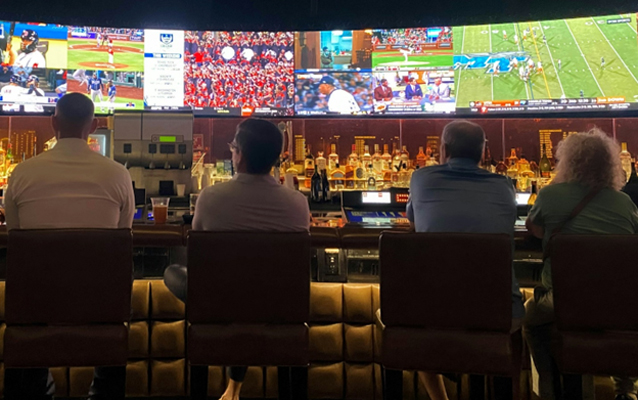
This shift in the US illustrates the complex balance between tradition and transformation. In the particular case of Wisconsin, although it hasn't adopted online sports betting on a large scale as quickly as some of its neighbors, this state has been steadily moving towards greater integration of gambling through agreements with Native American tribes and partnerships with major sports betting companies.
In 2021, the St. Croix and Oneida Nation Native tribes began offering in-person sports betting, marking a symbolic turning point for a region long known more for its college rivalries and devotion to the Packers than for gambling. Local lawmakers describe the move as a cautious and regulated approach – but even in Wisconsin, the lines between fanaticism, entertainment, and gambling are beginning to blur.
The spectacle of sports has become deeply intertwined with betting. It used to be something we did as a pastime (watching, cheering, supporting), but now it's filled with odds, payouts, and winning bet screens that make us rethink how we spend our last $20.
Legalization of sports betting
Since the Professional and Amateur Sports Protection Act (PASPA) was repealed in 2018, states have been rushing to legalize and regulate sports betting.
In 2024, Americans wagered nearly $150 billion on legal sports betting sites, generating over $14 billion in revenue for operators. As of 2025, the total betting volume has already surpassed $90 billion, with gross revenue exceeding $9 billion and a national profit margin (the bookmaker's share) of approximately 10%.
The regulatory reach is also enormous. By 2025, legal sports betting will be available in at least 39 states, in addition to Washington, D.C.
Fans are changing the way they watch games.
Think about the fan experience and how it has become today. The broadcast screen is filled with live odds overlays, "boosted" lines, and real-time betting alerts.
Advertisements for betting companies are present at all major sporting events. One study found that logos and advertisements for gambling appear every 13 seconds during certain championship matches.
Social media amplifies the effect, as bettors take screenshots of their payouts and share them widely, attracting more fans. When a combined bet is successful, the winnings can be life-changing, considering the very small value of the initial stake.
In simpler terms, some of the biggest payouts we see in US casinos are now associated with sports betting apps. These wins go viral on social media, encouraging more and more people to enter the world of gambling. Furthermore, more and more new online casinos are emerging . It's a temptation that even casual fans, who just wanted to watch the game and nothing more, may not be able to resist.
Economic factors and risks
How did things grow so much so quickly? There are a few key factors that drove mass adoption. Among them:
⇒ Cultural shift: a pillar of this growth is that betting has ceased to be a mere complement to the experience of watching sports. Now, it is one of the main forms of sports consumption. Many fans eagerly await the "betting moment," when odds are displayed before the game, live betting, combined bets on the same game, etc. Broadcasters and sports leagues have adopted partnerships with betting houses, integrating betting odds into broadcasts and content, further normalizing betting;
⇒ Convenience and technology: betting no longer requires you to go to a physical location. Online platforms are as attractive as anything you can find on the Las Vegas Strip . Betting has become part of the experience of watching events, given the ease with which one can participate in live betting. The data proves this, as the volume of bets continues to grow. The volume of legal sports betting increased from US$121 billion in 2023 to US$149,6 billion in 2024, and revenues grew proportionally;
⇒ State and operator interests: there are strong structural incentives for both states and sports betting companies, and these incentives have helped drive growth. States collect taxes on the gross gaming revenue of sports betting operators and/or charge licensing fees. Places like New York account for 51% of operators' revenue, while many states fluctuate between 6% and 20%. States tend to promote legalization with promises of new revenue streams to fund infrastructure, support for those with gambling problems, education, etc.
Risks, integrity, and social impact
The other side of this transformation reveals serious tensions. Let's look at some of them:
⇒ The fan experience changes: when the viewer is invited to focus on the odds, and not just the game, the nature of fandom transforms and becomes less about loyalty and more about reward;
⇒ Integrity of the competition: betting is so intrinsically linked to sports that the FBI recently arrested 34 people and indicted them for allegedly manipulating sports betting and poker games. In college sports, recent investigations have revealed athletes who allegedly bet for or against their own teams;
⇒ Public concerns: According to the Pew Research Center, 43% of adults in the US say that the fact that sports betting is now legal is bad for society. This number represents an increase from the 34% recorded in 2022;
⇒ Harm to the consumer: critics highlight the growing potential for addiction, aggressive marketing, and the transformation of what was once entertainment into high-risk activity. Some experts have compared aspects of the sports betting boom to how tobacco was marketed.
In many ways, the U.S. has transformed its stadiums, arenas, and big screens into casinos of a different kind. Players still play, teams still compete, but spectators now frequently place bets, check the odds, and try to win a combination bet.
The business model is so closely tied to betting that leagues, bookmakers, and broadcasters form a collective ecosystem, rather than operating as independent entities. Some might call this a new frontier of entertainment, but many see it for what it truly is: a worrying evolution of sport.