
Economic Freedom Bill Could Expand Betting on Horse Races
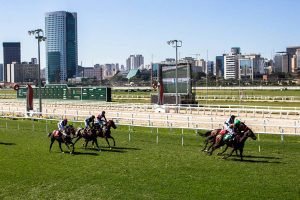
The Economic Freedom Provisional Measure, which aims to reduce bureaucracy and liberalize the Brazilian economy, may also result in the expansion of gambling and revenue for organizations that promote horse racing.
During its passage through the Chamber of Deputies, the measure, issued by the Jair Bolsonaro (PSL) government, received an article that modifies the Turf Law of 1984.
The new wording states that entities promoting races may be authorized by the Ministry of Economy to promote lotteries linked or not to the race results.
The measure fulfills a request from the Jockey Clubs, says lawyer Luiz Felipe Maia, a specialist in the gaming sector.
According to him, clubs are interested in offering other betting options to deal with their financial difficulties.
The most likely option to gain traction with a change in the law, according to Maia, would be "instant racing," in which the player bets on recorded races, randomly selected by a computer, to prevent them from knowing the outcome in advance.
“Today, the problem for the Jockey Club is that the cost of holding a race is very high. The volume of bets is often not enough to cover the cost of the race,” says Maia.
The Jockey Clubs have already had requests denied to adopt the model during consultations.
Jockey clubs are also interested in promoting other types of betting. In 2006, the club in Alegrete (RS) tried—and failed—to obtain authorization from the Attorney General's Office of the National Treasury to hold raffles based on numbers. The Jockey Club Brasileiro, in Rio de Janeiro, had already received the same refusal in 2001.
In 2008, the Santa Maria (RS) Jockey Club also did not receive approval to conduct bets on virtual races, which consider the movement of electronic horses, the so-called video-turf. The São Paulo Jockey Club had the same result in a similar consultation in 2004.
Maia says that depending on the regulations from the Ministry of Economy, these modalities would also be possible after the approval of the Provisional Measure.
Luiz Alfredo Taunay, president of the Jockey Club Brasileiro in Rio, says that holding horse races is a loss-making activity and, therefore, clubs need alternatives to survive.
In his assessment, the decline of horse racing has been happening for 40 years and is related to increased competition from other types of betting, including online football betting on foreign websites.
In 2018, a Provisional Measure was enacted creating the National Public Security Fund, which authorized sports betting, following government permission. However, regulation is still pending.

André Gelfi, partner at the Suaposta portal, which offers an online betting platform for the Jockey Club of Rio Grande do Sul, says that horse racing suffers from competition from international websites, with a large volume of gaming options and little control.
"I pay taxes in Brazil, I employ Brazilians, I face regulatory and fiscal restrictions, while international competitors face no such impediments," he states.
According to lawyer Luciano Andrade Pinheiro, partner at Corrêa da Veiga, the Economic Freedom Provisional Measure also opens the door for Jockey Clubs to sell bets on other sports, after government authorization.
Fabio Kujawski, a partner at the Mattos Filho law firm, believes that the provisional measure gives clubs more freedom to create creative bets, such as rewarding those who correctly predict the third-place finisher in several consecutive races.
In his assessment, the topic is relevant to the discussion of Economic Freedom, as it deals with increased income and employment, an objective that could be achieved by improving the economic situation of the Jockeys.
Congressman Jerônimo Goergen (PP-RS), rapporteur of the Provisional Measure in the Chamber of Deputies, says that the measure related to horse racing clubs aims to increase freedom in economic matters. However, he affirms that there is no intention to legalize games that are currently prohibited.
According to Goergen, what the measure does is allow betting on combinations of varied outcomes.Folha de São Paulo – Filipe Oliveira)