"No country has banned it and succeeded": statements by Udo Seckelmann and José Francisco Manssur that bothered the defenders of the Provisional Measure in the Supreme Court.
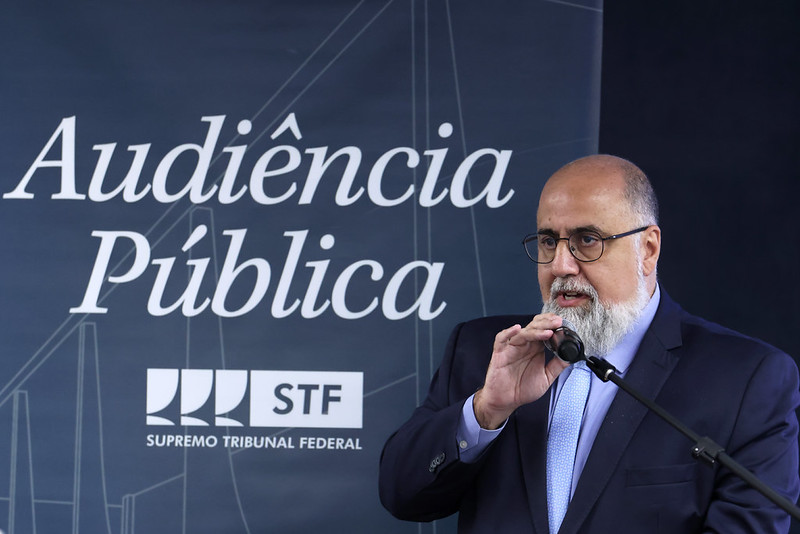
Among the presentations made by the clubs at the Supreme Federal Court's public hearing on Provisional Measure No. 1.394/2026, two directly challenged the government's arguments. These were those of lawyer Udo Seckelmann, representing SAF Botafogo, and José Francisco Manssur, representing Cruzeiro. Manssur coordinated the regulation of fixed-odds betting in 2023 at the Ministry of Finance, a regulation that the Provisional Measure has now eliminated.
The speeches came after the Attorney General of the Union, the Minister of Justice, Wellington César Lima e Silva, and the First Lady, Janja da Silva, left the hearing immediately after their interventions, without listening to the other guests. Also in the audience were businesswoman Paula Lavigne and a representative from the Alana Institute, who are part of the civil society group in favor of the ban. They did not stay until the end.
Udo: "Could it really be that all these countries are wrong?"
Seckelmann started from the three stated objectives of the Provisional Measure: to reduce gambling addiction, indebtedness, and the illegal market. He considered them legitimate, but stated that neither the explanatory memorandum nor the AGU's statements brought "a single example of a country" that has banned online gambling and achieved these goals. "And do you know why none was brought up, Your Excellency? Because international experience points in the opposite direction."
The question provoked an immediate reaction among the proponents of the provisional measure. Paula Lavigne and the representative from the Alana Institute exchanged glances when Seckelmann wanted to know which country had based its decision on the ban. It was one of the few demands from the hearing that went unanswered by the government, which had already left the plenary session.
According to the lawyer, more than 90% of the 38 OECD countries and more than 75% of the G20 countries have regulated online betting. The G20 rate is only not higher because of Saudi Arabia and Indonesia, which keep the activity illegal for religious reasons.
Seckelmann specifically chose China, already presented in public debates as a model for Brazil. He cited a report from the United Nations Office on Drugs and Crime (UNODC), published in July 2026. The document estimates that Greater China, including Hong Kong, Macau, and Taiwan, accounts for about half of the global volume of illegal gambling, estimated at between US$340 billion and US$1,7 trillion per year, despite the prohibition in effect since 1949. On page 133, according to Seckelmann, the report concludes that the prohibition has shifted demand abroad, rather than suppressing it. “If even China, with its extensive state apparatus, cannot contain the advances of the illegal market, what makes us believe that Brazil will be able to?” he questioned.
He also challenged the government's diagnosis with official data. Until the enactment of the Provisional Measure, there were 188 websites authorized by the Secretariat of Prizes and Bets (SPA/MF). In the approximately 20 months of regulation, more than 66 illegal websites were blocked, according to the Ministry of Finance. Thus, less than 0,3% of the offerings to Brazilian bettors were on websites that followed government rules. "Is it really true that the problems we are discussing here were caused by this less than 0,3%, or was it caused by the illegal market?" he asked. He urged caution with studies that do not distinguish between legal and illegal betting.
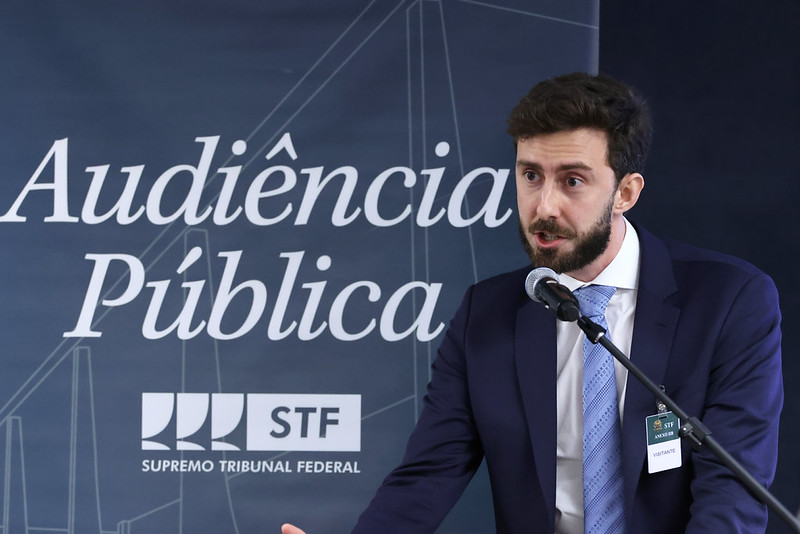
Manssur: "It's the same as discussing reforestation without calling IBAMA"
Manssur presented himself as the person appointed by the Treasury, in 2023, to coordinate the regulation. He recalled that the Lula government did not act on discretionary choice, but to comply with article 29 of Law 13.756/2018, which mandated the Treasury to regulate fixed-odds betting. He attributed the negative externalities to years of omission by the previous government.
Paula Lavigne and the representative from the Alana Institute did not wait for the rest of the presentation. As soon as Manssur introduced himself as the person responsible for regulation, the two gathered their belongings, stood up, and left the plenary session. Therefore, they did not hear the criticisms regarding the exclusion of SPA, the accusation of confiscation of concessions, nor the Boca Juniors incident at the Maracanã.
Manssur criticized the exclusion of the technical area from the decision. According to him, the SPA team was "strangely not consulted" at the meeting in the Presidential Palace that discussed the Provisional Measure. "It's the same as discussing reforestation without calling IBAMA, or discussing vaccine policy without calling Anvisa or Fiocruz."
He listed more than 20 countries that regulate and oversee gambling, such as the United Kingdom, France, Italy, Spain, Portugal, the United States, Canada, Australia, and Colombia. On the other hand, he cited India and China, where, according to estimates from the Chinese government itself, illegal gambling generates US$60 billion annually and fuels organized crime. "I believe that prohibition is ineffective," he stated.
The former advisor recalled that the Provisional Measure was issued on September 25th, nine days before the general elections. He asked Fux to analyze it in light of Article 20 of the Law of Introduction to the Norms of Brazilian Law, which requires considering the practical consequences of decisions. According to his calculations, these consequences so far include thousands of new illegal websites, almost 7 jobs lost, with a projection of 15, an increase in cases of match-fixing, and loss of sponsorships. He added that the Provisional Measure did not guarantee the transfer of funds to the SUS (Brazilian Public Health System) for the treatment of gambling addiction, as provided for in Law 14.790 and the SPA (Brazilian Society of Pediatrics) regulations.
"Confiscatory measure"
The hardest part was the granting of licenses. Manssur stated that the paragraph of article 4 of the Provisional Measure allows the government to retain the R$ 30 million paid by each company to operate for five years. "True, in my words, I assume this under my responsibility, a confiscatory measure," he said. According to him, 87 companies paid the amount, more than R$ 2,6 billion in total, which he rounded up to R$ 3 billion. After one year and nine months, the government prevented the activity without providing a mechanism for repayment. And he observed that, "in the lengthy speech of the Attorney General of the Union," there was not "a single mention" of the subject.
Boca Juniors at the Maracanã
Manssur concluded with an episode from October 20th. Boca Juniors faced Vasco at the Maracanã stadium with a betting company's logo on their shirts, even though Article 16 of the Provisional Measure prohibits any display of betting brands within the national territory. According to him, this case anticipates the imbalance that the measure will create between Brazilian clubs and their South American rivals, who will continue to have these sponsorships in continental competitions.
Both speeches attacked the core of the government's defense. Earlier, the Attorney General's Office (AGU) had argued that the regulated model had "become materially unconstitutional" due to insufficient protection, even stating that the "dragon" of betting was impossible to tame. Seckelmann and Manssur responded that the problem lies in the illegal market, not in the 188 websites that the government itself authorized and monitored. Those who most needed to hear this response had already left.