Even though gambling is prohibited, it doesn't disappear: how the Chinese gamble via VPN, cryptocurrencies, and websites in neighboring countries.
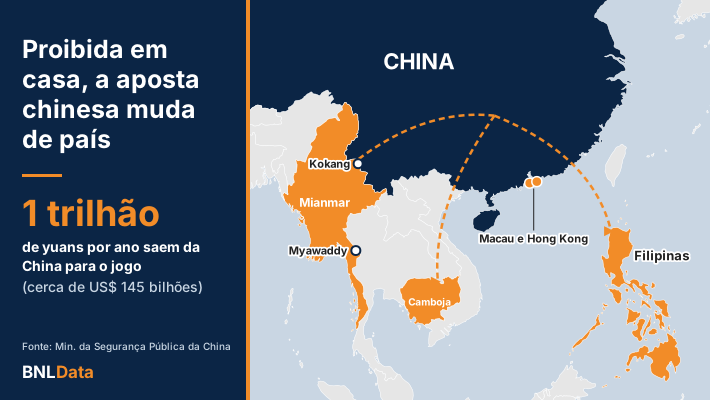
China has one of the strictest gambling bans in the world, an unparalleled repressive structure, and yet it loses about 1 trillion yuan a year to illegal gambling and overseas operators, an amount equivalent to about 1% of China's GDP.
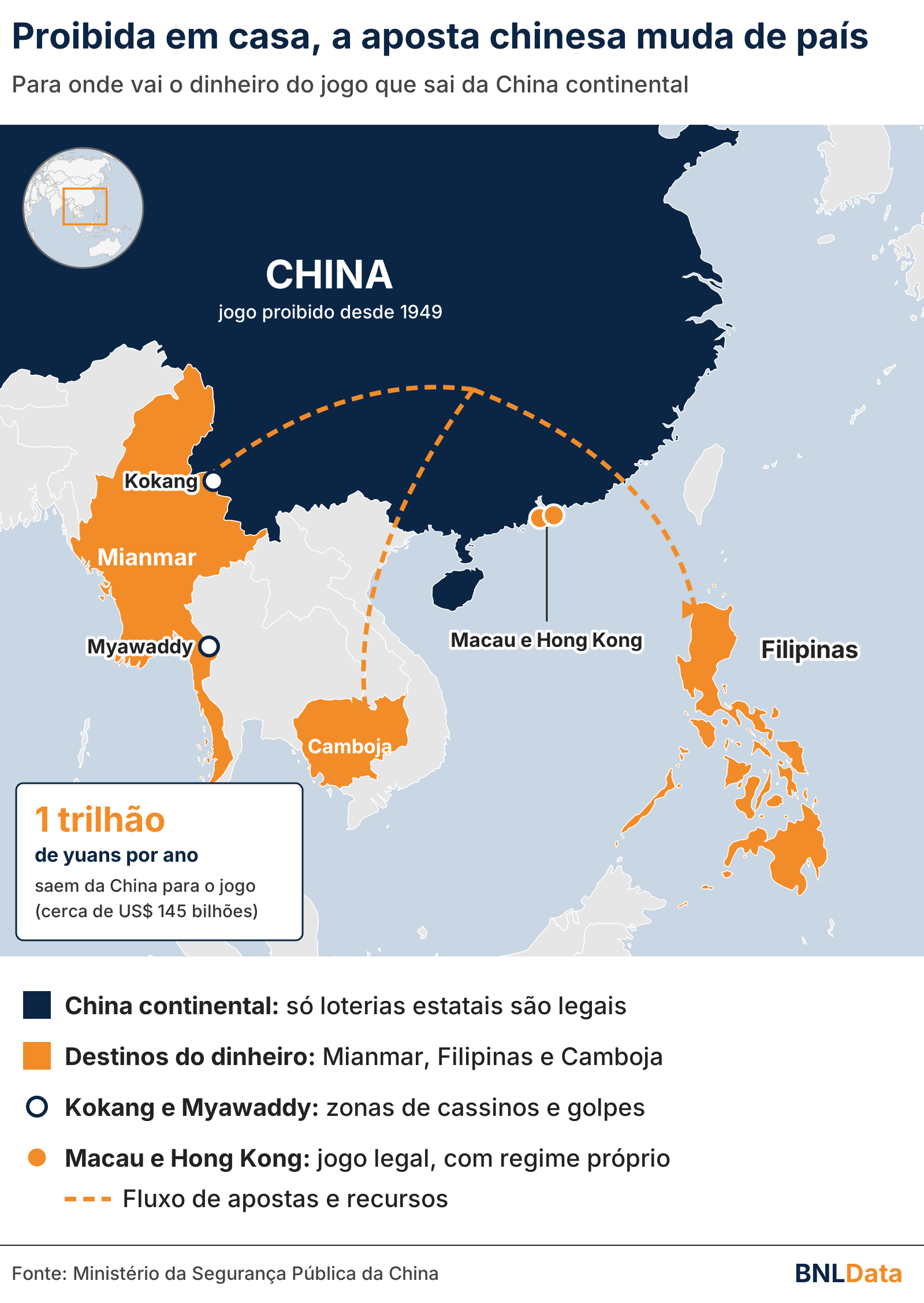
Those who advocate for a total ban on gambling often ignore the example of the country that has taken this policy furthest. In mainland China, gambling has been illegal since 1949. The only exceptions are state lotteries and casinos in Macau and Hong Kong, which have their own regulations. In practice, however, Chinese people buy tickets from official lotteries, frequently travel to legalized gambling centers abroad or in special administrative regions, and gamble with online gambling companies based outside the country.
The scale of the financial outflow was admitted by the government itself. According to Liao Jinrong, Director of International Cooperation at the Ministry of Public Security, at least 1 trillion yuan (approximately US$145 billion) leaves China every year for gambling activities, exacerbating the country's economic and financial risks. Liao stated that criminal gangs use digital currencies to raise and transfer funds, making it difficult to trace the origin of the money and conduct investigations. Jia Kang, former head of the Chinese Academy of Fiscal Sciences, linked to the Ministry of Finance, acknowledged that the amount is equivalent to about 1% of China's GDP.
The legal market: only the State can sell bets.
The official channel is gigantic. In 2025, China sold nearly 628 billion yuan (about US$90 billion) in lottery tickets, a 0,7% increase over the previous year, according to the Ministry of Finance. The China Sports Lottery accounted for 419,39 billion yuan, about two-thirds of the total, and the Welfare Lottery totaled 208,58 billion. Official data indicates that the country has more than 300 million registered lottery players.
The appetite for sports betting is evident during major tournaments. During the 2026 World Cup, sales of football lottery products reached 6,87 billion yuan between June 8 and 14, a 97% increase compared to the previous week.
However, the state-provided offering does not meet all the demand. The odds are less attractive, the portfolio is limited, and there are no legal online casinos. Restrictions on gambling within Chinese territory have ended up boosting foreign websites and online platforms aimed at Chinese citizens.
The escape route: VPNs, underground banks, and "money mules"
The first obstacle is technical. Foreign websites are blocked by the Great Firewall, and the most common workaround is a virtual private network (VPN). Using VPNs, underground banking networks, and payment platforms, gamblers from the continent can access gambling sites and send money to them.
Beijing has been trying to close this loophole for years. The Ministry of Industry and Information Technology has mandated government approval for all VPN services, and state-owned telecommunications operators have been ordered to crack down on unauthorized connections. There are reports that, in March 2026, individual VPN users were fined for the first time in a widely publicized manner in Hubei province.
The second obstacle is money. China has strict capital controls and has prohibited cryptocurrency transactions since 2021, but gambling networks have created parallel payment systems. According to Caixin magazine, the scheme reaches remote regions of the country and involves small participants, such as workers who lend or rent their bank details to criminal groups abroad. With these, gamblers hide the money from the authorities, often using the stablecoin USDT, from Tether.
A 2020 case in Huizhou, Guangdong province, illustrates how this works. Police arrested 76 suspects for operating a payment service that moved funds to and from 120 fraudulent betting sites and investment platforms. The network recruited approximately 3 "brokers" who opened accounts and deposited money. The bettor would "buy" a non-existent product, the amount would be debited from the broker's account, and then the bettor would buy USDT using a bank card or Alipay to "recharge" that account.
Another technique uses e-commerce as a front. Chinese authorities estimate, according to the Financial Times, that around US$2 billion a year passes through some of the country's largest online retail sites before reaching betting operators abroad. The bettor pays a fake retailer for goods that don't exist, and the equivalent amount is credited to their gambling account.
The neighbors who host the game.
Since Chinese demand did not disappear, the supply spread to neighboring countries. The Ministry of Public Security points to Myanmar, the Philippines, and other Asia-Pacific jurisdictions as the main destinations for the money.
The Philippines were the main hub for years, with POGOs (Philippine Offshore Gaming Operators). Rules from the Philippine regulator Pagcor prohibited streaming games to countries where the activity is illegal, but most of the POGOs' revenue came from players residing in China. Under Chinese pressure, the sector lost momentum until it was banned by the government of Ferdinand Marcos Jr., with closure scheduled for the end of 2024.
Cambodia followed a similar path. In 2019, Beijing asked Cambodia and the Philippines to shut down online gambling operations targeting Chinese citizens, and Cambodia announced it would not renew online gambling licenses that expired on December 31 of that year. The activity migrated to even weaker control zones, such as the semi-autonomous regions of Kokang and Myawaddy in Myanmar, associated with online scam networks, cyber fraud centers, and illegal casinos.
Beijing responded by extending the crackdown beyond its borders. In 2021, an amendment to the Penal Code criminalized opening or operating casinos abroad, as well as organizing or enticing Chinese citizens to travel to gamble outside the country. The government also maintains a blacklist of tourist destinations associated with gambling. This year, Chen Zhi, identified as a gambling kingpin and leader of the Prince Group, was arrested in Cambodia and extradited to China.

Industrial-scale repression with limited results.
The numbers from the crackdown are impressive. In 2024, the Ministry of Public Security dismantled more than 73 illegal online betting platforms, investigated 45 cases of cross-border gambling, dismantled 4,5 large organizations, and arrested more than 11 suspects.
For the 2026 World Cup, the crackdown reached social media. Douyin, the Chinese version of TikTok, flagged over 400 accounts linked to illegal gambling and permanently banned over 90 for promoting clandestine sports betting. In July, the ministry detailed ten cases involving unauthorized betting operations, agents of foreign websites, individual bettors, and illegal payment groups, with 29 people detained.
Even so, the problem persists and adapts. Because traveling abroad to gamble is time-consuming and attracts the attention of authorities, "proxy betting" has gained traction, in which the client communicates with employees wearing headsets positioned at the baccarat tables in foreign casinos.
"Chinese betting sites" are arriving in Brazil.
Beijing's crackdown has closed doors in Asia, but the clandestine industry set up to cater to Chinese gamblers hasn't disappeared. It has sought new markets, and Brazil has become one of the main ones. Here, the flow has already earned a nickname: "Chinese bets." According to operators in the regulated market interviewed by BNLData, most of the illegal sites serving Brazilians today belong to or are controlled by Chinese groups.
The model mirrors what Chinese police dismantle at home. An investigation by Estadão showed that "Chinese betting sites" use, without authorization, the personal data of Brazilians to open bank accounts that handle money from games like "Tigrerinho" (Little Tiger). The scammers also use CNPJs (Brazilian company tax IDs) and protocol numbers from license applications that haven't yet been analyzed to simulate legality, and periodically change the receiving accounts. The "front men" and disguised payment methods are the same mechanisms as in Huizhou, now with Pix (Brazil's instant payment system) instead of Alipay.
The connection also appears in police investigations. In the operation that arrested, in May, the person responsible for a network of illegal websites that used influencers to attract gamblers, investigators identified a member operating from China, who was making around US$199 a day.
The illegal gambling market in Brazil is significant even before the ban. In June, the federal government estimated that between 41% and 51% of online betting platforms operated illegally in the country.
The lesson for Brazil
The Chinese case dismantles the idea that prohibition solves everything. China has state control of the internet, surveillance over the financial system, restrictions on crypto-assets, and police cooperation with its neighbors, and yet it admits to losing the equivalent of 1% of its GDP annually to illegal gambling. The money doesn't stop circulating: it continues to circulate without taxation, without protection for the gambler, and in the hands of criminal organizations.
The most ironic thing is that Provisional Measure No. 1.394/2026 removes from the scene precisely the licensed companies that paid fees, collected taxes, and had their headquarters and tax identification number (CNPJ) in the country. With this, the market is left open to the groups that China has spent the last decade trying to expel. Brazil has nothing similar to the Chinese repressive apparatus. If the most surveilled country in the world cannot prevent its citizens from betting on sites hosted in neighboring countries, the provisional measure tends to hand the Brazilian bettor over on a silver platter to "Chinese betting sites".
The question remains: "Who benefits from the illegal market and who profits from illegal betting?"