
Brazil's Supreme Court debates whether gambling can still be a crime after 85 years.
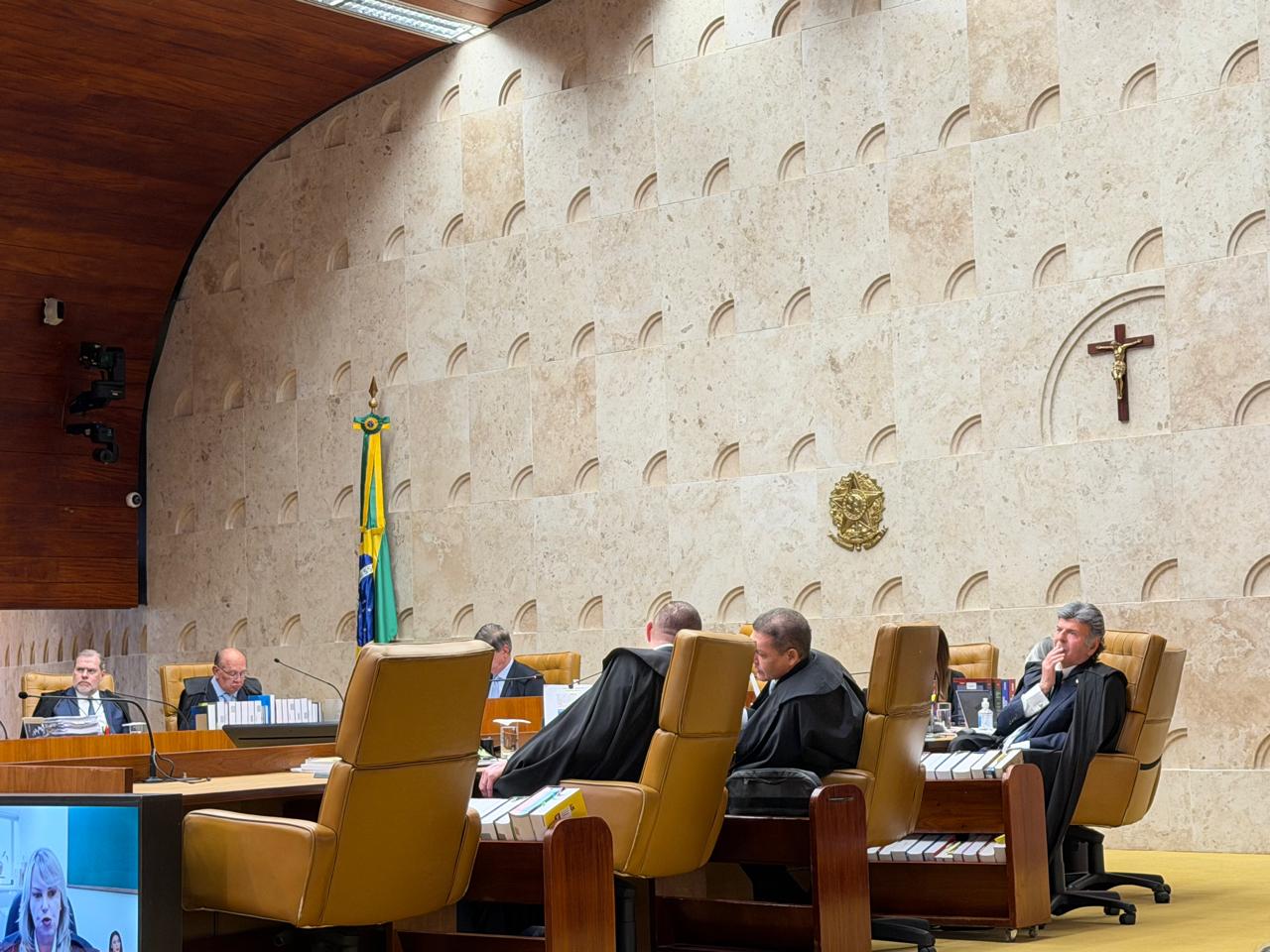
The Brazilian Supreme Court is discussing this Wednesday (August 5th) one of the oldest questions in Brazilian criminal law: can the operation of gambling still be treated as a crime almost 85 years after it was classified as such? The answer depends on how the justices interpret the relationship between a 1941 law and the Constitution promulgated in 1988.
The debate centers around Article 50 of Decree-Law 3.688, the Law of Criminal Offenses, which criminalizes the exploitation of gambling. The Supreme Federal Court (STF) is debating whether or not this provision was received by the 1988 Constitution, a decision that will have binding effect throughout the country due to the general repercussion recognized in Theme 924, approved by a nine-to-one vote almost a decade ago.
Protection or paternalism?
On one side, prosecutor Flávia Mauch, representing the Public Prosecutor's Office of Rio Grande do Sul, argued that the rule remains valid and necessary. According to her, the constitutionality of Article 50 should be evaluated on two simultaneous axes: the prohibition of excess and the prohibition of insufficient protection. According to the prosecutor, the court of origin examined only the first angle, ignoring the state's duty to adequately safeguard legal rights such as public order, collective health, and the dignity of vulnerable individuals.
The Public Prosecutor's Office structured its argument around three levels of control. Firstly, it argued that the law pursues a legitimate constitutional purpose by protecting specific legal interests. Secondly, it maintained that there are sufficient historical reasons for maintaining criminalization, citing the fact that, after a brief period of permission, gambling was once again prohibited by Decree-Law 9.215 of 1946, whose constitutionality the Supreme Federal Court itself has already recognized. Thirdly, it pointed to the close link between the clandestine operation of gambling and other forms of serious crime, such as money laundering, drug trafficking, corruption, and the smuggling of slot machines.
The prosecutor also highlighted two phenomena as independent reasons for maintaining criminalization. The first is ludopathy, or gambling disorder, classified in both the Diagnostic and Statistical Manual of Mental Disorders (DSM) and the International Classification of Diseases (ICD), with characteristics such as loss of control, compulsive behavior, and family and financial impairment. The second is over-indebtedness, expressly recognized by the Brazilian legislature in Law 14.181 of 2021. Regarding the Betting Law, sanctioned in 2023, Mauch was direct: the regulation of sports betting did not make gambling legal, but only replaced a model of prohibitive oversight with one of intensive regulation, preserving the need for state control.
The contradiction that the State created
Attorney Laerte Luis Gschwenter, representing the defense, started from a concrete contradiction to argue against the acceptance of Article 50. While the Ministry of Finance regulates fixed-odds betting in a virtual environment, the same State maintains criminal sanctions for physical gambling. According to Schenberg, this asymmetry has no legal justification; the State regulates casinos, bingo halls, and lottery outlets as its own monopoly, but criminalizes other physical modalities operated by private individuals.
The defense cited precedents favorable to its argument. In 2016, then-rapporteur Justice Dias Toffoli denied further proceedings on a ministerial appeal in RE 976344, which contradicted the acceptance of Article 50. Furthermore, RE 583523, reported by Justice Gilmar Mendes, unanimously declared Article 25 of the same Decree-Law 3.688 unconstitutional, recognizing a violation of constitutional principles, which the defense presents as indicative jurisprudence regarding the Court's direction.
Schenberg also presented data that illustrates the practical impact of the law: there are more than five million summary proceedings filed in Brazil based on Article 50, a situation in which the gambler, theoretically a victim of an activity not regulated by the State, is treated as the perpetrator of a criminal offense. Law 13.155 of 2015 aggravated this situation by setting fines of R$ 2 to R$ 200 for gamblers caught gambling. The central argument of the defense is that the State does not have the legitimacy to criminalize individual choices of fully capable citizens that do not generate autonomous harm to third parties; a prohibition that would find its basis in the principles of free initiative and individual autonomy of the 1988 Constitution.
The knot that the Supreme Court will have to untie.
Both sides of the debate converge on one point: maintaining the current status quo has concrete consequences. The disagreement lies in which consequences outweigh the others.
According to the Public Prosecutor's Office, decriminalization would reduce the State's capacity to combat the financing of criminal organizations linked to gambling. For the defense, it is precisely the prohibition that fuels clandestine activity, favors militias, and prevents the collection of taxes on an activity that already exists in practice. The lawyer asked the Supreme Federal Court to declare the conduct atypical and end the situation where Brazil is the only country with regulation of the virtual sector that has not extended this logic to physical gambling.
The trial answers a question that the National Congress has postponed for decades: can a law drafted during the Estado Novo (New State) regime, in a context of total intervention in customs and morals, survive the citizen-oriented Constitution of 1988? The ministers' answer will determine whether the exploitation of gambling remains within the criminal sphere or definitively migrates to the regulatory model that the country has already adopted for virtual betting.

