Acquired with funds transferred from Lottopar, the Scientific Police's new equipment identifies adulterated drugs, medications, and beverages.
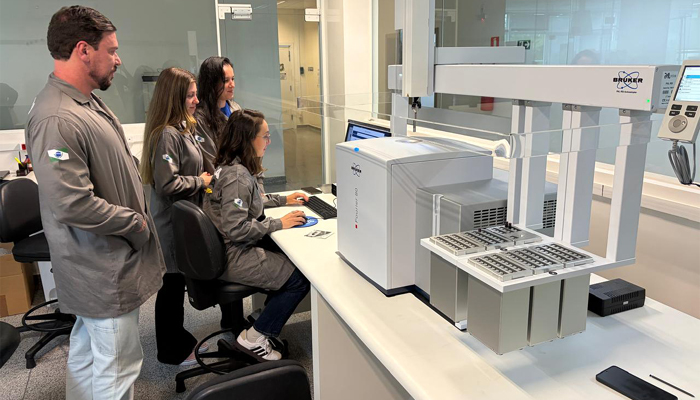
The identification of drugs, medicines, and counterfeit or adulterated products, such as wines, olive oils, and alcoholic beverages, is among the applications of new equipment installed in the Forensic Chemistry Section of the Paraná State Scientific Police (PCIPR). With the acquisition of the Nuclear Magnetic Resonance (NMR) spectrometer, the institution becomes the first state Scientific Police in Brazil to use this technology. Until now, within the scope of official Brazilian forensics, the equipment was used only by the Federal Police. The acquisition of the Bruker Fourier 80 cost approximately R$ 2 million, with resources entirely provided by the Paraná State Lottery (LOTTOPAR).
The Bruker Fourier 80 model uses Nuclear Magnetic Resonance to provide information about the molecular structure of substances. The data helps in the identification and characterization of chemical compounds, complementing the results obtained by other instrumental methods used in laboratories.
Among the applications are the analysis of drugs of abuse, the identification of new psychoactive substances, and the characterization of medications. The technology also allows for the examination of food and beverages, helping to identify compositional differences that indicate falsifications or adulterations in wines, olive oils, and alcoholic drinks.
According to the Director-General of PCIPR, Ciro Pimenta, the acquisition of the equipment represents an advance for forensic science in Paraná. “It expands the scope of expert examinations and offers new possibilities for the identification and characterization of substances. We strengthen the production of technical-scientific evidence and expand support for criminal procedures, contributing to authorities having qualified information for the correct elucidation of cases,” he states.
ANALYSIS – The equipment can optimize certain laboratory procedures and offer alternatives for specific tests. Depending on the characteristics of the samples and the methods implemented, the results can also guide the selection of complementary analyses.
According to Gabriela de Moraes Pinto, head of Forensic Chemistry at PCIPR, the NMR equipment will contribute to identifying substances and understanding the structure of their molecules. “It can be used to identify drugs, medications, solvents, and unknown substances, as well as helping in the analysis of mixtures. It is a tool that complements the equipment already existing in the laboratory and expands our investigative possibilities, allowing for more complete analyses and more reliable results,” she explains.
The incorporation of technology into routine laboratory work depends on the implementation and validation of methodologies and the training of professionals, observing the requirements of quality, reliability, and traceability of forensic analyses.
According to Caroline Da Ros, general coordinator of NAPI Public Security and Forensic Sciences and director of the Exact Sciences Sector at the Federal University of Paraná (UFPR), the device represents a milestone for strengthening forensic science in Brazil.
“In addition to significantly expanding the possibilities for applying Nuclear Magnetic Resonance in forensic analysis, the initiative demonstrates the pioneering spirit of the Paraná Scientific Police and its strategic vision for the future, by investing in innovative technologies and a collaborative operational model,” he states.
Caroline adds that the potential for integrating the equipment into a national NMR network allows for the sharing of expertise, the complementarity of analytical capabilities, and the construction of more robust and qualified responses to the challenges of criminal forensics. “It’s an achievement that goes far beyond the acquisition of equipment: it’s an advance in the consolidation of a modern, integrated forensic science connected to the best international standards,” she says. ( LOTTOPAR – Source: AEN)