
Bets: The cost of populism for companies that followed the law.
The Brazilian government established rules, charged fees, and required companies to structure themselves to operate in the regulated betting market. Now, the possibility of a provisional measure prohibiting online gambling or restricting sports betting puts these same companies in front of the prospect of an abrupt change in operating conditions.
On the eve of the elections, it is legitimate to question the political opportunism of presenting the ban as a solution to complex problems. The government needs to explain how a change of this magnitude would protect society and what the consequences would be for those who have invested in complying with the rules established by the State itself.
It is necessary to distinguish between the two. A potential ban on online casinos would directly affect companies authorized to offer these games, even if sports betting were preserved. Restrictions on sports betting, in turn, would have different scopes, depending on whether they affected operations, advertising, or sponsorships. While the proposal is under discussion, its effects should be examined without treating distinct scenarios as a single measure.
The business debate begins with a question: what predictability is offered to those who have decided to operate within the law? Companies have collected millions in licensing fees, hired professionals, and invested in technology and controls. Even during the regulatory discussions, the Brazilian Responsible Gaming Institute ranked the Brazilian license among the most expensive in the world, compared to other markets.
Authorization does not prevent the improvement of rules nor does it absolve operators of responsibility. However, the investments made and the obligations assumed must be factored into the evaluation of any change. Legal certainty also means requiring the State to consider the consequences of its own choices.
Legislation needs adjustments, especially regarding advertising and the actions of digital influencers. Public policies are also needed to prevent and treat gaming addiction. These problems require oversight and concrete solutions.
The same caution applies to household debt. Recognizing that gambling can exacerbate financial difficulties does not authorize attributing Brazilian debt or retail problems exclusively to gambling. Prohibition alone will not solve these issues. Presenting it as a general solution is a form of populism.
It also cannot be assumed that the demand for games will disappear with the withdrawal of authorized operators. The risk is that users will be displaced to clandestine platforms, the state's ability to monitor the situation will be reduced, and protection mechanisms will be weakened.
Match-fixing in sports, for example, did not originate with regulation. A regulated market allows for demanding controls, monitoring operations, and requiring companies to cooperate in identifying irregularities. It is this capacity that needs to be strengthened.
The economic effects can also extend to sponsorship contracts, advertising investments, and jobs linked to the activity. Clubs and media outlets are part of this chain, but the problem begins with the companies that have made commitments to operate regularly. A significant restriction on their activities can compromise their ability to maintain these investments.
Even those who consider regulation misguided need to demonstrate why prohibition would produce better results. It's necessary to explain how the black market, dependency, and the loss of enforcement mechanisms would be addressed.
The government must correct flaws, demand accountability, and punish irregularities. What it must not do is turn authorized companies into targets of an electoral response that promises more than it can deliver. Populism and opportunism cannot replace consistent public policy.
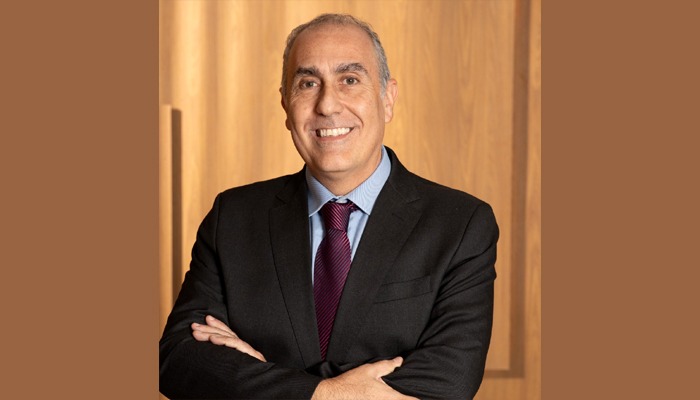
(*) José Frederico Cimino Manssur is a partner at the law firm Natal & Manssur Advogados, holds a postgraduate degree in Corporate, Succession and Tax Strategies from FGV/GVLAW, and is a specialist in Contracts from PUC/SP – COGEA and in the Regulation of Sports Betting and Online Gaming.

