
The World Cup tested the betting infrastructure in Brazil — and Oddsgate is sharing what it learned.
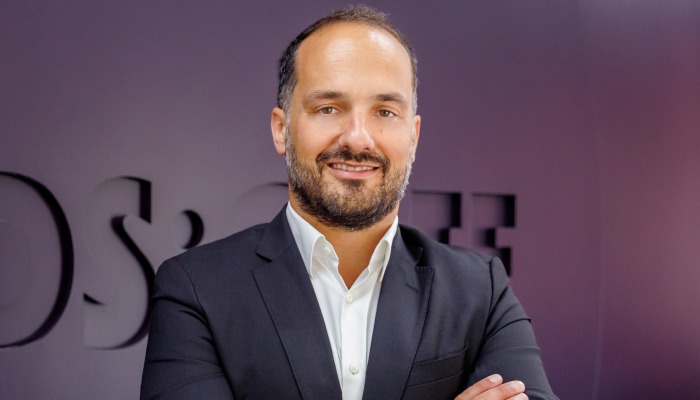
The 2026 World Cup tested the infrastructure of betting sites in Brazil like never before, exposing bottlenecks in traffic, user verification, and real-time payment processing. In this exclusive interview, Tiago Almeida, CEO and co-founder of Oddsgate, analyzes the main challenges faced by the sector during the tournament — from the end of the technical certification deadline of the Ministry of Finance's Prize and Betting Secretariat (SPA-MF) to fierce competition with the illegal market, which still accounts for almost half of the betting volume in the country.
Almeida also discusses the impact of the high tax burden on the profitability of operators, the central role of Pix in the player experience, the responsible gaming strategies adopted during the event, and the lessons that Oddsgate is already incorporating into its roadmap for the remainder of the 2026 sports season. Finally, the executive details the company's expansion plans for emerging African markets, such as Mozambique and Angola, drawing parallels with Brazil's regulatory trajectory in recent years.
Check out the exclusive interview: Tiago Almeida, CEO and co-founder of Oddsgate.
The 2026 World Cup generated unprecedented peaks in betting volume in Brazil. From a platform infrastructure perspective, what does this type of event reveal about an operator's technical robustness—and what bottlenecks did you observe in practice?
We are essentially talking about peak traffic and transactional demand. In Brazil, we observe a very specific anatomy: simultaneous games, live betting concentrated in windows of seconds (goal, penalty, VAR), and deposit behavior that follows the game clock, with hydration breaks and halftime also being transactional events in themselves. To give an idea of the magnitude of what the market faced, in the 24 hours prior to the start of the tournament, verification providers processed over 304 new users and approximately 1,2 million biometric authentications. Operators with proprietary technology and without network scale may not be sized or receive sufficient insight to accommodate this dynamic.
The transition period with reduced technical requirements for software certification ended on June 30th. What operational risks do operators who did not anticipate this change now face, and how has Oddsgate helped partners prepare for this shift?
The risk is real and has precedent because, as we have seen, the SPA (Brazilian Society of Authorizations) has already demonstrated that it suspends authorizations. In April 2025, SPA/MF Ordinance No. 787 suspended the authorizations of companies for failing to present the required certifications. Those who reached June 30th without complete certification, according to all requirements, are exposed to demands, suspension and, ultimately, revocation — and this within a sanctioning regime where fines for non-compliance range from 0,1% to 20% of the GGR (Gross Revenue Management), potentially reaching R$ 2 billion, in addition to domain and payment blocking. There is also a less mentioned risk, which is the delivery capacity of the laboratories themselves. All those who waited until the end competed for the same testing windows of the same recognized certification entities, in the middle of the World Cup.
Studies indicate that between 41% and 51% of betting volume in Brazil still passes through illegal websites, and this number tends to rise during events like the World Cup. In Oddsgate's operational experience, what makes the difference in retaining players within the regulated environment during these peak periods?
In our experience, three things make a difference. First, the speed of withdrawal approval: Pix payments arriving in seconds is the strongest retention argument the regulated market has, because it's something illegal sites frequently fail to honor. Over time, players will feel this difference and trust only betting operators with regulatory and institutional backing. Second, uptime during gameplay: bettors forgive almost anything except platform crashes. Third, an onboarding process where mandatory facial verification takes seconds, not minutes. Well-managed regulation becomes a product. Data protection, prize guarantees, and the .bet.br domain are assets of trust, but they only convert if the experience is at least as good as, or even better than, that of the illegal market. The focus of regulation should be on those offering the illegal operation, not those using it. Measures such as blocking payments and domains are fundamental to reducing this market. Decree No. 13.033/2026, which authorizes the immediate blocking of accounts belonging to irregular operators, is an important step in this direction.
With an estimated tax burden of between 35% and 42% of GGR, many licensed operators are entering the second half of the year with tighter margins. What product or operational adjustments has Oddsgate recommended to its partners to protect profitability in this scenario?
With the current tax burden, any poorly calibrated offer means direct margin destruction and a possible negative operating result. In the product mix, this often means directing user attention to structurally better margin verticals and markets, with more automated trading and less exposure to low-margin markets, used only as traps that leave traders unprotected. In automated operations, every manual risk, payment, or support process that is automated returns margin points without affecting the player. And, in revenue protection, the serious fight against bonus fraud and promotional abuse, our experience tells us, is a silent drain that, for many traders, is worth more than any marketing optimization. The trader who survives a tax burden of 40% or more is the one who knows their unit economics down to the cent. The platform must provide this visibility; that's what we've been building since 2022.
Pix is already the dominant standard for deposits and withdrawals in Brazil. During the most-watched games, what liquidity or processing speed challenges did Oddsgate identify, and what did this teach them about scaling infrastructure for large future events?
Pix solved the payment method problem we'd observed since the days of bank slips, but it created a product problem and also a financial engineering problem. During the most watched games, the pattern is quite demanding: deposits concentrated before the game and at halftime, withdrawals concentrated almost in the second after the final whistle. The challenges we identified were less about transaction approval and more about everything surrounding it, such as confirmation callbacks that require well-designed queues, real-time reconciliation to avoid blocking credit to the player's account, and liquidity of withdrawals on the operator's side, in a scenario where a favorite like Brazil wins and thousands of withdrawals come in at the same time.
The lesson for major future events: PSP redundancy with automatic failover (no processor can be a single point of failure in a Brazil game), liquidity scaling done with trading (the withdrawal liability is predictable if you look at the sportsbook's exposure), and monitoring the entire chain, from click to credit, because the user won't distinguish whether it was "the processor that was slow" or "the platform that failed".
Periods like the World Cup increase exposure for new bettors, many of them first-timers. How does Oddsgate balance responsible gambling tools with the natural commercial pressure of an event of this magnitude?
I don't see this as a balance between opposites, I see it as risk management. A player who loses control during the World Cup is a major liability: regulatory, reputational, and human. The Brazilian framework is already one of the toughest in the world; we have a ban on credit cards, age controls, and audited self-exclusion mechanisms, in addition to the recent restrictions on beneficiaries of social programs introduced in May 2026. Our role as a technology partner is to make compliance the path of least resistance for the operator, not an obstacle. In practice: player-configurable deposit and time limits with minimal friction; behavioral detection of risk patterns with automatic intervention; and CRM rules that exclude flagged profiles from any promotional communication.
Regarding commercial pressure, when pre-World Cup work is well organized, an event like the World Cup brings enough volume that there's no need to push anyone. The temptation to aggressively monetize first-time bettors is the most expensive mistake an operator can make in this market, and the SPA Technical Note on advertising during the World Cup made it clear that the regulator is paying close attention to exactly that.
With the World Cup over, what operational and product lessons is Oddsgate taking into the rest of the 2026 sports calendar — the Brazilian Championship, the eSports season — and how does this influence the platform's roadmap?
I would say that for our operators, the biggest lesson from the World Cup isn't technical, it's actually economic: the acquisition cost has escalated to levels that don't make sense outside of a mega-event.
During the tournament, the entire market competed for the same bettor across the same channels simultaneously – media, influence, and conversion – and even against the illegal market, which pays no taxes and doesn't comply with any advertising regulations. Research by Creditas with Opinion Box indicated that 56% of Brazilians considered betting during the tournament, reaching 70% among young people aged 18 to 24. In other words, an entire generation of new bettors entered the funnel, buying into the CPA of the World Cup. The operator that treated this base as event revenue and let it cool down turned the tournament into a marketing loss. What will determine the second half of the year is using our technology and associated tools to convert this inflated CAC into LTV, and LTV is built in the Brasileirão, the Libertadores, and casino cross-selling, not just in the next major sporting event.
African markets such as Nigeria, Kenya, and South Africa have been gaining attention from the global iGaming industry, driven by a young population, high mobile penetration, and developing regulatory environments. Is Oddsgate already considering a presence on the African continent? In your view, what similarities and differences exist between how Brazil and Latin America have absorbed technology and regulation in recent years and what is observed today in these African markets—and how might this shape a future entry strategy for the company in the region?
Oddsgate is present in Mozambique, a market that confirms everything we've learned about the mobile-first thesis: according to the Bank of Mozambique and industry entities, there are approximately 23 million subscribers to electronic money across M-Pesa, e-Mola, and mKesh, meaning millions of people deposit, bet, and withdraw directly via their phones. This is the same phenomenon that Pix produced in Brazil, with one difference: in Mozambique, mobile money arrived before banking services, not after. The market is young and still developing—the regulator (the General Inspectorate of Games) identifies 34 licensed operators, of which about 20 are active, and the tax regime was updated in June 2025—and it is precisely in this type of phase that a B2B provider with experience in emerging regulated markets adds the most value.
The next step is Angola, and there's a reason for the timing: the new Gaming Activity Law, Law No. 17/24, modernized the framework under the supervision of the ISJ (Instituto de Jogos de Gambling), expanding licensing to include online gaming and multi-channel betting, with minimum capital requirements and anti-money laundering measures aligned with international standards. It's a market that, in 2024–2026, is following the path Brazil took in 2023–2025: moving from a fragmented framework to a regime that formally recognizes digital and multi-channel gaming. We know this scenario—we participated in it in Brazil from the public consultations—and we know that those who enter during the structuring phase, regulated from day one, build a position that those who arrive later cannot recover.