
US Midterms: Forecast markets move R$ 8,13 billion and test credibility.
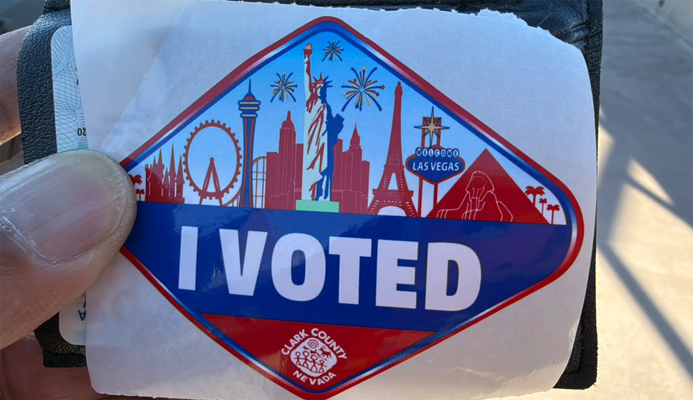
The US midterm elections become a credibility test for the prediction markets sector this Wednesday (November 4th). Kalshi and Polymarket, the two largest platforms in the segment, together have accumulated more than US$1,48 billion (R$8,13 billion) in bets linked to the US Congressional races.
The significance of the moment goes beyond financial volume. These platforms gained global visibility in 2024 by predicting Donald Trump's victory in the US presidential election ahead of traditional polls, positioning themselves as a benchmark for media outlets and investors. Now, any result significantly different from their projections could damage the sector's reputation, according to analysts.
On Tuesday (November 3rd), data compiled by the analysis firm BetInt indicated a 94% chance of Democrats winning a majority in the House of Representatives and a 75% probability of winning the Senate.
Disputes attract bets.
More than 28 markets have opened for the 2026 midterm elections , but the bulk of the money is concentrated in a few races. Senate elections in Texas, Michigan, Maine, and South Carolina lead in betting volume, according to the Anti-Corruption Data Collective (ACDC), a Washington-based nonprofit organization.
In Texas, the race between Democrat James Talarico and Republican Ken Paxton for a Senate seat has already generated more than $60 million in bets, according to ACDC. Markets indicated a 71% chance of Talarico winning on Tuesday, according to BetInt. In Michigan, more than $20 million has been wagered on the Senate race, with a 78% probability of Democrat Abdul El-Sayed defeating Republican Mike Rogers, according to the same analysis firm.
Kalshi reported on Monday (November 2nd) that it had already moved US$1,33 billion in bets on midterms . On Polymarket, the volume reached approximately US$145 million, according to ACDC. Combined, these figures exceed the US$221 million recorded in the entire 2024 presidential race, illustrating the sector's expansion.
Pressure on reliability
Despite their growth, these platforms have accumulated errors with major repercussions. In the US primaries, bettors incorrectly predicted the outcome in contests such as the one in Los Angeles. In the Brazilian presidential election, Kalshi and Polymarket even gave Luiz Inácio Lula da Silva (PT) only a 20% chance of winning over Flávio Bolsonaro (PL), a result that was confirmed on October 25th.
Joshua Clinton, a professor of political science at Vanderbilt University who led a study on the subject, believes that bettors may have overestimated Flávio Bolsonaro's chances in an attempt to compensate for a bias observed in other elections; polls that underestimated right-wing candidates. Even so, Clinton emphasizes that even the most experienced operators are subject to error.
Research from Vanderbilt University, published in 2025, analyzed nearly 2.500 markets linked to the 2024 elections and concluded that the probabilities presented were, in general, well-calibrated. A publication in the Proceedings of the National Academy of Sciences reached a similar conclusion about the industry's history. Calibration, however, does not equate to correctly predicting the winner; it measures whether the probabilities correspond to what happens in practice, without guaranteeing accuracy in close races.
Harry Crane, a statistics professor at Rutgers University, explains that a small group of experienced bettors concentrates a large portion of the money in these markets. They use opinion polls and other data to guide their bets and, in doing so, help to correct prices.
Questions and controls
The platforms also face suspicions of manipulation. Candidates have even bet on their own races, and an ACDC survey showed that relatively small bets can influence the odds in these markets. To try to curb irregularities, Kalshi prohibits politicians and campaign members from placing election bets. Both companies claim that the markets adjust quickly when large-value movements alter the odds.
“Tuesday represents, in fact, a true test for the new wave of forecast markets,” stated Yesha Yadav, associate dean of Vanderbilt University School of Law. According to her, the disputes over the American Congress this year will help gauge the overall performance of the sector.
Sean Patrick Maloney, CEO of the Coalition for Prediction Markets, acknowledges the model's limitations but argues that, "in a world full of chaos and biased news sources," these platforms offer an unbiased way to predict events. Spokespeople for the companies emphasize that a 20% chance does not make an outcome impossible; events with that probability happen frequently. "But they shouldn't be confused with certainty," they added.

