Lula's executive order prohibits betting and threatens R$ 600 million in revenue for football clubs.
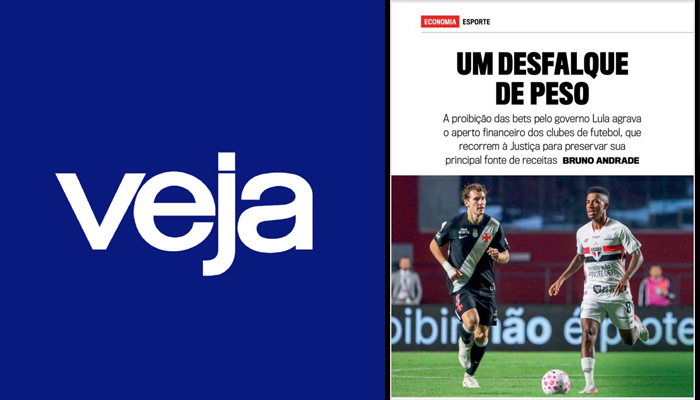
Provisional Measure No. 1.394/2026, issued by the Lula government to prohibit sports betting, removed one of the largest sources of revenue for Brazilian football clubs. Betting accounts for 34% of the marketing revenue of Serie A teams and occupies the main sponsor space in 14 of the 20 teams in the competition, according to data from the consulting firm Sports Value.
Veja magazine's report reveals the financial impact of the measure on a sector that already had accumulated debts, unpaid wages, and creditors knocking at its door. With the departure of the betting companies, executives are scrambling to close provisional agreements with other advertisers and are awaiting a possible reversal of the provisional measure by the National Congress or the Supreme Federal Court (STF).
Dissatisfaction with the measure has already reached the pitch. In the game between São Paulo and Vasco, this Tuesday (October 17th), the São Paulo club displayed the message "Prohibiting is not protecting" on their shirts. Flamengo's president, Luiz Eduardo Baptista, known as Bap, was even more direct about the consequences. "We won't have the money to pay Lucas Paquetá's salary in January with this MP," he stated in a recent interview. If even the club with the greatest financial strength in the country is projecting difficulties, the effect on more indebted teams tends to be proportional.
Judicial reorganization at risk
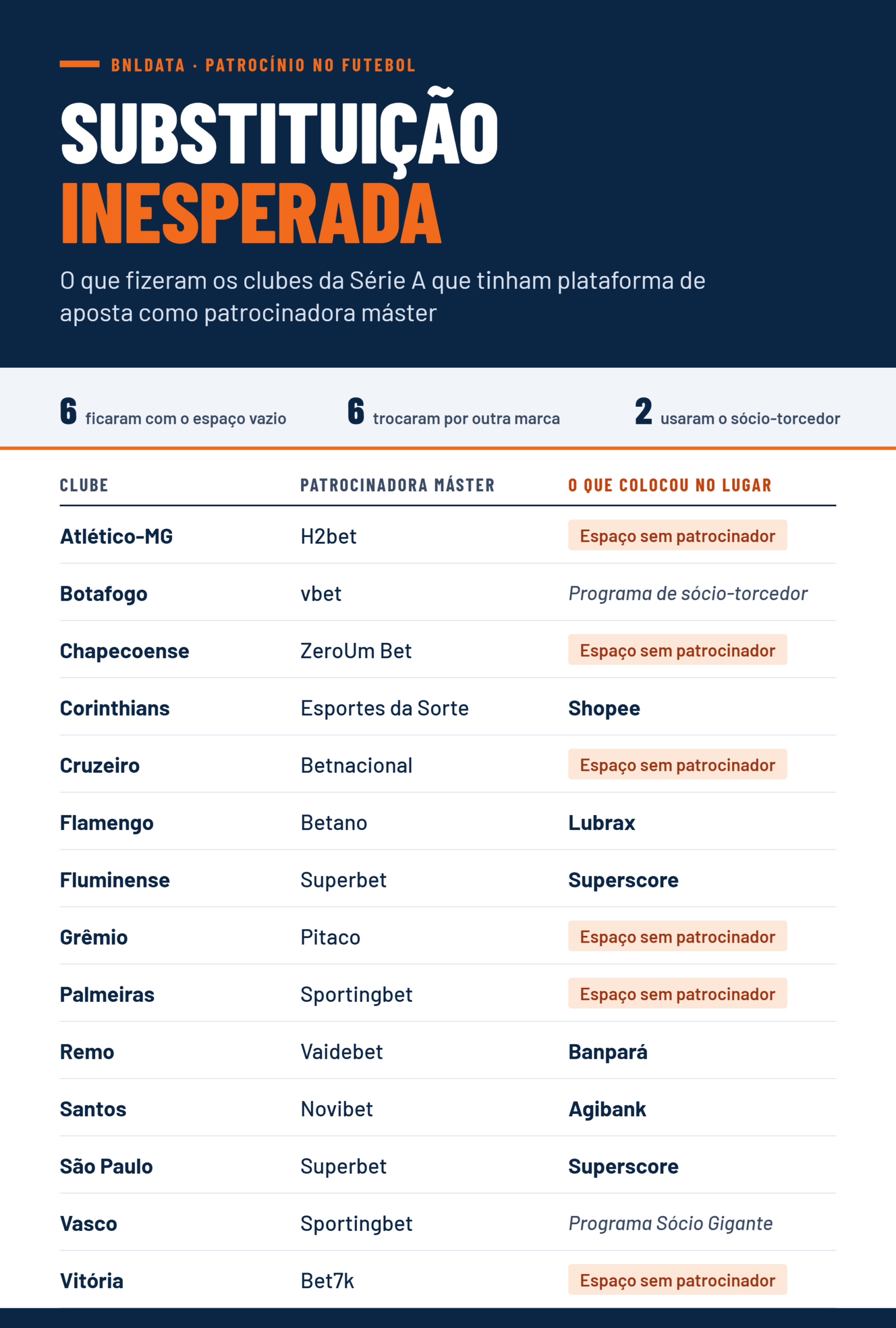
The most serious case identified by Veja is that of Botafogo. Documents obtained by the magazine indicate that the club's judicial reorganization is threatened. Botafogo's contract with a betting company provides for annual revenues of 50 million reais. In a direct action of unconstitutionality presented to the Supreme Federal Court (STF), the club argues that the Provisional Measure also harms creditors who have amounts to receive. "The abrupt suppression of the sponsorship compromises the execution of the judicial reorganization plan, with repercussions on the entire body of creditors," says the document.
To get through the next few months without breaking ties with betting companies, several clubs have signed temporary contracts with other advertisers. Corinthians signed an agreement with Shopee; Santos with Agibank; and Flamengo with Lubrax. São Paulo and Fluminense opted to display the Superscore brand, maintaining exposure from a business linked to their former sponsor. The strategy is to buy time until December, in the expectation that Congress will reject the Provisional Measure or that the Supreme Court will accept the arguments presented by the clubs.
The cost of replacement
Finding a replacement to fill the space previously occupied by betting companies on jerseys, however, doesn't mean recovering lost revenue. According to Amir Somoggi, founder of Sports Value, betting companies collectively spend between 500 and 600 million reais more on advertising than companies in other sectors. Between 2023 and 2025, club marketing revenue grew by 95%, according to the expert. "Without the resources from betting companies, the growth would have been only 25%," Somoggi stated.
The contrast with the approach adopted in England is cited as an example of a well-conducted transition. In 2023, Premier League clubs decided to remove betting advertisements from the front of their shirts starting in the 2026/2027 season, preserving other forms of sponsorship. “This is a case of successful regulatory evolution, which provided a three-year adaptation period,” said Carlos Lima, president of the Brazilian Institute for Responsible Gaming. In Brazil, the Provisional Measure did not foresee an equivalent transition period for clubs to reorganize their budgets.