In SBC Lisboa, the sector is betting on the Supreme Court to overturn the Provisional Measure on betting.
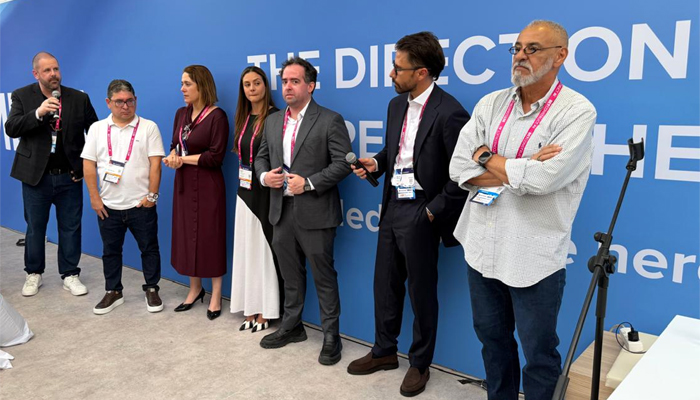
Lisbon – The SBC Summit Lisbon held this Tuesday (29), as an extra event, the SBC Meetup – Regulation Brazil, a meeting dedicated to discussing the most delicate moment experienced by the regulated betting market since the entry into force of Law 14.790/2023. The debate took place in the Regulatory Gaming Meetup Lounge, stand F4-17, a few days after the publication of Provisional Measure No. 1.394/2026, which prohibits fixed-odds betting in the country.
Participating in the debate:
⇒ Leonardo Baptista, CEO and co-founder of PayForFun (moderator)
⇒ Ana Bárbara Teixeira, director of ABRAJOGO
⇒ Bárbara Teles, director of AMIG
⇒ Bernardo Freire, lawyer at the BetLaw firm and consultant for ANJL
⇒ Gilberto Porto, lawyer
⇒ Michael Lopes Stewart, partner at Arco Advice
⇒ Magnho José, president of the Brazilian Legal Gaming Institute (IJL) and editor of BNLData
Leonardo Baptista began with an account of the immediate impact of the Provisional Measure. PayForFun is a payment institution authorized by the Central Bank. Since Friday, Baptista has been approached by three foreign companies interested in buying a regulated payment institution, with its own Pix system, to operate exclusively in the illegal market. He also mentioned that at least five operators were already talking about cutting almost half of their staff.
The precedent of bingo
Magnho José recalled that the country has already experienced a similar scenario. In 2004, the same president, Lula, banned bingo halls by provisional measure, which was approved in the Chamber of Deputies and overturned in the Senate, and the market resumed operations. For him, this time there is a decisive difference: "This market is digital, and it is stateless." In 2004, there was a CNPJ (Brazilian tax ID) and a physical address to shut down. Now, according to the president of the IJL (Brazilian Institute of Bingo), the government treats as analog an operation that has no door to close. "Prohibiting is not protecting," he summarized.
Magnho expressed optimism about the reversal and believes the market will recover before the provisional measure is voted on by Congress. However, he warned that a regulated Brazil "will never be the same" because the measure disrupts the market.
Judicial and political strategy
Bernardo Freire reported that two lawsuits have already been filed with the Supreme Federal Court and classified the Provisional Measure as "political, not technical." According to him, the government itself acknowledged not having conducted an impact study or prior analysis at the Ministry of Finance. Freire contested figures cited in the announcement of the measure, such as the cost of R$ 100 billion to healthcare and the R$ 65 billion that would have been removed from the economy, and countered the official data from the Secretariat of Prizes and Bets. He reported the identification of approximately 6 illegal websites in four days, some of them cloning authorized brands.
Freire believes a preliminary injunction could be issued the week following the first round of voting. In the worst-case scenario, the review would fall to Congress, with an estimated deadline of early March.
Ana Bárbara Teixeira listed flaws that the sector intends to exploit in the Federal Court of Accounts as well. Among them, the absence of an estimate of fiscal impact and the provision that unwithdrawn amounts will pass to the Union, which she called "confiscation".
Michael Lopes Stewart pointed to three simultaneous fronts: legal, political, and social. He highlighted the importance of the composition of the joint committee that will analyze the Provisional Measure. He also suggested that the sector organize the evidence on the explosion of the illegal market and its connection to organized crime, to present it to the Supreme Federal Court and to candidate Flávio Bolsonaro. Flávio leads in the polls, although he has publicly defended the prohibition of online casinos.
Jobs, reputation, and self-criticism
Bárbara Teles stated that more than ten companies have already begun layoffs and cuts. She offered self-criticism: the regulated sector “has not been competent” in showing society what differentiates it from the illegal sector. She cited the World Cup as a missed opportunity for responsible gambling campaigns.
The issue of image resurfaced in a question from the audience. One participant recalled that public opinion treats betting as a "boogeyman" and criticized the clubs' statement as alarmist. Magnho responded that the reputation deficit didn't start now. It stems from 85 years of prohibition, completed on October 3rd, and six years without regulation after legalization in 2018, a period prior to the 22 months of a regulated market.
Gilberto Porto defended the autonomy of SPA, currently linked to the Ministry of Finance, so that the regulator is not subject to "a stroke of the pen." He made industry unity his watchword and, in his closing remarks, demanded "legal certainty and regulatory predictability."
In closing, Leonardo Baptista defended the SPA team, whose three years of work he considered disrespected by the Provisional Measure, and made a plea to the foreign audience: "Don't give up on our country."