Operational overview of the online betting market in Brazil.
Seven months have passed since Law No. 14.790/2023 came into effect—allowing online fixed-odds betting platforms to operate legally in Brazil. During this period, the iGaming market has overcome challenges and made progress on regulatory and fiscal issues, reinforcing its commitment to responsible gaming and the professionalization of the sector, which will inject approximately R$ 20 billion in taxes and fees into the Brazilian economy by 2025, according to projections by the National Association of Games and Lotteries (ANJL). It should be noted that, as of June, the government had already collected R$ 3,8 billion, contributing to a record in tax revenue.
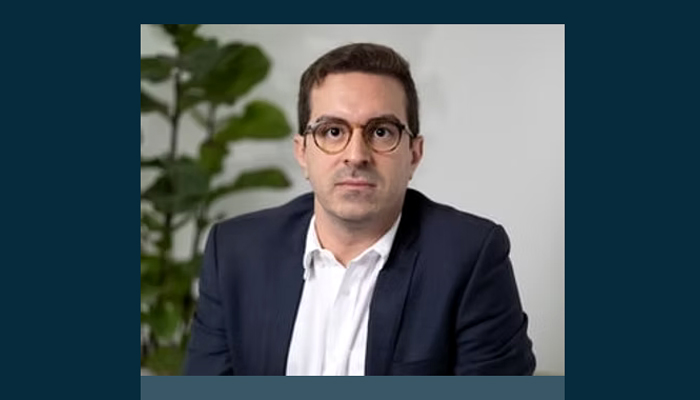
Rodrigo Vick, Legal Director of S8 Capital — a financial solutions ecosystem — emphasizes that more than just an economic opportunity, the iGaming industry imposes a series of rigorous obligations regarding Responsible Gaming and Consumer Law, as well as compliance with regulations, anti-money laundering, and data protection. “The process of operating legally is rigorous. In addition to ensuring the legality of the operation, a betting company needs to spend R$ 30 million to obtain a federal license and guarantee another R$ 5 million as collateral. And any infraction can jeopardize the license, in addition to the possibility of fines ranging from R$ 50 to R$ 2 billion,” he explains.
The executive, who specializes in corporate governance, consumer law, and the General Data Protection Law, reveals that there is a market demand for alignment between operators and consumer protection agencies, especially regarding information on the implementation of responsible gaming practices and compliance policies implemented by operators who have obtained federal licenses. "Because it is a newly regulated market, there are still doubts about its operation and a lot of distorted information about the sector. After all, it is a sector with rigorous, costly, and developing regulations; there is no room for a lack of dialogue and penalties due to a lack of knowledge of the regulations," he assesses.
Consumer Rights
In addition to financial oversight, there is meticulous monitoring of consumer rights and responsible gambling. A set of rules and regulations must be followed to ensure the protection of platform users, always aiming for responsible gambling and consumer health.
“It’s an entertainment market, meaning responsible gaming is fundamental. In this sense, the communication from operators needs to be clear, precise, conspicuous, and transparent, making it clear that this is not about investments. Advertising must comply with “Annex X” of the CONAR Ordinance, undergoing a rigorous process, prohibiting the encouragement of excessive gambling and highlighting messages of responsible gaming,” he states.
The use of personas and influencers targeting a child audience is also categorically prohibited, as is access by minors under 18 years of age. To this end, CPF registration (Brazilian taxpayer ID) and facial recognition are measures included in the current regulations.
Other rules that guarantee consumer protection include payment only via PIX (Brazil's instant payment system), prohibiting the registration of credit cards, and no bonuses for first-time users.
“Committed platforms seek federal licenses — which guarantee the release of games evaluated by Gaming Laboratories International (GLI), an international institution that analyzes games before validation for the market, such as scoring dynamics, visual stimuli, music, and values to be returned to the marketplace,” the executive points out.
Furthermore, the expert advises consumers to pay attention to website URLs, since companies with federal licenses have " bet.br " in their domain.
Amounts to be refunded
It's worth highlighting that the regulation requires betting sites to return 60% of the winnings. In other words, this monetary percentage must be returned to users as prizes.
Vick reveals that although the sector has advanced significantly in recent months, from raising public awareness to increased inspections at homes, many challenges remain. "Especially regarding the informal market, which is estimated to hold about 60% of this industry. Besides not contributing to taxes and injecting money into the country's economy, it also exposes consumers to risks in fulfilling offers and hinders inspections by the competent authorities."
This activity in the parallel market still generates unfair competition for companies committed to transparency in their operations and consumer rights.
“Without a doubt, we have made significant progress in the first few months of regulation. It is a new market, so questions and challenges will arise, and it is our duty to present and convey accurate information, as well as solutions that contribute to the market's work with society. To do this, we need government support to intensify the sector's oversight and auditing, reinforcing the commitment of federally licensed companies to scale their businesses sustainably and play the responsible game,” he concludes.
About S8 Capital:
Founded in 2025 from the integration of Salis Capital with the Greek group OKTO, S8 Capital was created to be a high-impact financial ecosystem, specializing in strategic cash management, foreign exchange and derivatives, financial advisory and M&A.
With strong expertise in the corporate and international markets, S8 Capital acts as a strategic partner to CFOs, CEOs, and financial directors, offering customized solutions and exclusive service to boost the financial efficiency of companies in various sectors. Website: https://www.s8capital.com.br/