
Bill to reduce taxes for betting sites advances in the Belo Horizonte City Council.
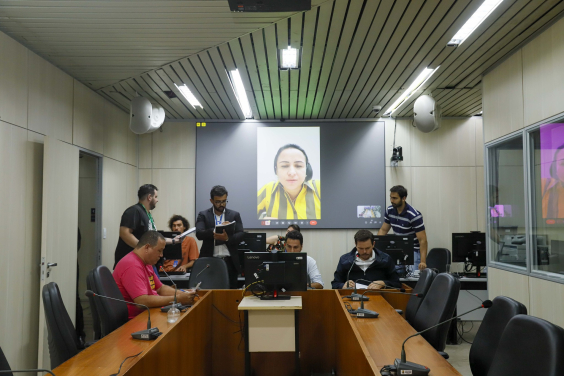
According to Law 8.725/2003, services related to the distribution and sale of tickets and other lottery products, bingo, betting coupons, raffles, prizes, including those resulting from capitalization bonds, are subject to a 5% Service Tax (ISSQN) in Belo Horizonte. To attract so-called "betting" companies to the city, the Executive Branch sent Bill 503/2025 to the City Council, which reduces the tax rate paid by these companies to 2%. This Tuesday (October 14th), the Legislation and Justice Committee (CLJ) approved the opinion of councilwoman Dr. Michelly Siqueira (PRD) regarding the constitutionality, legality, and compliance with regulations of the proposal.
The text also modifies Law 9.795/2009, which alters the Tax Policy of the Property Tax on Urban Buildings and Land (IPTU) to benefit indebted sports and recreational clubs. The measure will have to go through three merit committees before being analyzed by the Plenary, in the first round, when it will need the favorable vote of two-thirds of the councilors (28) to continue processing. Check here the complete result of the meeting.
Encouraging bets
In the justification for Bill 503/2025, the Executive branch argues that reducing the ISSQN tax rate "does not generate a relevant impact on municipal revenues." According to the Belo Horizonte City Hall, "most" of the service providers established in the capital are registered under the Simples Nacional tax regime, which authorizes "more beneficial" tax rates for its participants.
The estimated tax waiver for 2025 would be just over R$ 11. According to the Executive branch, although the change in the tax rate represents a marginal reduction in revenue, the measure aims to "stimulate" the establishment of new companies in the capital, contributing to the "economic strengthening of the Municipality".
“By maintaining the 5% rate, Belo Horizonte risks losing significant opportunities for revenue collection and economic development, especially in the current competitive context, in which other cities already apply reduced rates as a mechanism to attract companies in the sector, such as São Paulo, Barueri, and Porto Alegre,” states the Executive branch.
According to calculations by the municipal administration, adopting the 2% tax rate could generate an additional R$ 2,8 million per year for the municipal coffers. The Executive branch believes that expanding the tax base would amount to approximately R$ 140 million with the installation of betting shops in the city.
Property tax debts
Sports and recreational clubs registered as delinquent taxpayers due to unpaid property taxes (IPTU) could also benefit if Bill 503/2025 is approved. Currently, bonuses of up to 80% of the amounts owed can be granted, but limited to the date of December 31, 2014. The idea is to extend this period to December 31, 2020. According to calculations by the city hall, the change could benefit 95 entities, covering approximately R$ 15 million in debts to the Municipality, with a projected revenue loss of R$ 12 million.
“The expectation is that the change in the time frame will expand the offer of sports, social and recreational programs for the population of Belo Horizonte,” writes Mayor Álvaro Damião. He also believes that the waiver could be offset by the “potential increase in revenue” over the years, resulting from the attraction of new and significant businesses to BH.
Remote monitoring and tracking
One of the articles in Bill 503/2025 also adds to the list of services subject to ISSQN (Tax on Services of Any Nature) those related to remote monitoring and tracking of vehicles, cargo, people, or animals. According to the justification in the text, a federal complementary law from 2021 authorized the tax to be levied on this type of service and its collection by municipalities.
Monitoring and tracking companies would start paying a 5% tax rate. According to the municipal administration, it is estimated that, between 2022 and 2025, Belo Horizonte could have collected around R$ 2,5 million from the levy.
Constitutional and legal
In her opinion, rapporteur Dr. Michelly Siqueira emphasized that she saw no "flaw in competence, initiative, or violation of constitutional principles," since municipalities have the power to establish taxes on both urban real estate and land, as well as on services of any kind. She also attests that the proposal is in accordance with the legal system "and does not present any violation of current legislation on the subject." The opinion was unanimously approved.
Next Steps
Before being evaluated by the Plenary, in the first round, Bill 503/2025 will have to go through the Committees on Education, Science, Technology, Culture, Sports, Leisure and Tourism; Urban Mobility, Industry, Commerce and Services; and Budget and Public Finances. To continue processing, it needs the favorable vote of two-thirds of the councilors (28).

