Rio Grande do Sul challenges ANJL's legitimacy to question the state's betting law.

The National Association of Games and Lotteries (ANJL) is questioning the constitutionality of State Law 16.508/2026 of Rio Grande do Sul. The law establishes restrictions on the advertising of sports betting platforms in the state. Minister Cármen Lúcia, rapporteur of Direct Action of Unconstitutionality 7.971, ordered the adoption of an accelerated procedure for the analysis of the legislation. The ruling was published this Monday (June 1st).
The Government of Rio Grande do Sul has presented its defense to the Supreme Federal Court against a lawsuit filed by the National Association of Games and Lotteries. The entity is challenging State Law No. 16.508/2026, sanctioned on April 24, 2026, by Governor Eduardo Leite. The Rio Grande do Sul legislation establishes rules for advertising, publicity, and sponsorship of fixed-odds sports betting platforms within the state. The legal text states its objective as protecting consumers, safeguarding children and youth, supporting vulnerable individuals, and contributing to the prevention of pathological gambling and over-indebtedness.
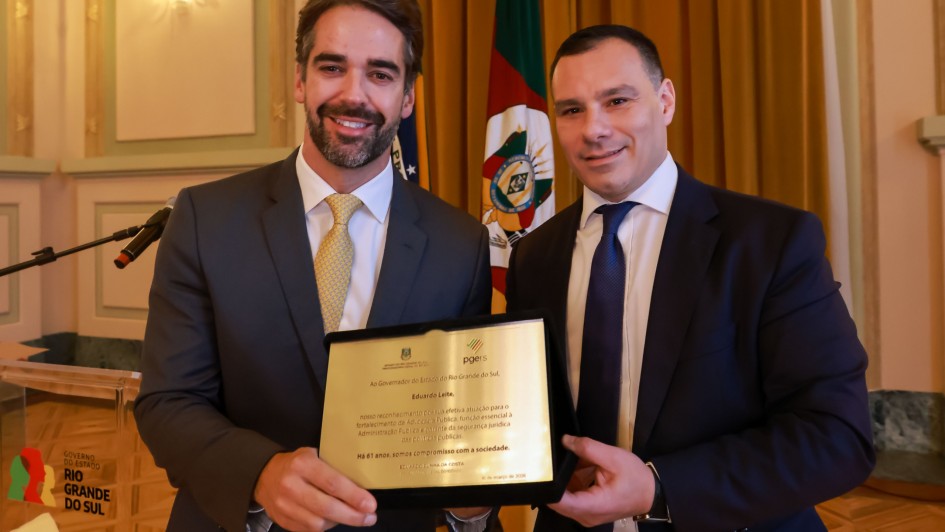
The Attorney General of the State, Eduardo Cunha da Costa, filed a petition on Thursday (27) requesting the dismissal of the case without analysis of the merits. Alternatively, he asks the STF to declare the full constitutionality of the state law.
The Legislative Assembly approved the state law on April 24, 2026. The law mandates that betting companies display warning phrases against uncontrolled gambling and excessive debt. The legislation prohibits the use of animations, mascots, or artificial intelligence with appeal to children and young people in advertising campaigns of platforms known as " bets ".
The law establishes geographical restrictions for advertising. Advertisements are prohibited in sports venues and near schools. The broadcast times for audiovisual advertisements are limited to the period between 21 PM and 6 AM. The restriction covers broadcast television, radio, streaming , and on-demand services. PROCON-RS (the consumer protection agency of Rio Grande do Sul) is responsible for monitoring and applying fines to companies that violate the rules.
Government questions association's ability to propose action.
The main argument of the Rio Grande do Sul defense questions the ANJL's capacity to act in the concentrated control of constitutionality. The government maintains that the entity does not meet the requirements established by the Constitution and the jurisprudence of the Supreme Federal Court to propose actions of this nature.
“The Plaintiff is a private civil association formed by a few companies located in only 7 states of the federation,” the document highlights. The defense argues that the legitimacy of national class entities requires an effective presence in at least nine member states. It would be necessary to demonstrate homogeneity of the represented category and thematic relevance to the object of the action.
The State argues that ANJL lacks standing to bring an action of unconstitutionality because it is not a representative national class entity under the terms of the Supreme Federal Court's jurisprudence, which requires homogeneity, representation in multiple states, and thematic relevance. The Rio Grande do Sul government maintains that ANJL defends the "purely commercial and competitive interests" of its members. The association seeks to preserve profits and promote the deregulation of advertising, without concern for consumer protection or public health. It asserts that ANJL represents restricted commercial interests and does not protect the collective interests of consumers or public health, which is why the action should not even be considered. This characteristic negates the necessary "thematic relevance" required by the Supreme Federal Court's jurisprudence.
The purpose of the regulation is "to protect the consumer, safeguard the physical and psychological integrity of children and youth, support vulnerable people, and prevent pathological gambling and over-indebtedness," states the state government. The defense presented to the Supreme Federal Court structures its arguments on two main fronts: the illegitimacy of the association to propose the action and the constitutionality of the state's competence to legislate on the subject.
The state invokes concurrent jurisdiction to legislate.
The defense refutes the claim that the state law encroached upon the exclusive jurisdiction of the Federal Government. ANJL argues that only the Federal Government can legislate on lotteries, commercial advertising, telecommunications, and civil liability, according to Article 22 of the Constitution. The government of Rio Grande do Sul disputes this interpretation.
The State defends concurrent jurisdiction (Article 24 of the Federal Constitution) to legislate on consumer protection, public health, and liability, with the States having the power to supplement general federal norms. The petition argues that the legislation is based on concurrent legislative jurisdiction, provided for in Article 24 of the Constitution, in its clauses V, VIII, XII, and XV. The norm invokes the constitutional duty to protect the consumer, established in Article 5, clause XXXII. The State cites recent precedents from the Supreme Federal Court itself to reinforce its argument.
The government mentions ADI 7.416, which dealt with a case from Mato Grosso do Sul. In that ruling, the Supreme Federal Court (STF) recognized the validity of a state law that required internet companies to provide speed information to consumers. This precedent demonstrates that states can legislate on consumer protection, even in sectors regulated by the Union. The defense invokes precedents from the STF (ADPF 492/493, ADI 7416, ADI 5631, among others) that recognize the constitutionality of protective state norms and the legitimacy of local acts that impose transparency and advertising limits when they aim to protect consumers and children.
"The Union has the power to authorize and regulate betting, but states can supplement local protection, especially in matters such as health, childhood, and consumer relations," summarizes the document presented to the Supreme Federal Court (STF). It argues that the law does not encroach on matters under the exclusive jurisdiction of the Union nor does it alter civil law; it acts through administrative/consumer protection and police powers. The Rio Grande do Sul law does not conflict with federal regulations, but complements protection in areas of concurrent jurisdiction.
The argument also invokes ADPFs 492 and 493. In those rulings, the Supreme Federal Court recognized that the operation of lotteries constitutes a public service exercised concurrently by the federated entities. By symmetry, this interpretation would allow the states to regulate the advertising of these activities.
Studies indicate a social impact of R$ 38,8 billion.
The government attached to the petition studies on the social impact of gambling in Brazil. Research from the Institute for Health Policy Studies (IEPS) estimates that the harm associated with betting and gambling generates an annual social cost of R$ 38,8 billion in the country. The survey indicates that approximately 12,8 million people are at risk due to these activities. The defense also cites data from the Federal Court of Accounts indicating that a large portion of the market operates irregularly, as well as studies on the profile and vulnerability of gamblers to justify state intervention.
Data from the CETIC survey (“TIC Kids Online ”) indicates that 53% of Brazilian children and adolescents reported having contact with advertisements for games and gambling. The 42nd Public Hearing of the STF (Supreme Federal Court), held within the scope of ADI 7.721, had already highlighted “significant and deleterious impacts of gambling advertising on the mental health of children and adolescents and on family budgets, especially those of beneficiaries of social programs”.
The defense from Rio Grande do Sul refutes the argument that the restrictions would violate free enterprise and free competition. The document recalls that the constitutional economic order must be harmonized with social purposes, including consumer protection and the social function of property. Economic principles are not absolute in the Brazilian legal system. The prosecution argues that the measures are adequate, necessary, and proportionate to the protection of constitutional goods (public health, child protection, economic order with a social function).
"Economic freedom is not absolute and must be subject to the ethical limits imposed by the Public Authorities to curb abuses," says the text of the defense presented to the Supreme Federal Court. State regulation does not represent undue interference in economic activity, but rather the legitimate exercise of regulatory power to protect fundamental rights.
The prosecution argues that any potential harm to companies constitutes "mere commercial inconvenience inherent to the risk of the regulated activity." The defense maintains that suspending the regulations would generate reverse damage by restoring massive and unrestricted advertising. The State argues that restrictions do not encourage the black market, but rather distinguish regular operators and improve oversight.
The State argues that suspending the law would exacerbate risks to mental health and indebtedness among vulnerable families. It claims that the injunction sought by ANJL would cause " reverse periculum in mora ," that is, immediate harm to health and consumers if the law were suspended. The Supreme Federal Court itself, when granting precautionary measures in ADIs 7.721 and 7.723 under the rapporteurship of Minister Luiz Fux, recognized the "insufficient protection" of federal legislation. The court ordered immediate actions to curb advertising directed at children and adolescents.
Minister Cármen Lúcia ordered that information be requested from the president of the Legislative Assembly of Rio Grande do Sul and the state governor. This information must be provided within a maximum and non-extendable period of five days. Subsequently, the case file will be forwarded to the Attorney General's Office and the Prosecutor General's Office, successively, for their respective opinions within a maximum and priority period of three days each. Once these steps have been completed and the deadlines observed, with or without a response, the electronic case file will be returned to the rapporteur for a final decision.
ADI 7.971 is under the jurisdiction of Justice Cármen Lúcia at the Supreme Federal Court. The government of Rio Grande do Sul requests that the action be dismissed without prejudice due to the lack of standing of the National Association of Games and Lotteries. Alternatively, it requests that the action be dismissed as unfounded, upholding the state law in its entirety. The petition is signed by the Attorney General of the State and Deputy Attorneys General.
The case is awaiting review by the rapporteur for a decision on the request for a precautionary measure. The Supreme Federal Court (STF) has not yet set a date for reviewing the precautionary measure requested by ANJL, nor for judging the merits of the case. The Court's decision will have a direct impact on the application of the state law. The decision could establish precedents for similar legislation in other states.