
Senate analyzes bill that could ban advertising by betting companies in Brazil.
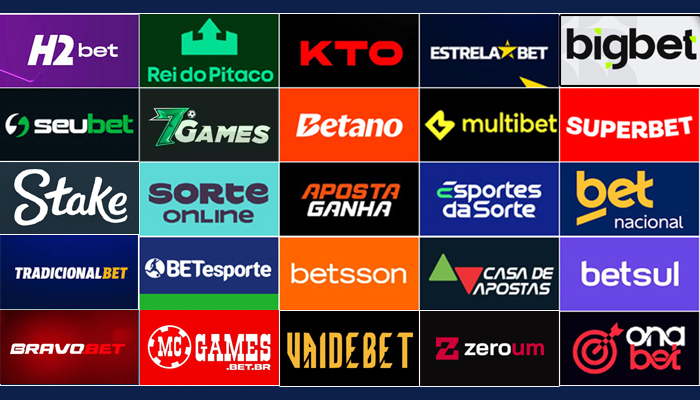
The Brazilian Federal Senate is analyzing a bill that establishes a complete ban on advertising by sports betting companies in Brazil. The proposal has been awaiting the appointment of a rapporteur in the Constitution and Justice Committee (CCJ) since February 2026. The text was approved by the Science and Technology Committee (CCT) in early February.
The project was initially authored by Senator Randolfe Rodrigues. Senator Damares Alves was the rapporteur in the CCT (Committee on Science, Technology, Innovation, Communication and Informatics), where she presented a substitute bill that was approved by the committee. Senator Carlos Portinho expressed interest in reporting on the text in the CCJ (Committee on Constitution, Justice and Citizenship), according to information from UOL Esportes.
Portinho had already reported on another project on the subject in May 2025. That text approved restrictions on betting advertising , but did not establish a total ban.
Arguments for the ban
Senators in favor of the measure argue that the advertising exposes the population to risks of addiction and debt. Damares Alves stated that the advertising increases the number of gamblers and affects people in situations of social vulnerability.
"Driven by massive and highly targeted campaigns, the sector contributes to over-indebtedness, the worsening of mental health disorders, and the breakdown of thousands of Brazilian households," said the senator.
Damares' report highlighted that "the main cause of the various social and economic problems reported is precisely the incessant and indiscriminate use of advertising to induce the idea that gambling can constitute a means of obtaining economic gains and financial independence."
The senator cited data presented at the Gambling Parliamentary Inquiry Commission. "Guests highlighted that gambling addiction is already the third most frequent addiction in Brazil, behind only tobacco and alcohol," she emphasized.
Senators opposed to the advertising cite a survey by the Central Bank. The document indicates that Brazilians spent around R$ 20 billion per month on bets in 2024, "something close to the value of Brazilian soybean exports in 2023". In 2025, the value jumped to R$ 30 billion per month, according to the same source.
Data from the regulated market
The Ministry of Finance reported that 25,2 million Brazilians placed bets in 2025, according to a report from the Betting Management System released in January. The document indicates total gross revenue of approximately R$ 37 billion for authorized companies throughout the year. Dividing this amount by 12 months results in R$ 3,08 billion in monthly revenue.
Betting companies and the Ministry of Finance indicate that the Central Bank's figures are exaggerated.
The regulated sports betting market in Brazil has been operating for a year. The Ministry of Finance reported that it has already taken down more than 25 illegal websites. Recent legislation approved specific rules for advertising betting. The regulations include stricter controls for verifying the identity and age of those who register on the platforms, as a barrier for minors.
Impact on football
Currently, 14 of the 20 teams in the Brazilian Championship's Série A display betting brands on their uniforms. In 12 of these clubs, the betting companies occupy the main sponsor space.
Flamengo has the biggest contract in Brazilian football with a betting company . Betano pays the Rio de Janeiro club R$ 268 million per year. Corinthians signed a contract with Esportes da Sorte valid until the end of 2029. The agreement guarantees a fixed R$ 150 million per year to the São Paulo club. The amount can reach R$ 200 million with the fulfillment of variable goals.
“Society’s concern about advertising in the sector is legitimate, and therefore we defend the responsible enforcement of established rules. The point is that a broad ban does not solve the problem and tends to limit the communication of those operating within the law, while the illegal market continues to seek visibility without any kind of control. Furthermore, there is a significant economic impact that needs to be considered. The sector is currently an important part of the financing of sports and major events in Brazil. These resources are not one-off events; they are part of medium- and long-term planning. The sponsorship contracts we maintain follow this logic. They are structured agreements that support investment and provide predictability. In the case of Corinthians and Náutico, for example, these are the largest sponsorship contracts in the clubs' history, with a direct impact on financial organization and planning capacity. The most effective path is not prohibition, but rather balance: application of existing rules with objective criteria and effective oversight of those operating outside the regulated environment. This is what guarantees legal certainty and a more sustainable market,” commented Darwin Filho, CEO of Esportes Gaming Brasil, owner of the [company name - likely omitted in the original text]. Sports of Luck.
A potential ban on advertising would force betting companies to remove their brands from club uniforms and stadium signage.
Government position
Daniele Corrêa Cardoso, Secretary of Prizes and Betting at the Ministry of Finance, questioned the total ban on advertising at this time. “We have one year of regulated market, it's a recent market from a regulatory point of view. We question this total ban. At this moment, we have a process of combating illegal activities. The consumer needs to see a movement of communication, of understanding the sector, of what the market is. This total ban, at this moment, is not viewed so favorably. The consumer still doesn't have this clarity about where they stand, how things are,” she told UOL.
The secretary argued that advertising can help consumers identify regulated companies. “We are in a process of channeling [the market]. It's about combating the illegal market. We have already taken down more than 25 illegal websites. So, we know that it's important that, if citizens are interested in the market, they go to the legalized one,” she added.
The technical wing of the federal government understands that a blanket veto could hinder the consolidation of the regulated market, amidst a battle against illegal websites.
Industry view
André Gelfi, director of the Brazilian Institute for Responsible Gaming, drew distinctions between the communication of the regulated and illegal markets. “The advertising of regulated betting sites conveys the message that betting is entertainment. The moment this starts causing problems, you should stop consuming it. It's the illegal operators who are targeting minors, using subliminal messages of someone with a fancy car, a huge house, flaunting wealth, as if that wealth was obtained through gambling. That's the problem. Banning advertising won't solve this issue; it will only make life more difficult for the regulated market. I'm not saying that our advertising in the regulated market is perfect, but I think that, given the context, we have other priorities,” he stated.
Fabio Tiberia, director of Vbet in Brazil, a brand that sponsors Botafogo, cited the Italian experience. “I'm Italian, we experienced this in 2018. A decree was passed prohibiting advertising. In this case, it didn't work because the user could always redirect themselves to a betting site. The most effective approach is raising player awareness, making them understand that gambling is entertainment, and providing more information about how much they spend and how much they receive back. Transparency and always specifying that gambling is not for profit, but for entertainment,” he stated.
Guilherme Figueiredo, director of institutional relations at Betano, disputed the figures presented in the Senate. “If we do a simple average ticket size calculation , using the most elementary math, we're talking about an average ticket size of R$120 per month per bettor. So, in terms of family debt, of families being destroyed, perhaps that's not the case. If we still consider that the average ticket size isn't the one that should be considered, because there's a small portion of bettors who actually play for a higher amount, we can safely say today that 95% of people play for less than R$80 per month. That's consistent with an amount to be used for entertainment. So, the majority of the population uses sports betting as it should be used: for entertainment,” he stated.
Figueiredo also addressed the consequences for football funding. “If you restrict all of this, funding for national sport will suffer a considerable drop. There’s an important point: for sports betting companies, sport will always be the most important moment for advertising. We’ve seen several other industries arrive in football, stay a little while, and then leave. You’ll never see that with betting . They’ll stay because it’s our core business . You’re not going to advertise at an event of any other nature that isn’t sport, to attract an audience that isn’t involved in consuming the activity,” he stated.
Bernardo Cavalcanti Freire, legal consultant for the National Association of Games and Lotteries, stated that “Preventing advertising by companies authorized to operate in the country, at the initial stage of regulation, is a major mistake, as it fosters the growth of illegal betting and goes against the path taken by nations that present a responsible environment for online gambling , such as England. The advertising of regulated operators is already subject to strict oversight. What should be repressed is abusive advertising, and especially that carried out by clandestine companies.”
Next Steps
The bill is awaiting the appointment of a rapporteur in the Senate's Constitution, Justice and Citizenship Committee (CCJ) to proceed with its processing. Carlos Portinho has expressed interest in assuming the role of rapporteur for the text in this committee. There is no set date for when the text will actually be analyzed by the committee.
The proposal has the support of senators from different political spectrums. The discussion is not related to a polarized agenda between right and left.
Football betting sponsorships reach US$764 million in Europe, the Middle East, and Africa.

