
'Vale o Escrito', 'Donos do Jogo', 'Corrida dos Bichos'... how is the Jogo do Bicho (Animal Game) portrayed on screen?

A survey compiled 20 Brazilian audiovisual productions that portrayed the world of the jogo do bicho (illegal lottery) between 1952 and 2026. The research identified radical changes in the representation of the bicheiro (illegal lottery operator) throughout this period. The character who appeared as a romantic bookmaker in the 1950s has transformed into the violent mobster of current blockbusters.
Historian Luiz Antônio Simas, author of the book "Maldito Invento dum Baronete: Um Breve História do Jogo do Bicho" (Damned Invention of a Baron: A Brief History of the Animal Game), analyzed the public's fascination with the subject. According to him, the interest transcends the game itself and is linked to street culture and its contradictions, as reported by g1 Globo.
“The creature engages in dialogue with the bar, the street corner, the world of samba and Carnival. But it also engages in dialogue with violence, security, and the relationships between public and private power,” he explains.
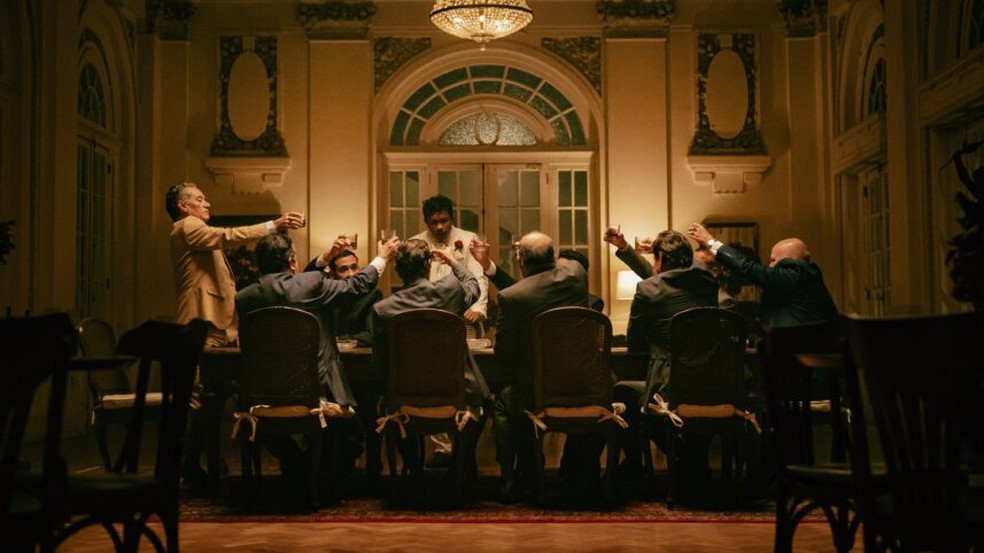
Transformation reflects changes in real-world crime.
The portrayal of the illegal gambling operator has changed as organized crime has transformed in real life. In "I Loved a Gambling Operator," from 1952, the character was depicted as a romantic bookie. "Lady of Destiny," a telenovela aired in 2004, presented the gambling operator as a charismatic rogue. "The Owners of the Game," a 2025 series, showed the racketeer as a violent mobster.
Prime Video released "Animal Race" in 2026. The film presents a futuristic dystopia where crime evolves into a "Hunger Games"-style competition.
Simas reveals that most people who enjoy productions on the subject are unaware of the rules of the game. "Out of every 10 people I know who love movies on the subject, nine haven't the slightest idea how to play the lottery," he says.
The 20 titles selected by g1 in chronological order:
⇒ I Loved a Bookie (1952)
⇒ Boca de Ouro (1963)
⇒ Flag 2 (1971)
⇒ Mario Fofoca (1983)
⇒ Partido Alto (1984)
⇒ The King of Rio (1985)
⇒ Mandala (1987)
⇒ Fire in the Tail (1988)
⇒ Sai de Baixo (1999)
⇒ Lady of Destiny (2004)
⇒ The Big Family (2006)
⇒ Lara with Z (2011)
⇒ Giovanni Improtta (2013)
⇒ Doctor Castor (2021)
⇒ Law of the Jungle (2022)
⇒ Worth Writing (2023)
⇒ Vai Que Cola (2023)
⇒ Comeback (2024)
⇒ The Owners of the Game (2025)
⇒ Animal Race (2026)
Brazilian sport attracts audience.
Brazilian television drama has found in the jogo do bicho (a type of illegal lottery) its Brazilian version of mafia films. The historian explains the attraction that the public feels for series like "Os Donos do Jogo" (The Owners of the Game), on Netflix.
"The mafia in cinema seduces more than it horrifies. While you show the horror, that horror is also seductive. People are captivated by the environment in which it is set," he analyzes.
Simas differentiates between documentary and entertainment. Series like "Vale o Escrito," on Globoplay, expose real dilemmas. Fiction relies on fantasy and romance.
The historian points out a problem in the way the topic is treated. "The big mistake is to treat the jogo do bicho (illegal lottery) from only one perspective: either restricting it to crime or romanticizing illegality," he argues.
1950s: romantic character
The film "I Loved a Bookie" premiered in 1952. The production featured Carlos (Cyl Farney), an ambitious young man who leaves the countryside and goes to Rio de Janeiro. The character ends up getting involved with the illegal lottery game known as "jogo do bicho". After some time in jail, Carlos decides to change his life by marrying Laura (Eliana Macedo) and living honestly.
1960s: boss in Madureira
The film "Boca de Ouro" was released in theaters in 1963. The production featured Boca de Ouro (Jece Valadão) as the head of the illegal gambling operation known as "jogo do bicho" in Madureira, Rio de Janeiro. After Boca's death, reporter Caveirinha (Ivan Cândido) decides to track down Guigui (Odete Lara), the gambling boss's former lover. The film received a remake in 2019. Daniel Filho directed the new production starring Marcos Palmeira.
1970s: Rio de Janeiro's underworld
TV Globo aired the telenovela "Bandeira 2" in 1971. The production had 179 episodes. The plot portrayed the underworld of the illegal gambling bosses in Rio de Janeiro. The telenovela showed the difficult and constant struggle for survival in the poorest areas of the city and the pursuit of professional achievements.
1980s: detectives and lawbreakers
TV Globo aired the fictional series "Mário Fofoca" in 1983. The plot featured the detective played by Luis Gustavo. The character moves to Rio. With the help of a friend, he begins to investigate cases of infidelity. In the storyline of the episode "O Rei dos Bicheiros" (The King of the Illegal Gambling Operators), the investigation into the alleged betrayal of a racketeer ends in an accident that leaves those involved unrecognizable.
TV Globo aired the fictional series "Partido Alto" in 1984. The production portrayed the lives of residents of the South Zone and the suburbs of Rio de Janeiro. In episode 122, Piscina (José Mayer) tells Jussara (Betty Faria) that he will take Jorginho (José Mayer) away from the bookmaker's house.
The film "The King of the River" hit theaters in 1985. The production was based on the play "The King of Ramos," written by Dias Gomes. The plot followed Tucão (Nuno Leal Maia) and Nico Sabonete (Nelson Xavier), two employees of the illegal gambling boss Cacareco (Milton Gonçalves). In the story, the ambitious Tucão convinced his friend to take over some of Cacareco's gambling operations to start their own careers in the illegal lottery.
TV Globo aired the 20 PM telenovela "Mandala" in 1987. The production featured Tony Carrado (Nuno Leal Maia) as one of the central characters. The bookmaker was presented with an aesthetic that combined "tacky" with romanticism. The character was feared in the underworld of Rio de Janeiro's illegal gambling scene. He succumbed to his passion for the protagonist Jocasta (Vera Fischer).
The program “TV Pirata” aired “Fogo no Rabo” in 1988. The production was a parody of the soap opera “Roda de Fogo”, broadcast in 1986. In the eighth episode of the first season, the character Reginaldo (Luiz Fernando Guimarães) decided to go to Atlantic City accompanied by Penélope and a group of bookies.
1990s: Pointer in comedy
TV Globo aired the fictional series "Sai de Baixo" between 1999 and 2002. The episode "Anta na cabeça" (Tapir on the Head), from the fourth season, addressed the theme. In the plot, Vavá (Miguel Falabella) got a job as a numbers game bookie. The family's luck changed when Magda decided to bet on the bull. She won a fortune and became a numbers game operator.
2000s: iconic character
TV Globo aired the telenovela "Senhora do Destino" in 2004. The production featured Giovanni Improtta, a bookmaker played by José Wilker. The character was taken from a book by Aguinaldo Silva. He became popular with the public for phrases like "Don't forget my motto: with Giovanni Improtta there's no problem". In the story, Giovanni met Maria do Carmo (Suzana Vieira) in prison.
Brazilian TV network Globo aired the fictional series "A Grande Família" between 2001 and 2014. The show addressed the illegal lottery game known as "jogo do bicho" in the episode "Tuco Mãos de Tesoura" (Tuco Scissors Hands), from the sixth season. Agostinho Carrara (Pedro Cardoso) tried to cheat as a bookmaker for the "jogo do bicho" under the influence of the "bicheiro" (bookmaker) Dentada (Alexandre Zacchia). The character ended up being exposed. At the end of the episode, the police took everyone to the police station. "Playing the 'jogo do bicho' is a crime," said one of the policemen. "Wait, not a crime. It's a misdemeanor," retorted Beiçola.

